Model of a Manor House and Tower

Artifacts January 1, 2011

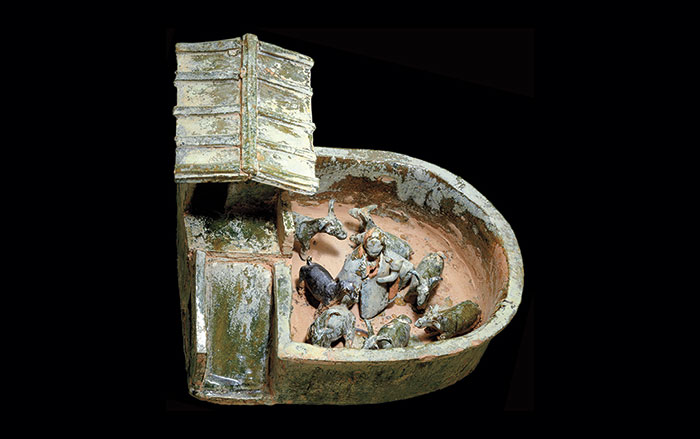
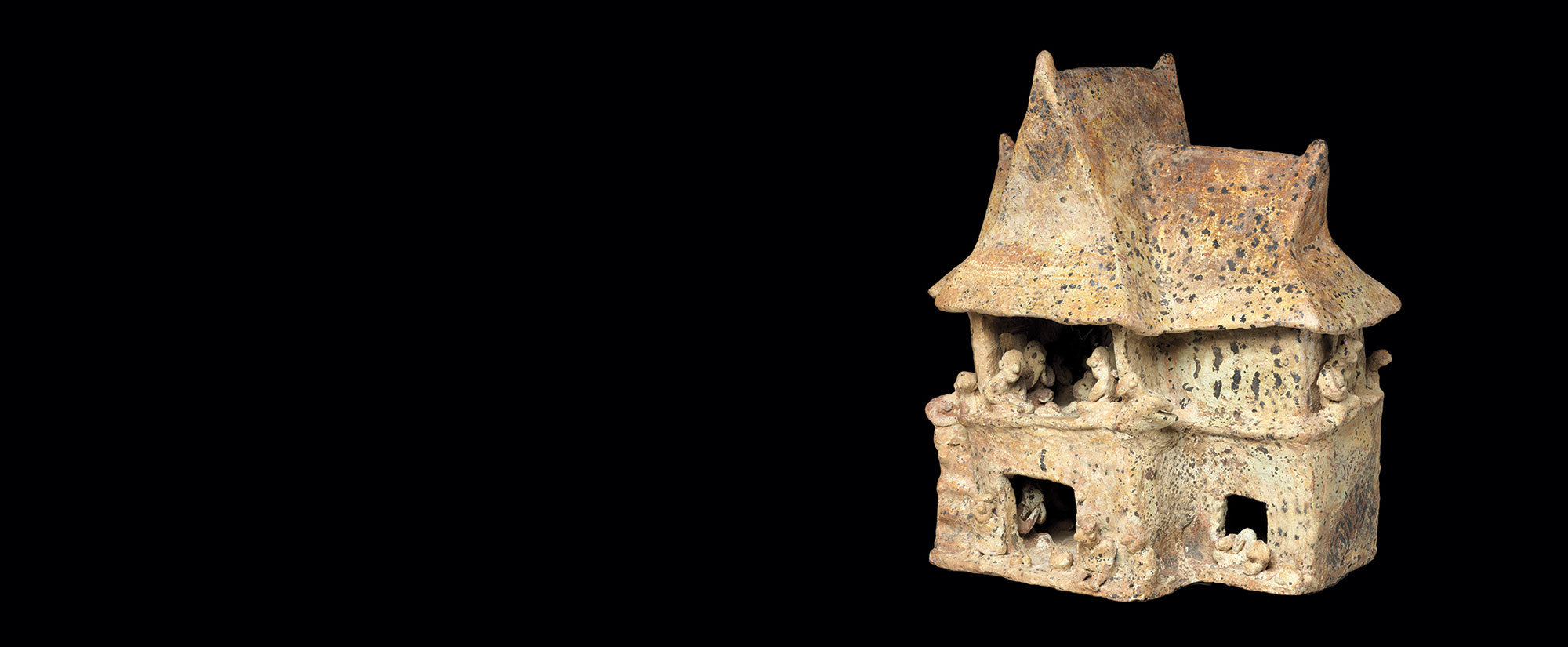
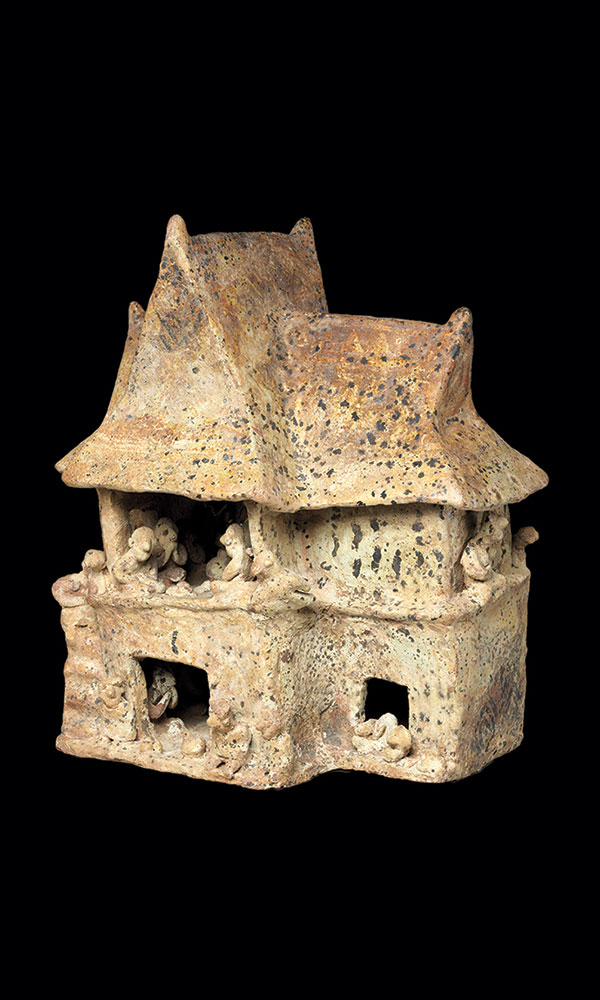
Since the beginning of the twentieth century, many mingqi (a word that literally means "visible objects," used to mean all types of grave furnishings) have been discovered in Han Dynasty tombs in Henan Province, but few are as impressive as this six-foot-tall model of a multi-story manor house.
SHARE:
Courtesy Qinghua Guo, author, The Mingqi Pottery Buildings of Han Dynasty China (206 B.C.A.D. 220): Architectural Representations and Represented Architecture. Sussex Academic Press, 2010.

What is it?

Model of a seven-story manor house and tower

Culture

Early first century A.D.

Date

A.D. 79-130

Material

Pottery

Found

1993, Tomb no. 6 at Baizhuang, Jiaozuo, Henan Province

Dimensions

6.2 feet tall

Currently Located

Henan Museum, China

Since the beginning of the twentieth century, many mingqi (a word that literally means "visible objects," used to mean all types of grave furnishings) have been discovered in Han Dynasty tombs in Henan Province, but few are as impressive as this six-foot-tall model of a multi-story manor house.

Actual remains of ancient Chinese domestic architecture are rare. Scholars, however, are still able to glean the appearance of some types of houses from pottery models, such as this one, that reveal a higher level of architectural achievement than had previously been imagined.

From the carefully constructed main house and tower with its brightly colored exterior, to the enclosed courtyard with its model dog, the level of detail shown in this mingqi is impressive. The artist even inscribed small markings on the home's exterior, both to sign his work and to help him assemble the model.

Many Han Dynasty tombs were equipped with the necessities of everyday life including furniture, cooking utensils, and even food—items thought to provide comfort and ease the soul's transition to the afterlife. Mingqi as elaborate as this, however, would only have been buried with the wealthiest members of Han society.
  • Features January/February 2026

    The Cost of Doing Business

    Piecing together the Roman empire’s longest known inscription—a peculiarly precise inventory of prices

    Read Article
    A digital reconstruction shows how the Civil Basilica in the city of Aphrodisias in southwestern Anatolia would have appeared with the Edict of Maximum Prices inscribed on its facade.
    Ece Savaş and Philip Stinson
  • Features January/February 2026

    The Birds of Amarna

    An Egyptian princess seeks sanctuary in her private palace

    Read Article
    The Metropolitan Museum of Art, New York/ Rogers Fund, 1930
  • Features January/February 2026

    Taking the Measure of Mesoamerica

    Archaeologists decode the sacred mathematics embedded in an ancient city’s architecture

    Read Article
    Courtesy Claudia I. Alvarado-León
  • Features January/February 2026

    Stone Gods and Monsters

    3,000 years ago, an intoxicating new religion beckoned pilgrims to temples high in the Andes

    Read Article
    The ritual center of Chavín de Huántar flourished in northern Peru.
    Courtesy John Rick