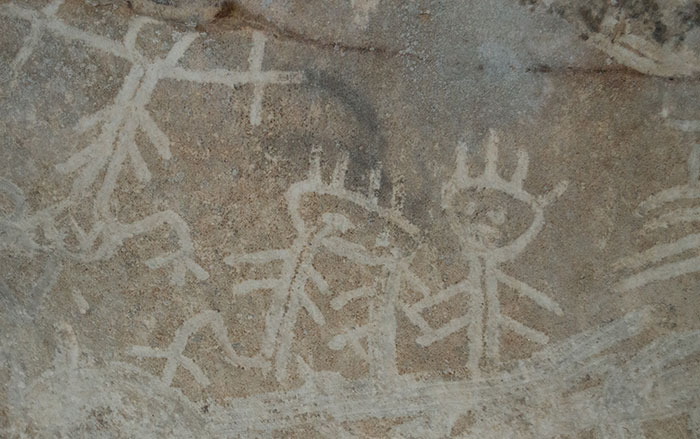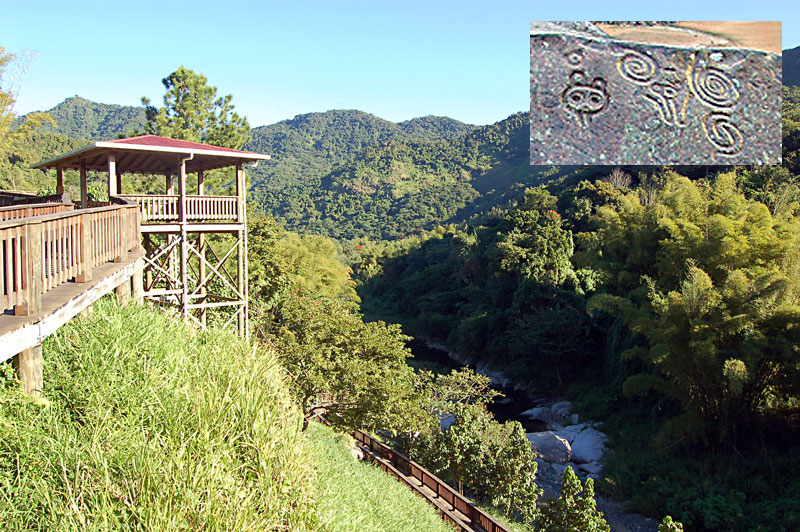
Many people get away to Puerto Rico during the winter, but few know it was a home of the Taino people before Columbus arrived in the Americas, and that Taino culture is alive and well there. Archaeologist Miquel Bonini of the Puerto Rico State Historic Office recommends that vacationers hit La Piedra Escrita in the town of Jayuya, where there is a huge, river-bound boulder covered with 86 prehistoric Taino petroglyphs.
The site La Piedra Escrita, or "The Written Rock," is 32 feet high and 13 feet wide, and rests right in the middle of the Rio Saliente, in the central forested, mountainous region of the island. About half the petroglyphs on it resemble people, a few have animal shapes, and others are geometric or abstract. The petroglyphs date to sometime around A.D. 600-1200, but the significance of the boulder is unknown.
Getting there It should take about two hours by car from San Juan to reach Jayuya, a town known for its deep love of its Taino heritage. There is no fee to view the petrolgyphs, and there is a recreation area, restrooms, and a parking lot. A wooden boardwalk leads down to the river for a closer look, but Bonini requests all visitors to refrain from touching the boulder.
While you're in the neighborhood In Jayuya, check out the Museo el Cemi, designed to represent Taino divinities. It is full of Taino artifacts for those curious to learn more about Puerto Rico's indigenous people. Also nearby are the Caguana Ceremonial Ball Courts, a group of 30 restored courts, called bateyes, that date back 700 years. One of them is the largest of its type in the Caribbean. To learn more about the Tainos, Bonini recommends Irving Rouse's The Tainos: The Rise and Decline of the People Who Greeted Columbus.