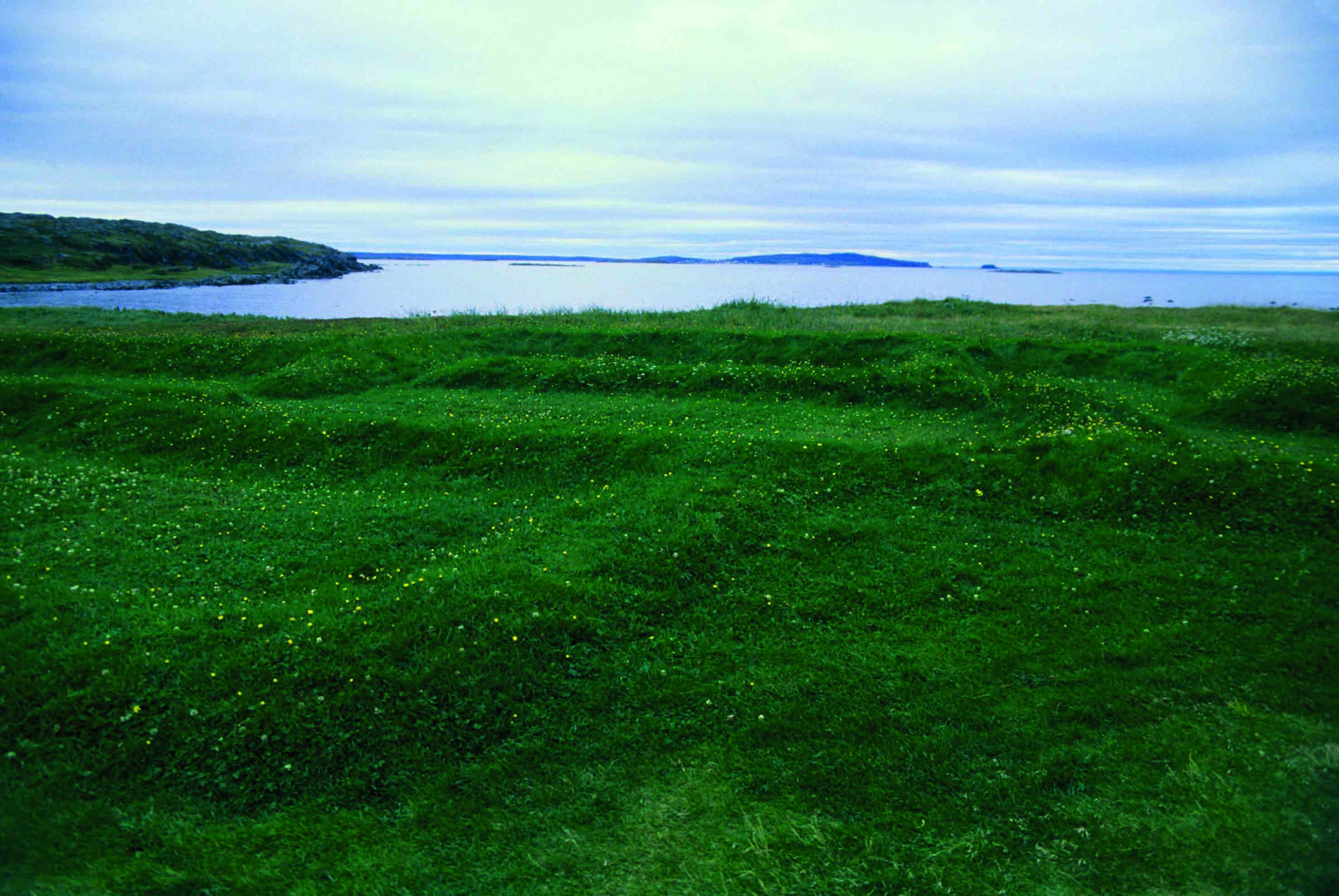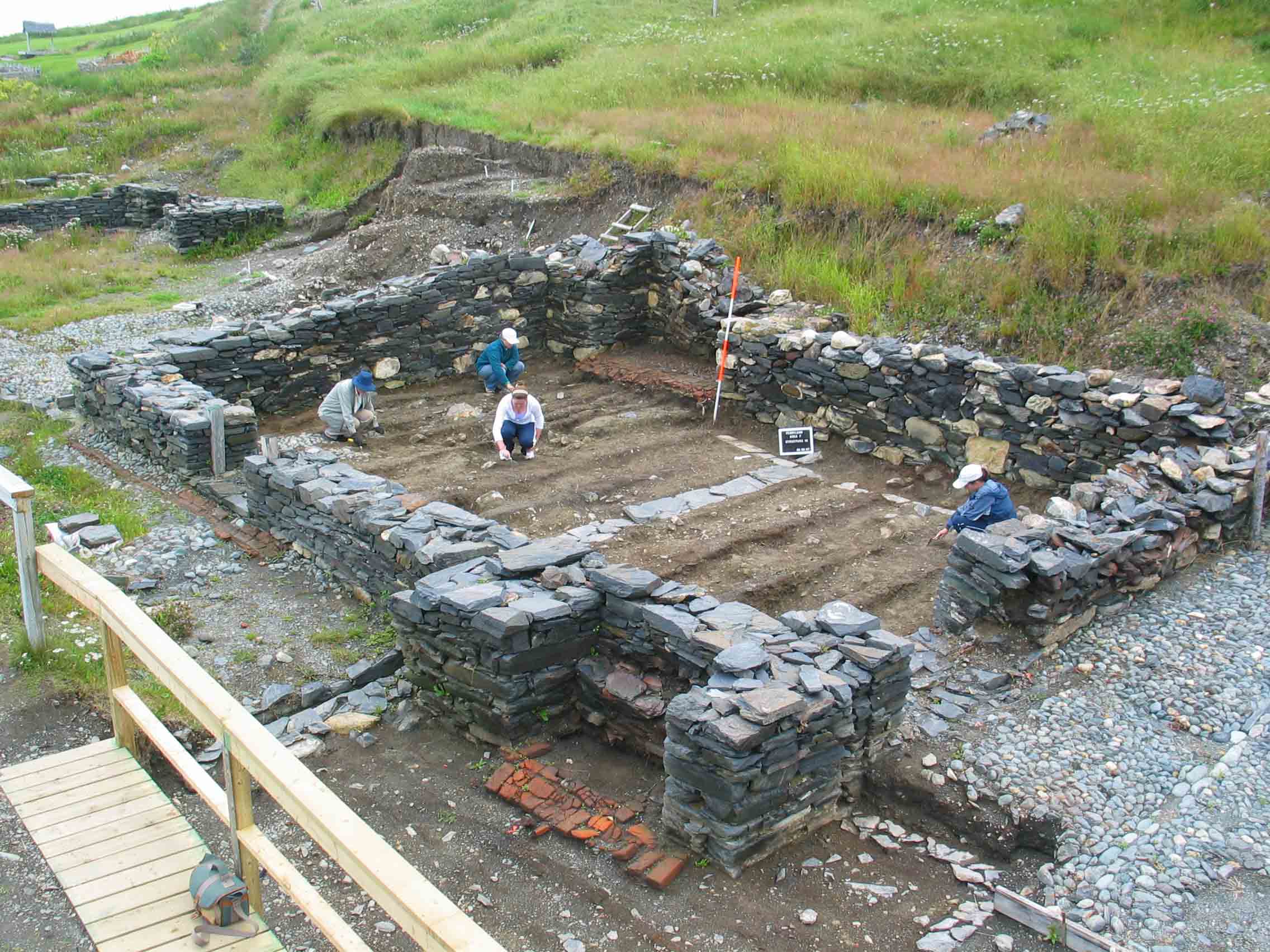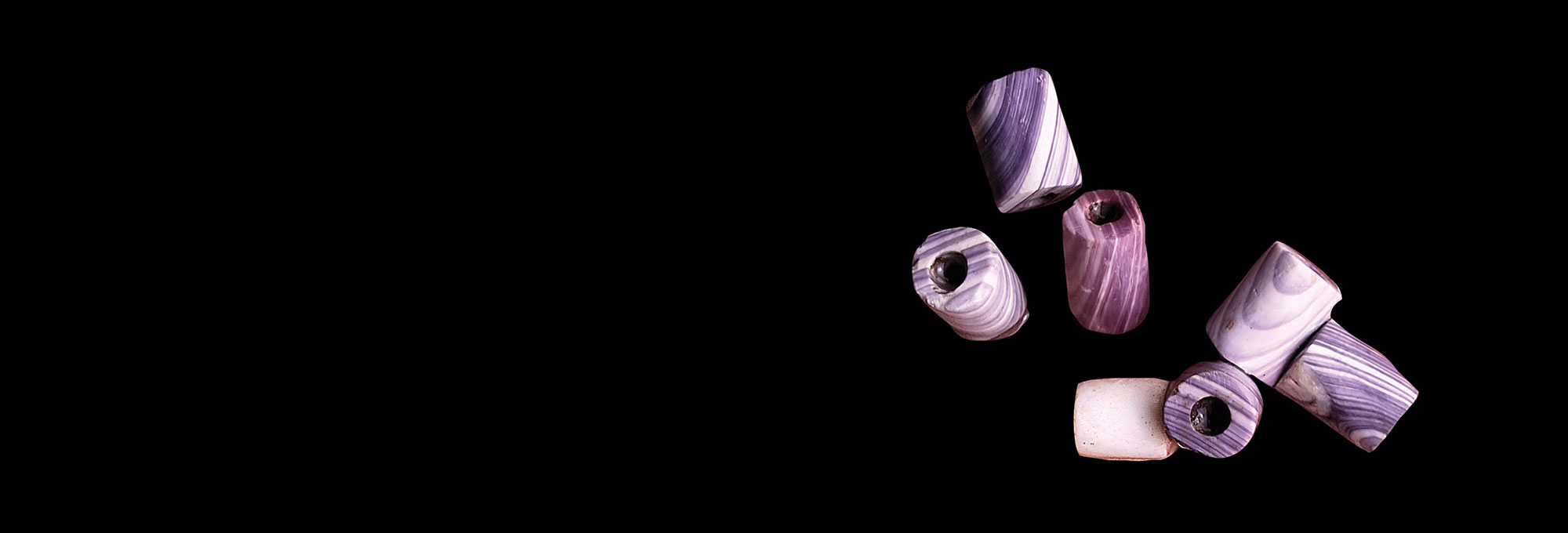
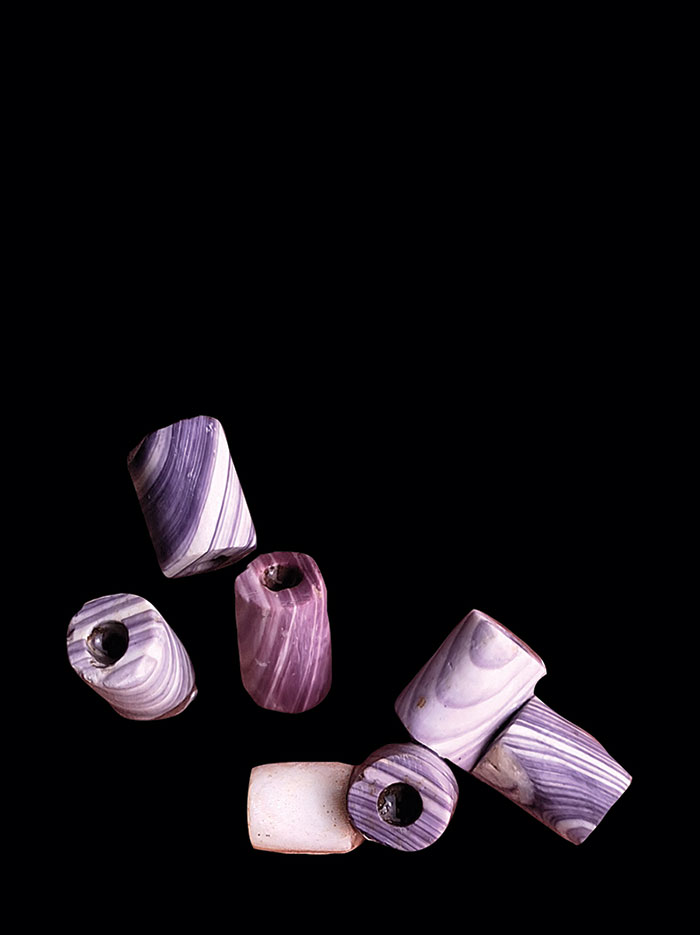
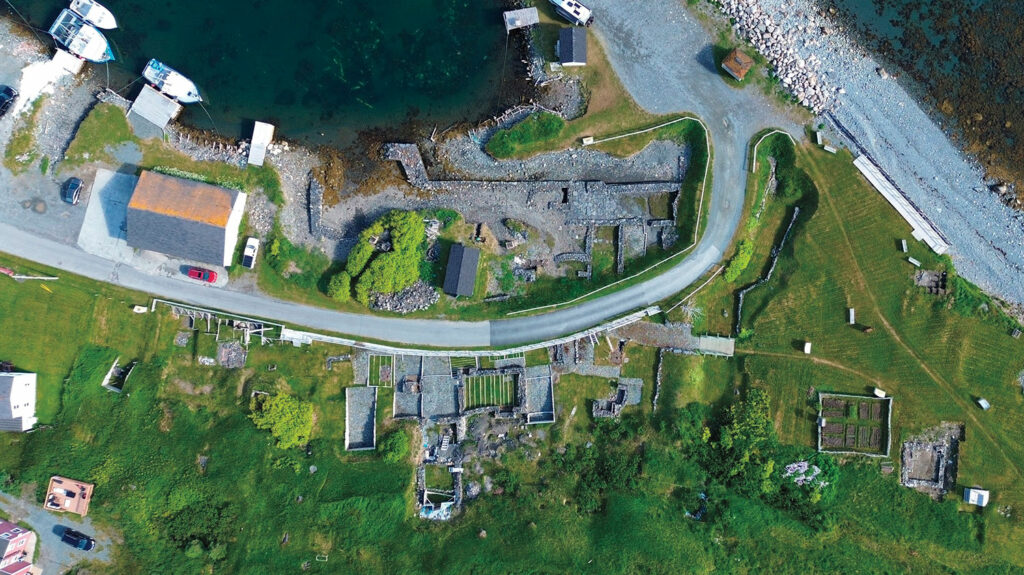
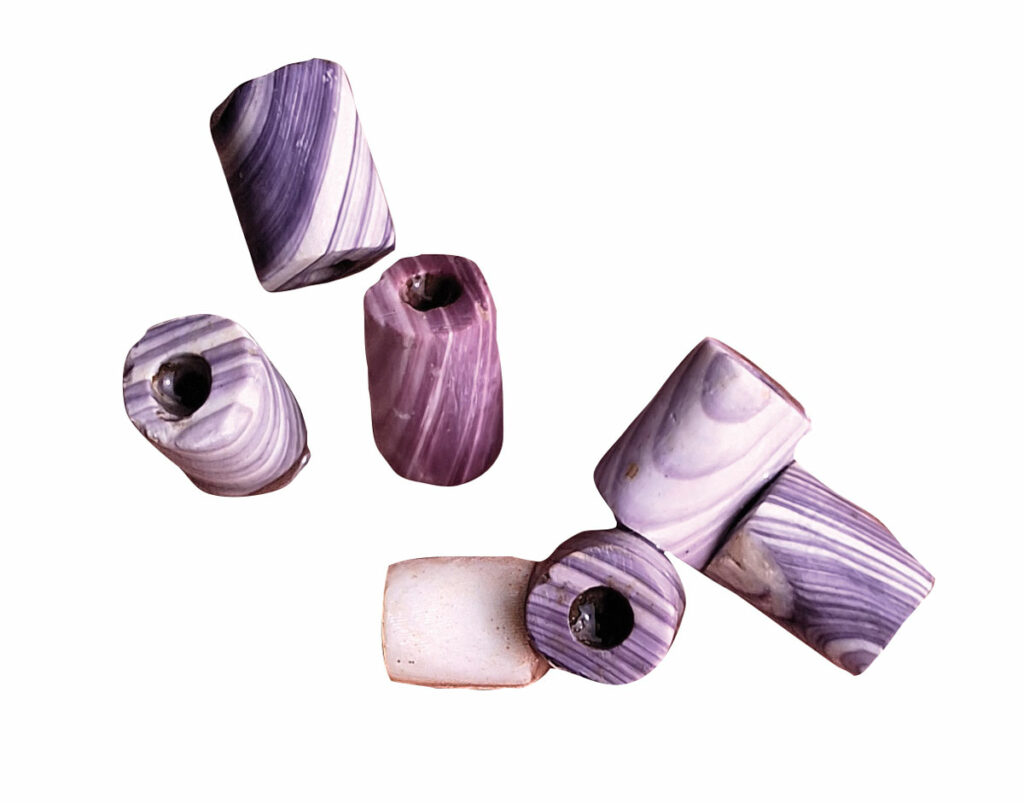
Over the past 30 years, excavations at the site of the seventeenth-century Colony of Avalon in the Newfoundland town of Ferryland have uncovered tens of thousands of artifacts. These objects have provided valuable information about life in one of the most remote English colonies in North America. Recent investigations unearthed a set of curious objects demonstrating that Avalon’s inhabitants had better connections with the greater colonial world than previously thought. While working in a storage room associated with the settlement’s main building, known as the Mansion House, archaeologists found seven tubular wampum beads.
Wampum was typically carved from white and purple whelk or quahog shells and was used by Native American communities for a range of purposes, most commonly as currency. While wampum beads have been found at both European colonial and Native American sites in the northeastern United States, no wampum had ever been found in the Canadian province of Newfoundland and Labrador. These beads were likely fashioned in the early 1600s. According to archaeologist Barry Gaulton of Memorial University, they probably made their way to such an unlikely location in the hands of Dutch and New England colonial merchants who had acquired them from Indigenous traders. “In addition to being the first examples of wampum beads found in Canada’s easternmost province,” he says, “these objects are also a tangible reminder of the many connections between Ferryland’s residents and people in other parts of North America.”