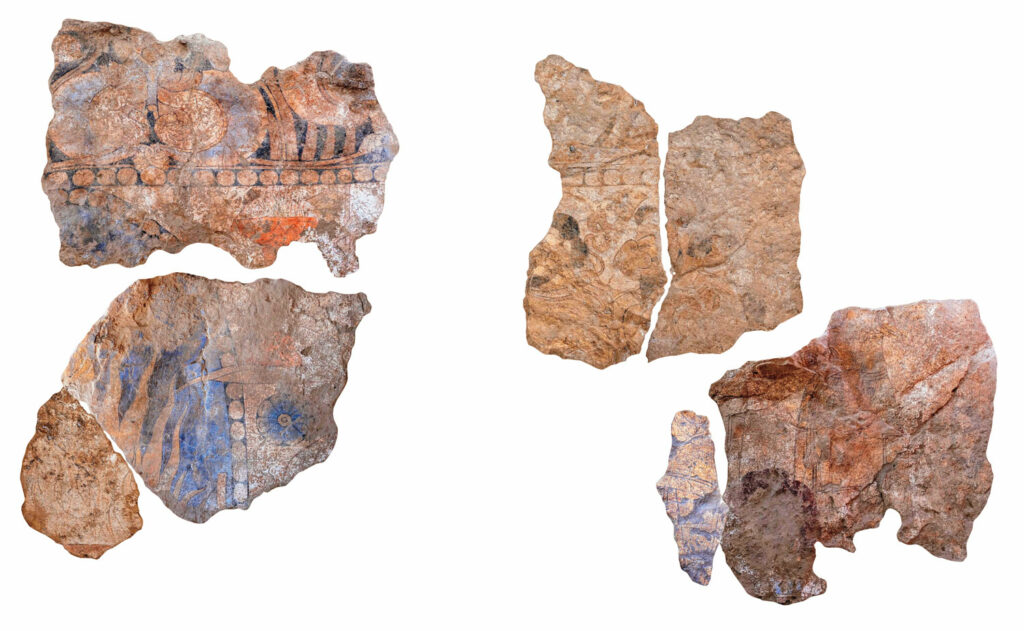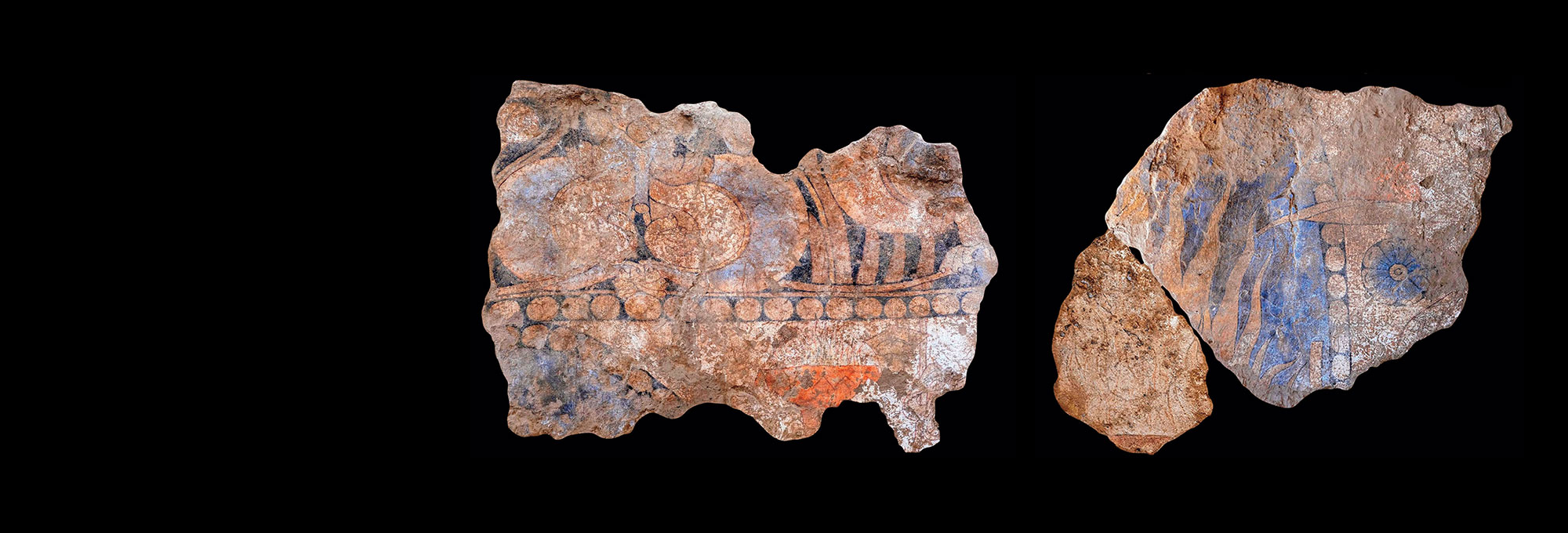
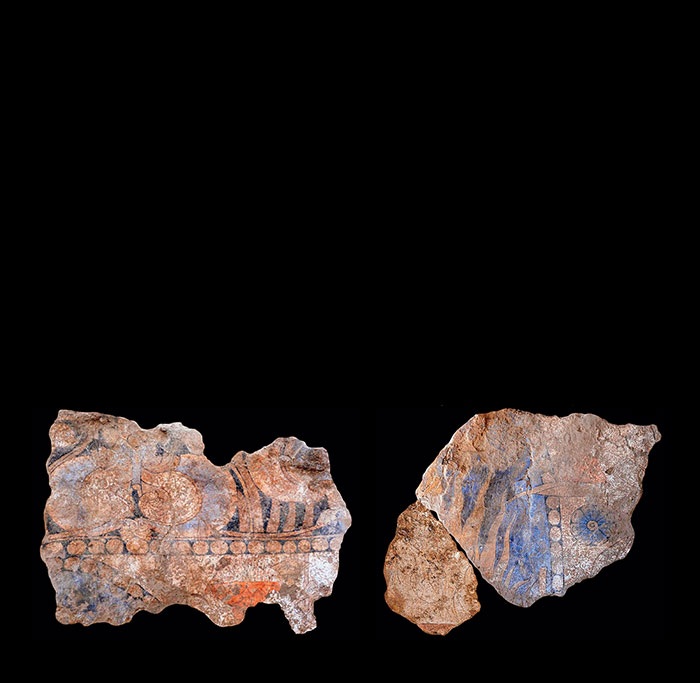
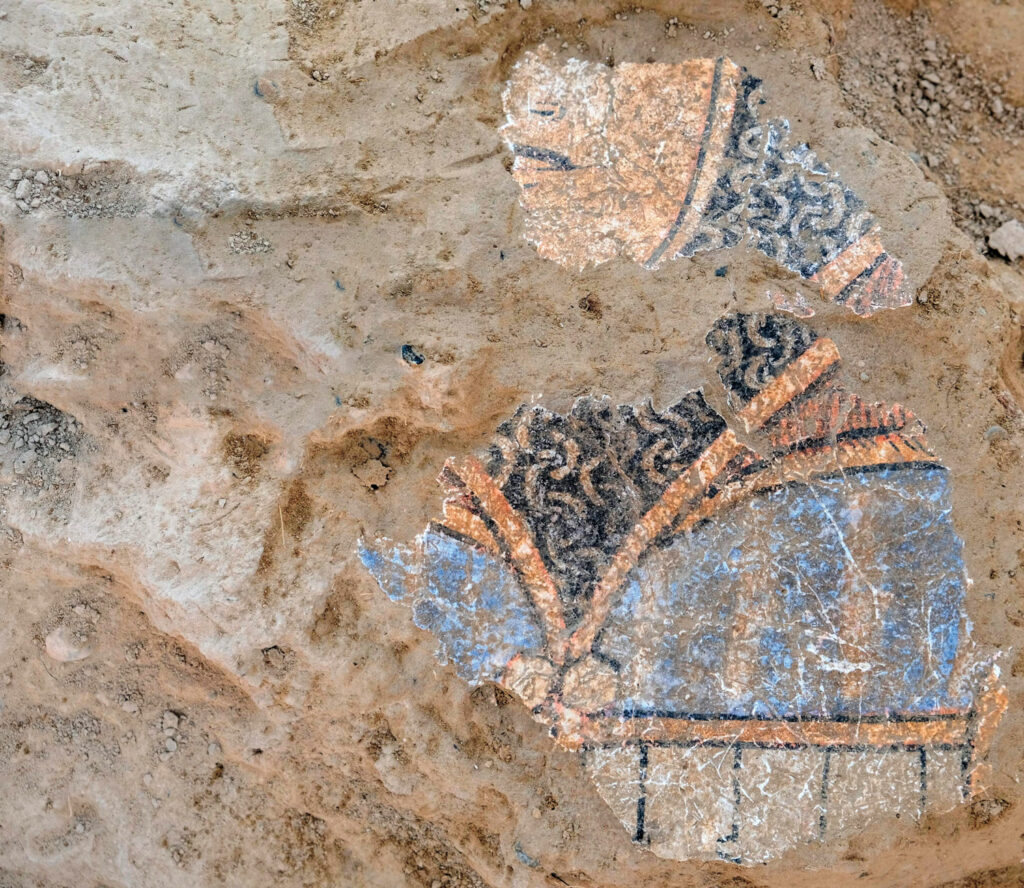
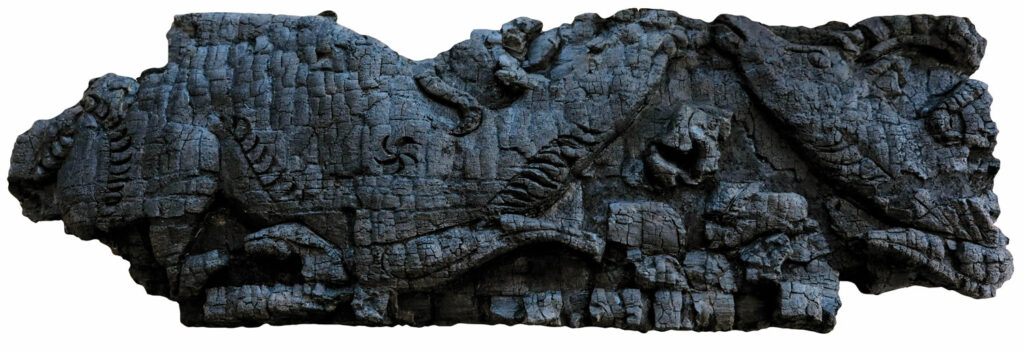
Recent excavations in the cities of Sogdiana, which encompassed parts of modern Uzbekistan and Tajikistan from the fifth through the eighth century a.d., have illuminated the sophisticated artistic and religious traditions of the territory’s people. (See “A Silk Road Renaissance.”) Archaeologists have now discovered fantastical figurative wall paintings and ornate wood carvings in a palace at the site of Sanjar-Shah in Tajikistan that was built in the a.d. 740s. Some mural subjects are typical for Sogdian art, such as a hunting scene and a battle against demons. Michael Shenkar of the Hebrew University of Jerusalem recently finished reconstructing a rather more confounding composition from dozens of fragments unearthed in 2022 and 2023. “It’s a scene of fire worship and is unique,” he says.
The fire ceremony was a Sogdian ritual derived from Zoroastrianism, a religion developed in Central Asia centuries earlier. Previously, scenes portraying this ritual in Sogdian art were only known to have appeared on ossuaries, boxes used to hold the bones of the dead. This mural, however, was painted in what was probably a reception hall. It depicts a procession of four priests, and possibly a child. Each priest wears a padām, a mouth covering to prevent human breath from contaminating the sacred flame, and ribbons flow from the backs of their necks. Such ribbons were an accessory typically worn by kings in Central Asia, beginning with Alexander the Great (reigned 331–323 b.c.). “I’m really puzzled by it,” says Shenkar. “But the Sanjar-Shah Palace always provides surprises.”