Scientists Rethink Early Hominin Species

News January 23, 2026

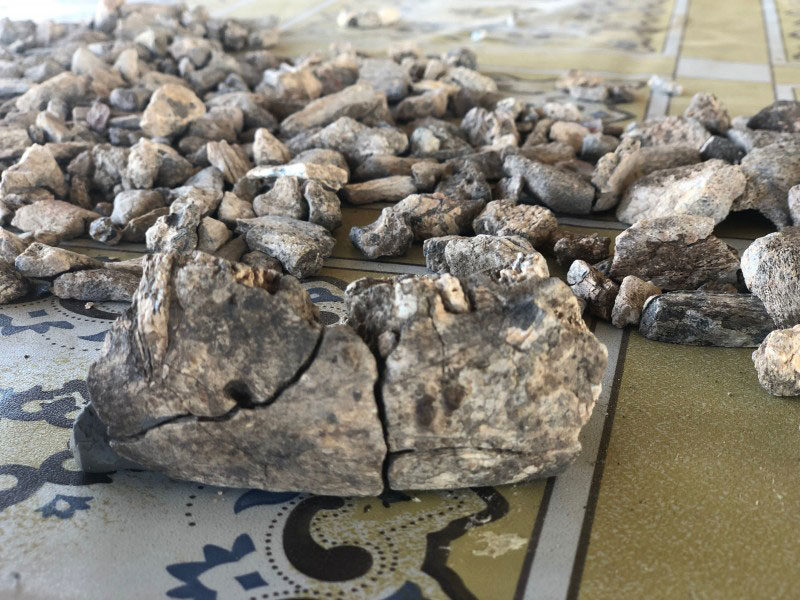
Fragments of the Paranthropus mandible after reassembly
Courtesy of Alemseged Research Group
SHARE:

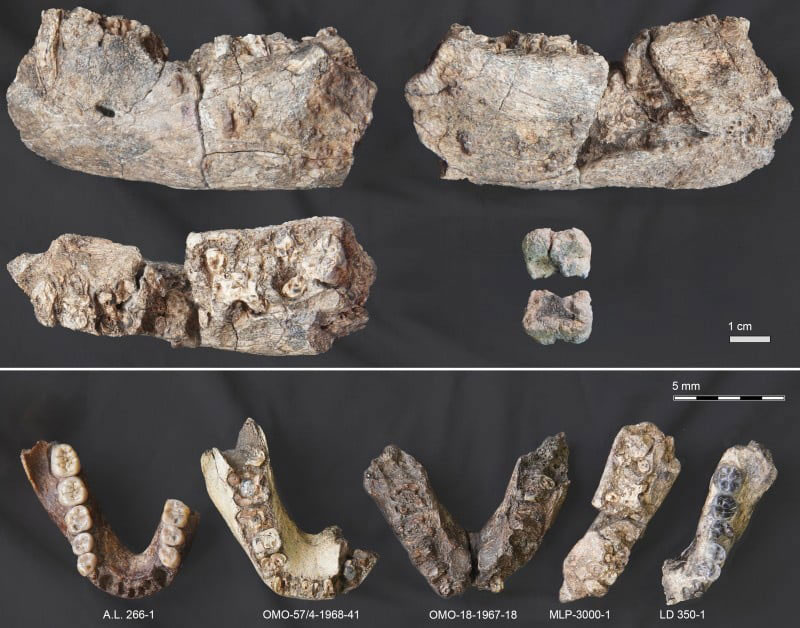
CHICAGO, ILLINOIS—Fragments of a 2.6-million-year-old Paranthropus jaw have been discovered in the Afar region of northeastern Ethiopia, about 620 miles farther north than other known Paranthropus remains, according to a Live Science report. As extinct human relatives, Paranthropus species, including P. robustus, P. boisei, and P. aethiopicus, were bipedal and had massive teeth and jaws, resulting in the nickname “Nutcracker Man.” However, the discovery of the jaw in the Afar region suggests that Paranthropus probably survived in diverse habitats and had a more flexible diet than had been previously thought. It could also indicate that Paranthropus encountered Australopithecus and Homo individuals living in the Afar region between 2.8 and 2.5 million years ago. “Discoveries like this really trigger interesting questions in terms of reviewing, revising, and then coming up with new hypotheses as to what the key differences were between the main hominin groups,” said paleoanthropologist Zeresenay Alemseged of the University of Chicago. To read about the best-preserved Paranthropus robustus fossil, go to "Consider the Craniums."
  • Features January/February 2026

    The Cost of Doing Business

    Piecing together the Roman empire’s longest known inscription—a peculiarly precise inventory of prices

    Read Article
    A digital reconstruction shows how the Civil Basilica in the city of Aphrodisias in southwestern Anatolia would have appeared with the Edict of Maximum Prices inscribed on its facade.
    Ece Savaş and Philip Stinson
  • Features January/February 2026

    The Birds of Amarna

    An Egyptian princess seeks sanctuary in her private palace

    Read Article
    The Metropolitan Museum of Art, New York/ Rogers Fund, 1930
  • Features January/February 2026

    Taking the Measure of Mesoamerica

    Archaeologists decode the sacred mathematics embedded in an ancient city’s architecture

    Read Article
    Courtesy Claudia I. Alvarado-León
  • Features January/February 2026

    Stone Gods and Monsters

    3,000 years ago, an intoxicating new religion beckoned pilgrims to temples high in the Andes

    Read Article
    The ritual center of Chavín de Huántar flourished in northern Peru.
    Courtesy John Rick