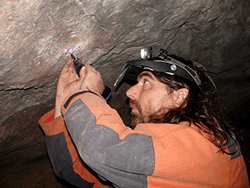
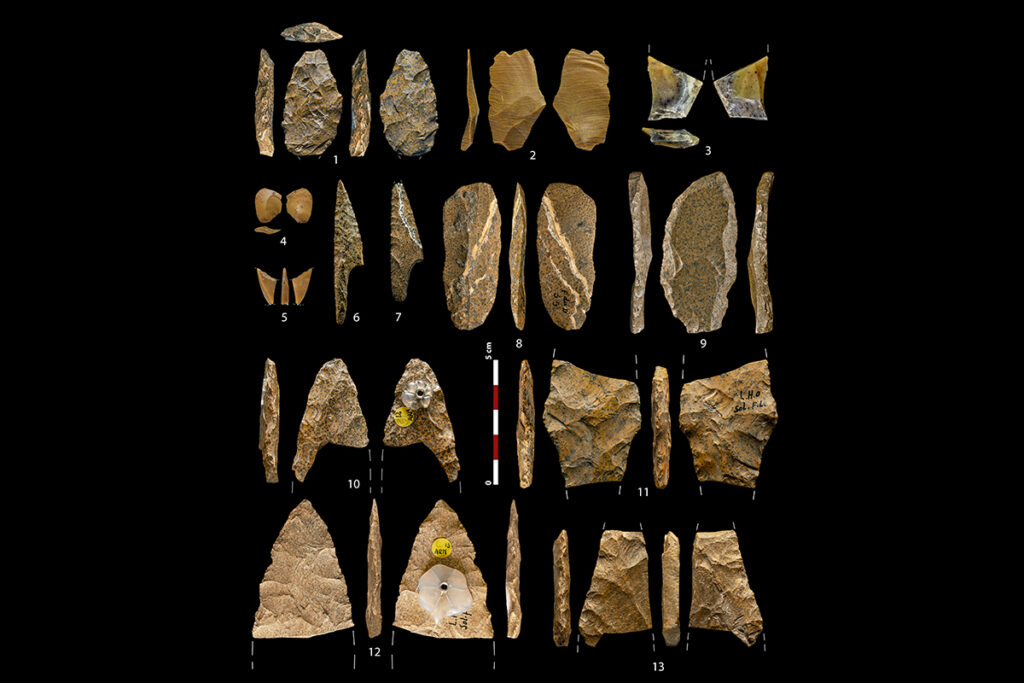
ALCALÁ DE HENARES, SPAIN—Science Magazine reports that five stone blades made from chert outcrops in central France have been found more than 400 miles away in central Spain by Manuel Alcaraz-Castaño of the University of Alcalá and his colleagues. The team members unearthed the yellowish tools at the Peña Capón rock shelter near the Sorbe River, where people fished for salmon and hunted deer, horses, and rabbits between 26,000 and 22,000 years ago. Dating of charcoal and animal bone in the several layers where the chert tools were recovered indicates that the materials were imported for a period of about 1,400 years. “Their presence some 700 kilometers [435 miles] from their source [shows] these societies had a more complex social structure than previously assumed, one that connected diverse groups across very broad territories,” said Alcaraz-Castaño. The long-distance trade likely involved more than two bands of people, he explained, and may reflect shared identity and belief systems. Contact between these groups probably also facilitated sharing knowledge about the land, animal migration patterns, and potential mates, especially during periods of challenging climate conditions. Read the original scholarly article about this research in Science Advances. To read about hunter-gatherers in southern Africa who ventured long distances to procure colorful chert to make tools, go to "Source Material."