Roman Carriage Ornament Found in England

News February 5, 2026

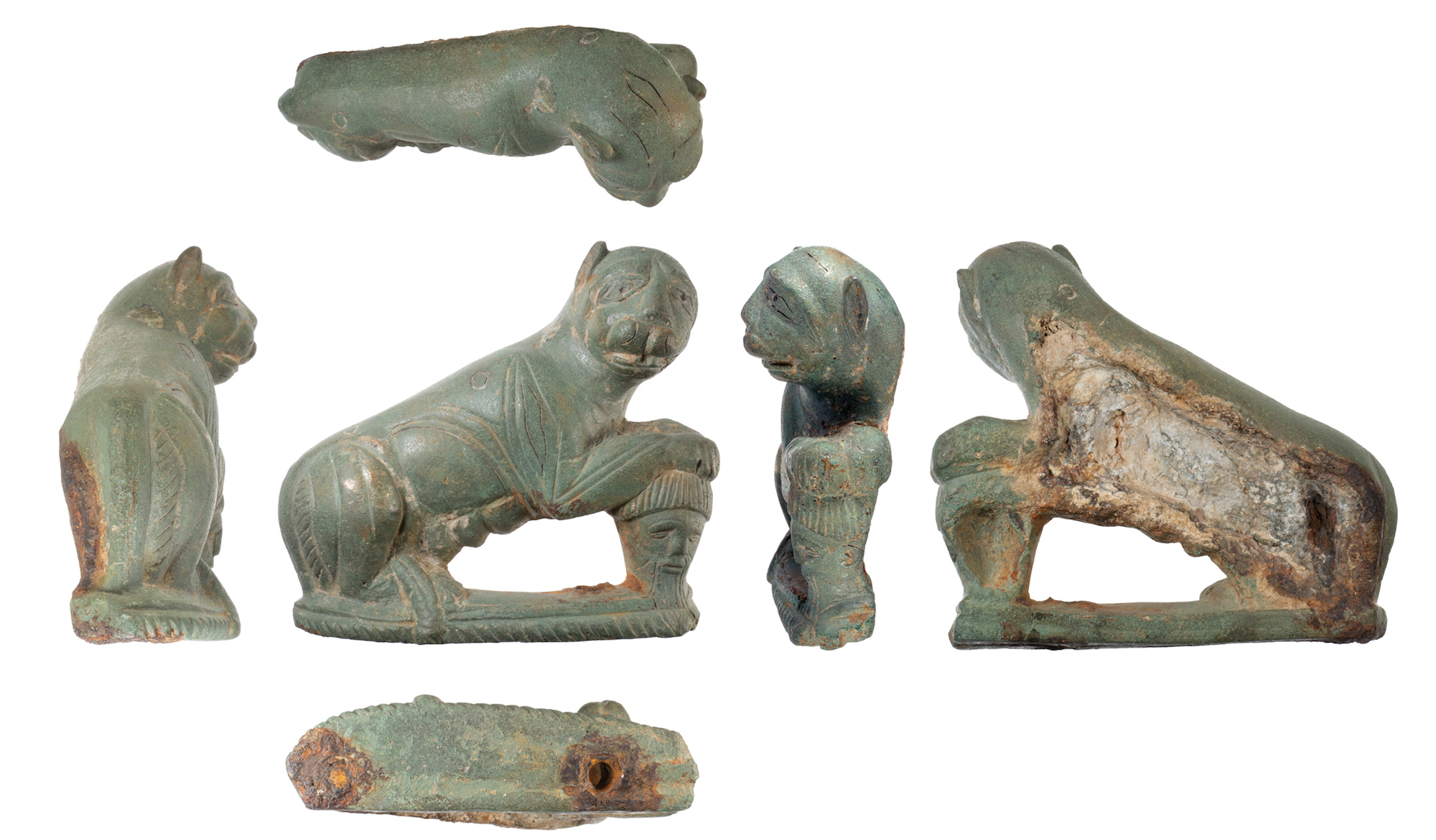
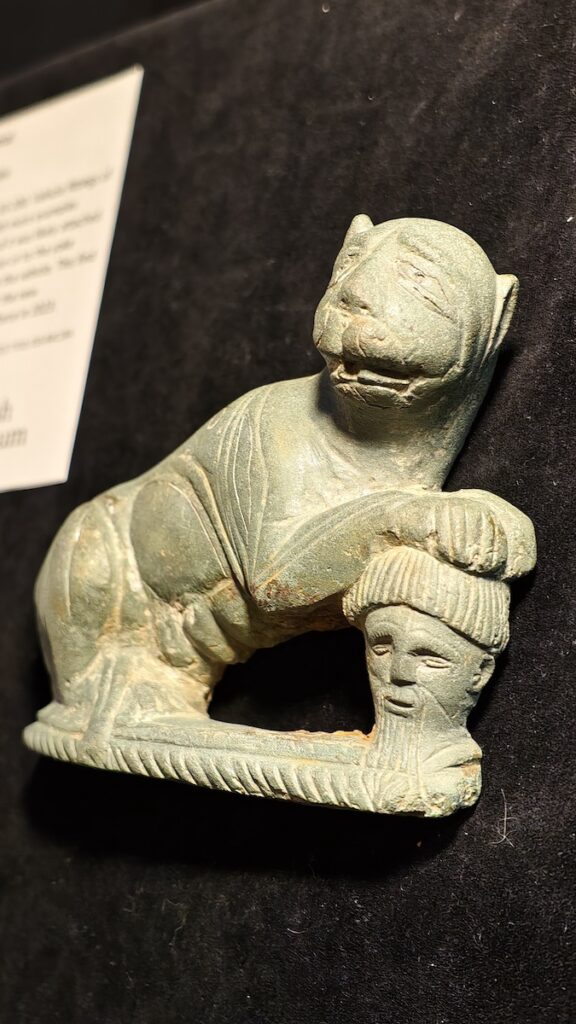
Different views of copper-alloy Roman vehicle fitting depicting a panther with paws resting atop a man's head
The British Museum Portable Antiquities Scheme
SHARE:

LONDON, ENGLAND—ZME Science reports that a metal detectorist recovered a four-inch copper-alloy carriage ornament in Essex. The figure, now an oxidized green, shows a panther—a Roman symbol of power, civilization, and Bacchus, the god of wine—with a front paw resting on a severed human head, representing the defeat of local Iron Age Britons. “There’s nothing quite like it in Romano-Britain,” said John Pearce of King’s College London. Researchers think the artifact once adorned the carriage of a wealthy farmer or merchant, and fell off as it traveled over a bumpy road. The object is being conserved and housed at the British Museum. To read about the only four-wheeled chariot that has been discovered in the Roman world, go to "A Ride Through the Countryside."
  • Features January/February 2026

    The Birds of Amarna

    An Egyptian princess seeks sanctuary in her private palace

    Read Article
    The Metropolitan Museum of Art, New York/ Rogers Fund, 1930
  • Features January/February 2026

    Taking the Measure of Mesoamerica

    Archaeologists decode the sacred mathematics embedded in an ancient city’s architecture

    Read Article
    Courtesy Claudia I. Alvarado-León
  • Features January/February 2026

    Stone Gods and Monsters

    3,000 years ago, an intoxicating new religion beckoned pilgrims to temples high in the Andes

    Read Article
    The ritual center of Chavín de Huántar flourished in northern Peru.
    Courtesy John Rick
  • Letter from France January/February 2026

    Neolithic Cultural Revolution

    How farmers came together to build Europe’s most grandiose funerary monuments some 7,000 years ago

    Read Article
    © Laurent Juhel, Inrap