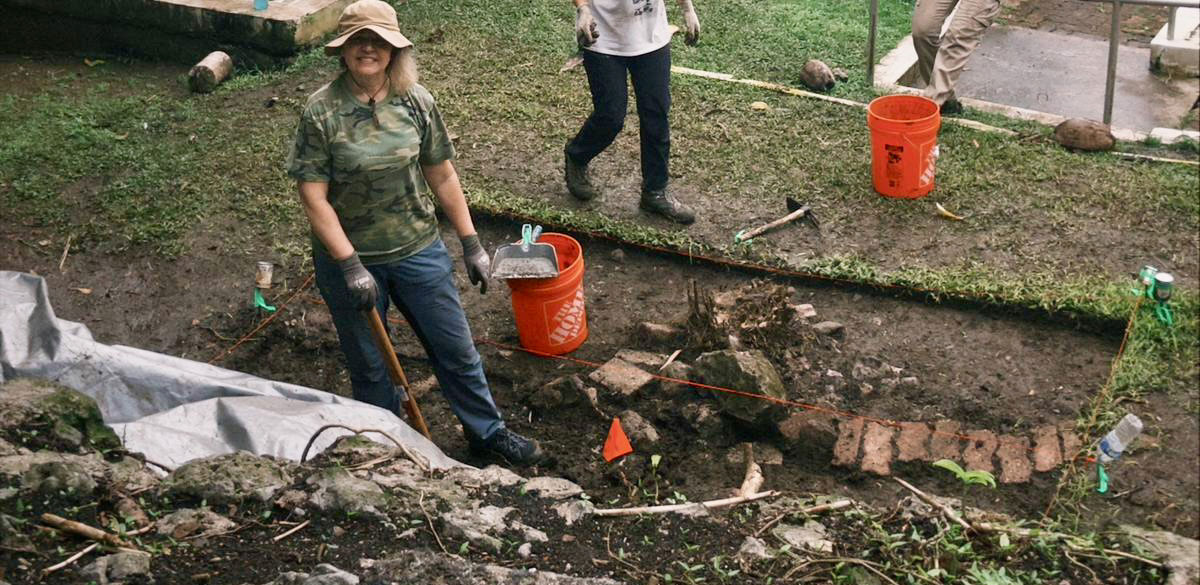
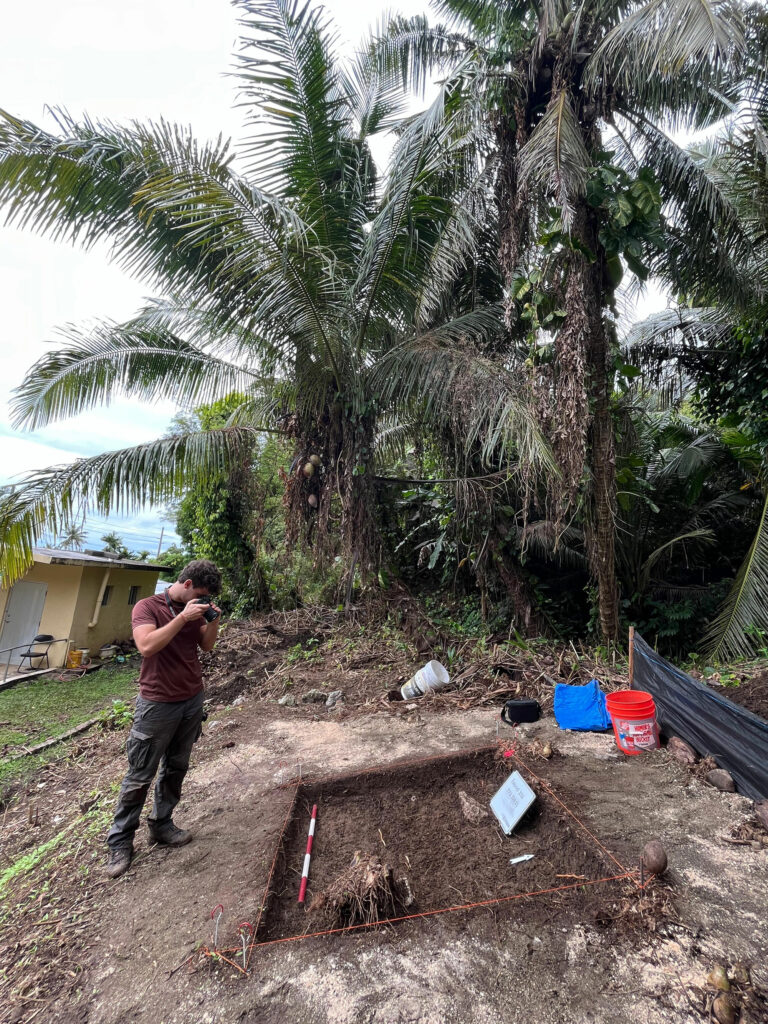
HUMÅTAK, GUAM—The Guam Daily Post reports that a team of researchers made up of scientists from Spain and Guam is investigating the site of the Spanish colonial governor’s palasyo, or palace, in the village of Humåtak, which is located near Guam’s southwestern coastline. “Humåtak functioned as one of the main nodes of colonial administration in Guam, and the Palasyo was a key space where colonial authority was enacted on a daily basis,” said Sandra Monton of Pompeu Fabra University. The team members uncovered the rear wall of the Palasyo, smaller walls that defined activity areas within the building, and traces of local CHamoru communities who lived in the region before the arrival of the Spanish. “While it is still early in the investigation, the archaeological record already suggests a more complex and grounded picture of colonial rule than that offered by administrative documents alone,” Monton said. “The presence of serving and tableware points to banquets and formal meals that staged colonial authority and hierarchy,” she added. Members of the CHamoru community likely prepared food and served at these events hosted by the governor. “These materials hint at unequal relationships of labor and obligation that structured everyday encounters between colonial officials and Indigenous people,” Monton explained. To read more about historical archaeology in the Pacific, go to "Place of the Loyal Samurai."