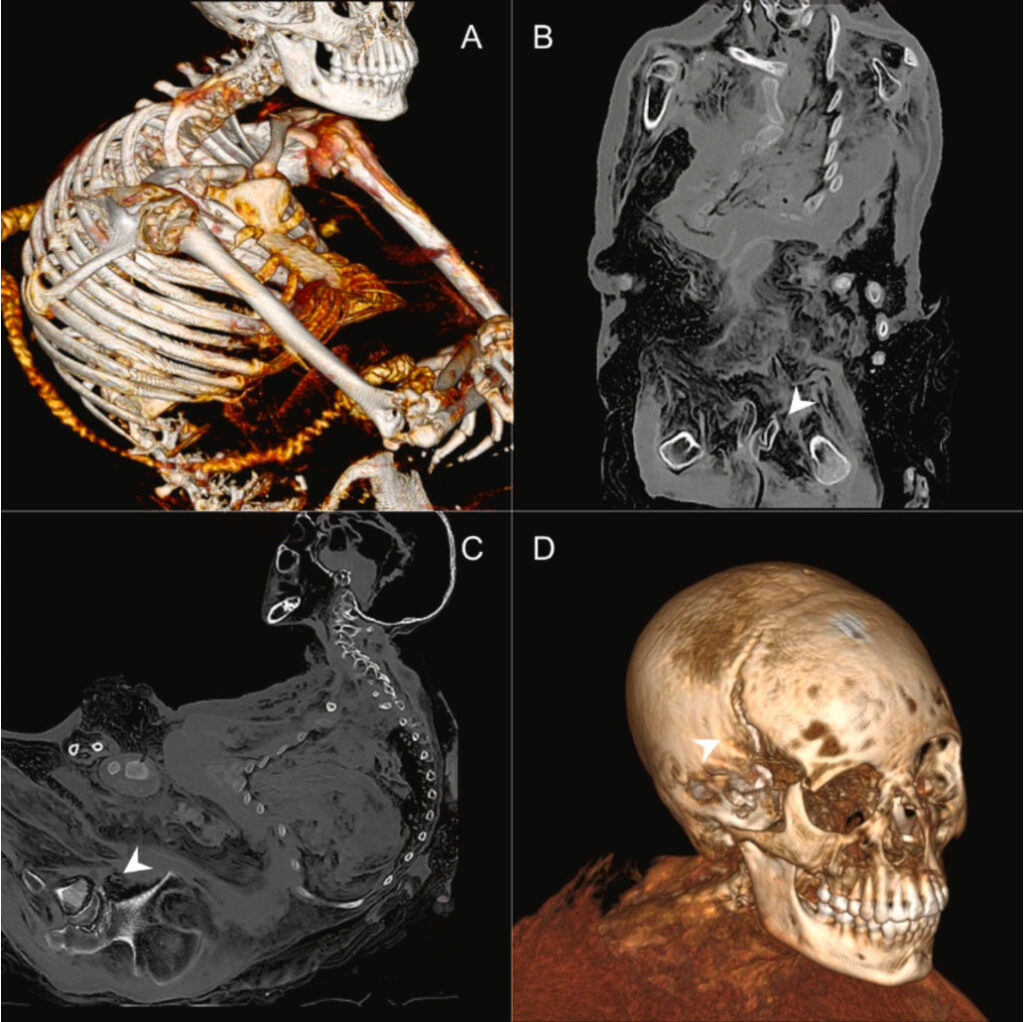
WARSAW, POLAND—Science in Poland reports that the remains of four children sacrificed in Inca capacocha rituals and left on mountain peaks in the Andes some 500 years ago were studied with computed tomography scans and analyzed by a team of researchers led by Dagmara Socha of the University of Warsaw. “The examined remains come from high-altitude volcanic sites, where low temperatures, a dry climate, and a lack of microorganisms facilitated the preservation of soft tissue,” Socha said. CT scans identified signs of intentional mummification in one of the bodies, and numerous injuries and pathological changes in the remains, she added. Some of the damage had been caused by lightning strikes. The analysis showed that all four children were killed by blows to the head. One girl, estimated to have been eight years old at the time of death, had an enlarged esophagus and calcifications in the lungs likely caused by Chagas disease. Injuries to the chest and pelvis were identified in the remains known as the "Lady of Ampato." The bones in another mummy bundle were found to be in disarray, with stones and textile fragments in the abdominal cavity. This girl is thought to have been sacrificed elsewhere and her remains later relocated. “Such practices correspond to historical accounts of the relocation of ethnic groups in the Inca Empire, carried out both as a form of punishment and as a means of colonizing overpopulated areas,” Socha said. When groups were relocated, they took their sacred objects with them. Capacocha victims were likely relocated as well, she explained, indicating that the children’s ritual significance in the community continued long after their deaths. To read about child sacrifice among the Chimú people, go to "Peru's Great Urban Experiment."