Crete's Inner Circles

Top 10 Discoveries of 2025 January/February 2026

Papoura Mountain, Greece
George Drakonakis/Ephorate of Antiquities of Heraklion
SHARE:

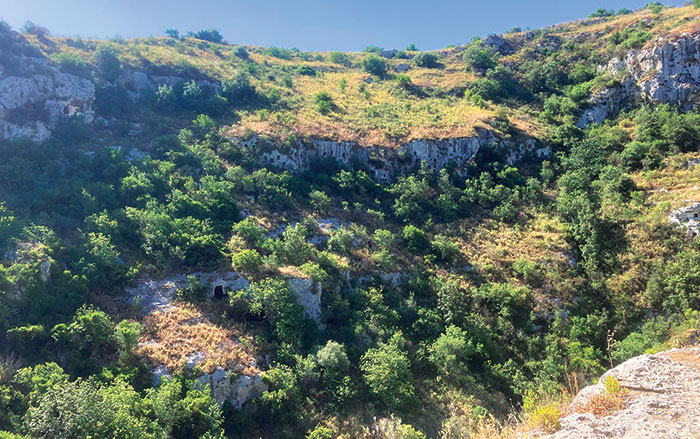
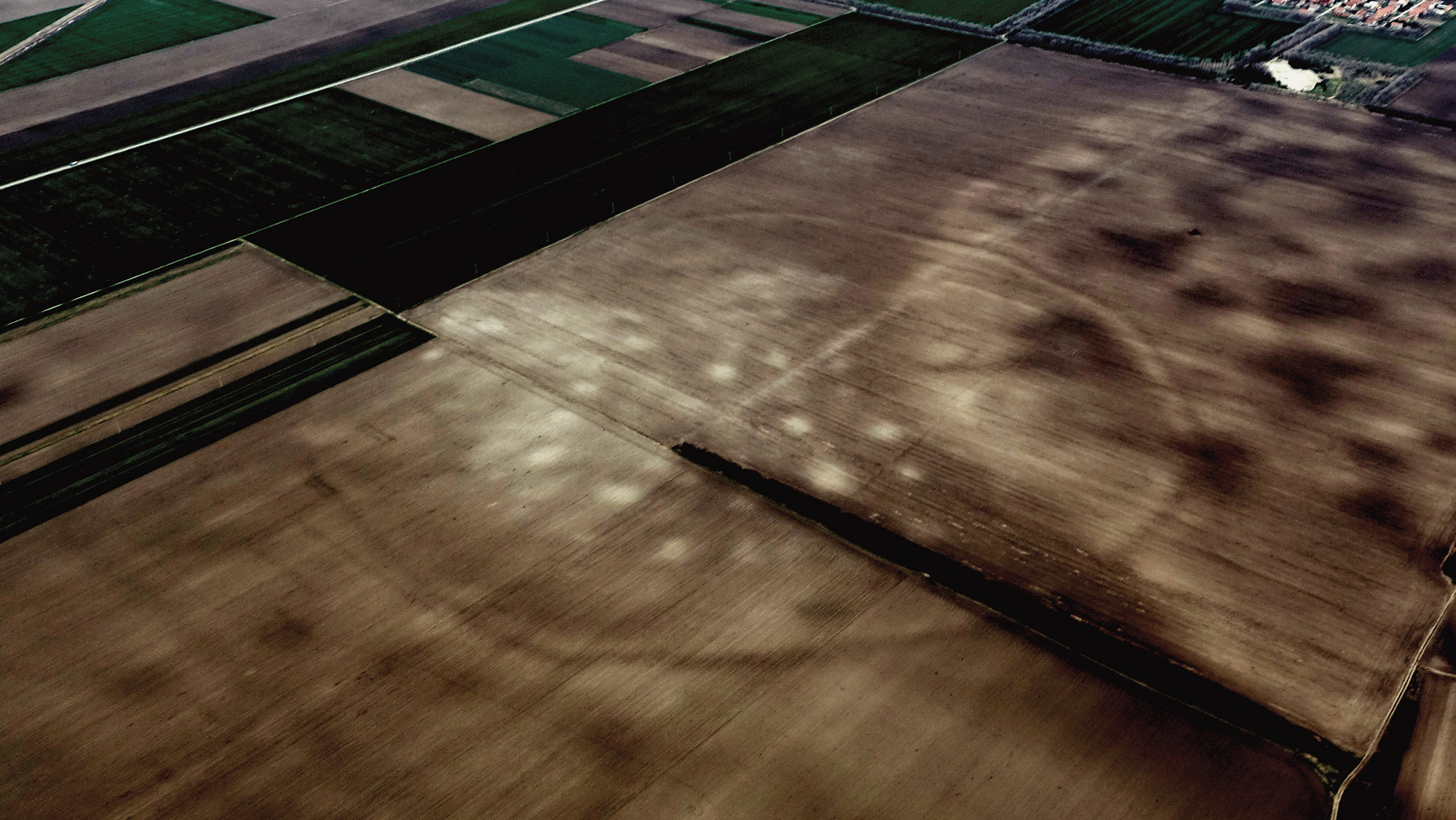
On the summit of Papoura Mountain in central Crete, archaeologists are investigating a highly unusual circular structure. It was built by members of the Bronze Age Minoan culture (ca. 3000–1100 b.c.) and is thought to be the earliest monumental complex discovered on the island. Measuring more than 160 feet across, the complex was constructed atop sloping ground and consists of eight concentric stone walls, some preserved to a height of more than six feet. The outer rings form rooms of roughly equal size connected by small doorways. At the center of the structure, a team led by excavation director Danae Kontopodi and Vassiliki Sythiakaki, director of the Ephorate of Antiquities of Heraklion, has unearthed a vaulted building divided into four sections whose plaster walls preserve traces of paint. The archaeologists believe the complex was constructed as early as 3000 b.c.—more than a millennium before the rise of the palace-based society that would come to dominate Minoan sociopolitical life—and used until about 1800 b.c. “The monument was clearly a communal undertaking, built to be visible from the settlements of the Pediada Plain below and the surrounding peaks and ridges,” Sythiakaki says. “Its commanding presence would have made it a focal point for communities throughout the region.”

Minoans hailing from small rural sites and larger settlements likely congregated in a stone-paved area of the structure that was spacious enough to hold substantial crowds. The researchers believe that pottery found in the complex suggests that the network of people who gathered there may have included those from the palatial centers of Knossos and Malia on Crete’s north coast, some 20 miles away. “The circular monument served as a communal space for periodic feasting and ritual activities,” Kontopodi says, “but its function seems to have evolved according to geopolitical shifts and the social or spiritual needs of local communities.”

MORE FROM Top 10 Discoveries of 2025

  • Top 10 Discoveries of 2025 January/February 2026

    The First Indo-European Speakers

    Eastern Ukraine and Southern Russia

    Read Article
    Erich Lessing/Art Resource, NY
  • Top 10 Discoveries of 2025 January/February 2026

    Oldest Mummified People

    Southern China and Southeast Asia

    Read Article
    Courtesy Indonesian-French Joint Prehistory Program
  • Features January/February 2026

    The Birds of Amarna

    An Egyptian princess seeks sanctuary in her private palace

    Read Article
    The Metropolitan Museum of Art, New York/ Rogers Fund, 1930
  • Features January/February 2026

    Taking the Measure of Mesoamerica

    Archaeologists decode the sacred mathematics embedded in an ancient city’s architecture

    Read Article
    Courtesy Claudia I. Alvarado-León
  • Features January/February 2026

    Stone Gods and Monsters

    3,000 years ago, an intoxicating new religion beckoned pilgrims to temples high in the Andes

    Read Article
    The ritual center of Chavín de Huántar flourished in northern Peru.
    Courtesy John Rick
  • Features January/February 2026

    Top 10 Discoveries of 2025

    ARCHAEOLOGY magazine’s editors reveal the year’s most exciting finds

    Read Article
    Courtesy of the Caracol Archaeological Project, University of Houston