
The First Indo-European Speakers

Top 10 Discoveries of 2025 January/February 2026

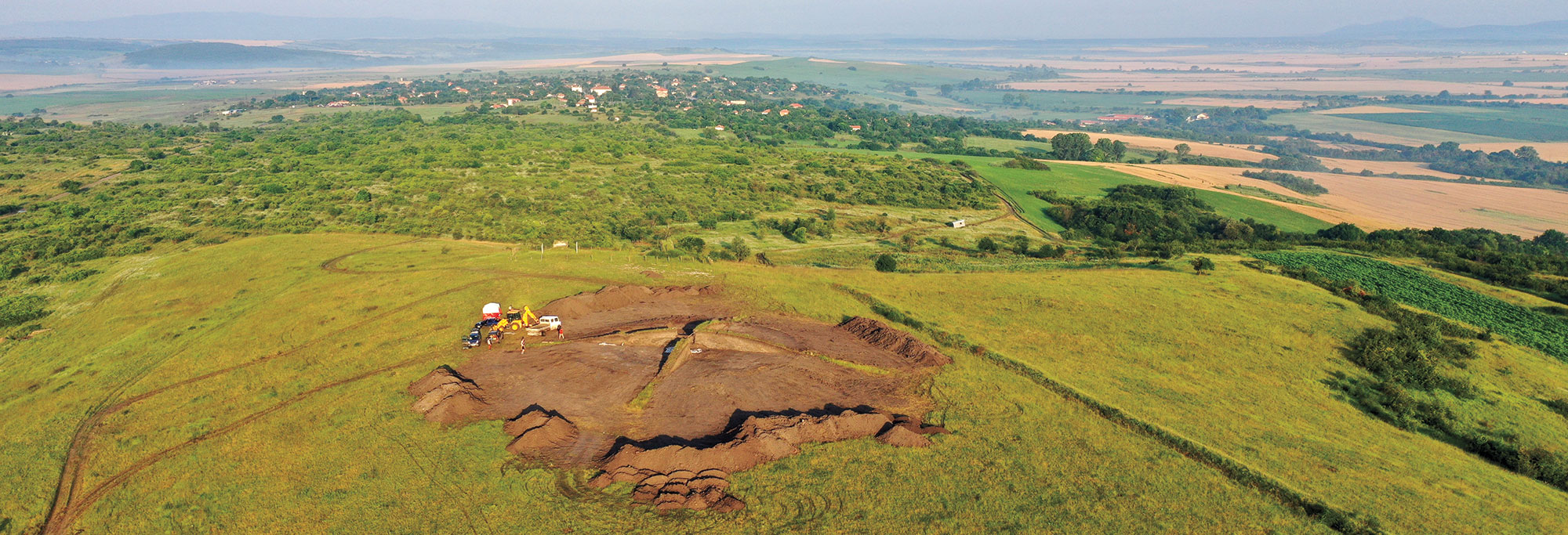
Eastern Ukraine and Southern Russia
Courtesy Michal Podsiadło
SHARE:

Ever since eighteenth-century scholars recognized that Latin, Greek, and Sanskrit all descended from a common language, researchers have been consumed with determining who first spoke this ancient tongue. Known as Proto-Indo-European, it is the common ancestor of all the languages that belong to the Indo-European language family, which include English, Hindi, Persian, and hundreds of others. Today, almost half the planet’s population speaks one of these languages. An early form of Proto-Indo-European also contributed to the language that eventually became Hittite, which was spoken in Anatolia during the Bronze Age (ca. 3000–1200 b.c.) and was the first language from the family to be written.

Archaeological, linguistic, and genetic evidence suggests that a nomadic Bronze Age culture called the Yamnaya, who built massive burial mounds known as kurgans in the steppe north of the Black Sea, spoke a form of Proto-Indo-European. Beginning around 3100 b.c., the Yamnaya migrated as far as Bulgaria and western Siberia, spreading their language with them. But their links to the Hittite speakers of Anatolia have long been mysterious, especially as previous genetic studies had established no links between the two cultures.

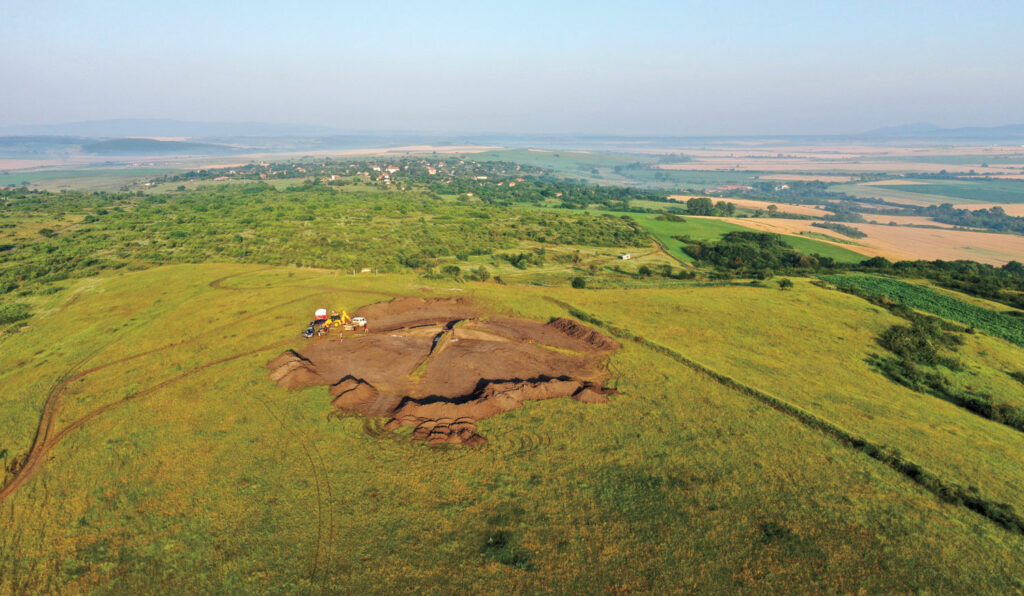
A new DNA study of more than 400 ancient people from eastern Ukraine and southern Russia shows that both the Yamnaya and ancestral Hittite speakers descended from an eclectic Eneolithic, or Copper Age (ca. 4500–3300 b.c.), population of steppe nomads and farmers from the north Caucasus. These people intermarried and buried their dead in small mounds reminiscent of later Yamnaya kurgans in an area around the Volga and Don Rivers from about 4400 to 3300 b.c. “This study resulted in a fire hose of data that we’ll be analyzing for years,” says archaeologist David W. Anthony of Hartwick College. “But we can now say that the earliest form of Proto-Indo-European was almost certainly spoken by these Eneolithic people.” Scholars still debate how ancestral Hittite speakers made their way from the steppe to Anatolia, but the new genetic data has helped refine the Yamnaya’s ancestry. It suggests that these Proto-Indo-European speakers, whose ancestors went on to spread their languages across Eurasia, originally descended from a small clan of perhaps just 2,000 people living in what is now eastern Ukraine.

MORE FROM Top 10 Discoveries of 2025

  • Top 10 Discoveries of 2025 January/February 2026

    Return of the King

    Caracol, Belize

    Read Article
    Courtesy of the Caracol Archaeological Project, University of Houston
  • Top 10 Discoveries of 2025 January/February 2026

    Crete's Inner Circles

    Papoura Mountain, Greece

    Read Article
    George Drakonakis/Ephorate of Antiquities of Heraklion
  • Features January/February 2026

    The Birds of Amarna

    An Egyptian princess seeks sanctuary in her private palace

    Read Article
    The Metropolitan Museum of Art, New York/ Rogers Fund, 1930
  • Features January/February 2026

    Taking the Measure of Mesoamerica

    Archaeologists decode the sacred mathematics embedded in an ancient city’s architecture

    Read Article
    Courtesy Claudia I. Alvarado-León
  • Features January/February 2026

    Stone Gods and Monsters

    3,000 years ago, an intoxicating new religion beckoned pilgrims to temples high in the Andes

    Read Article
    The ritual center of Chavín de Huántar flourished in northern Peru.
    Courtesy John Rick
  • Features January/February 2026

    Top 10 Discoveries of 2025

    ARCHAEOLOGY magazine’s editors reveal the year’s most exciting finds

    Read Article
    Courtesy of the Caracol Archaeological Project, University of Houston