

Bearded vultures are the avian world’s great accumulators, a species never burdened by the question “Does it spark joy?” They reuse their nests for hundreds of years, building up and repairing their aeries with bric-a-brac scavenged from the ground. Still, researchers investigating 12 nests in rock shelters in southern Spain were surprised at how much stuff the birds had tucked away—including items nearly 700 years old. “When artifacts of human origin began to appear in our visits to old nests, we decided to collaborate with archaeologists,” says ecologist Antoni Margalida of Spain’s Institute for Game and Wildlife Research.
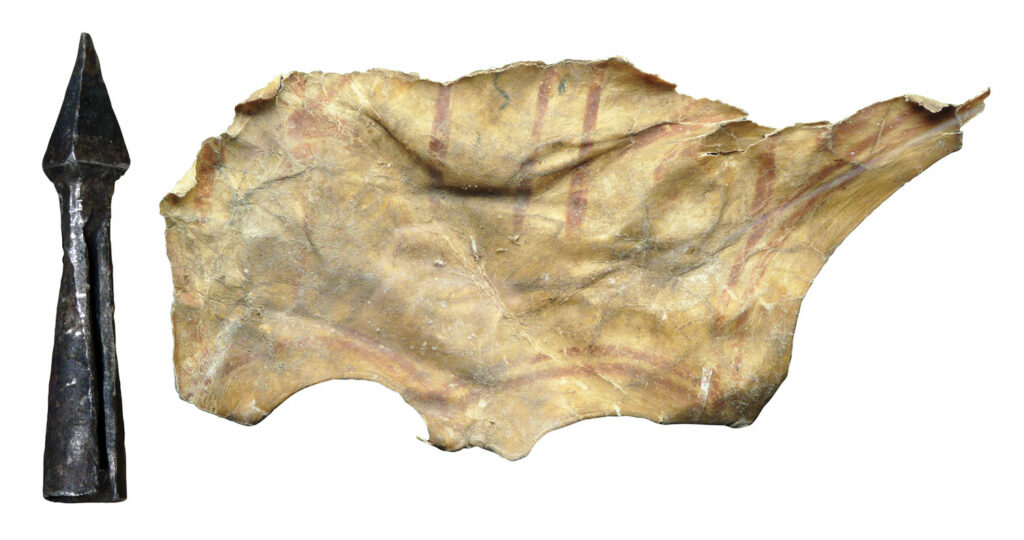
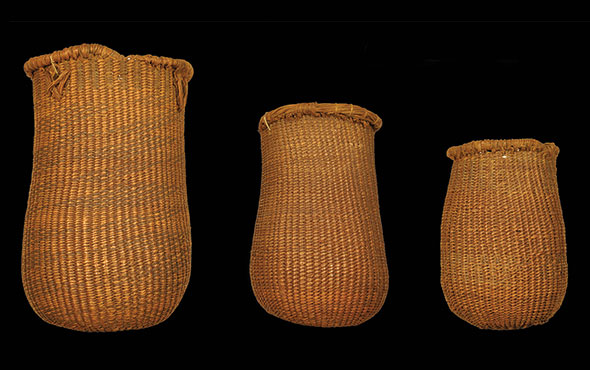
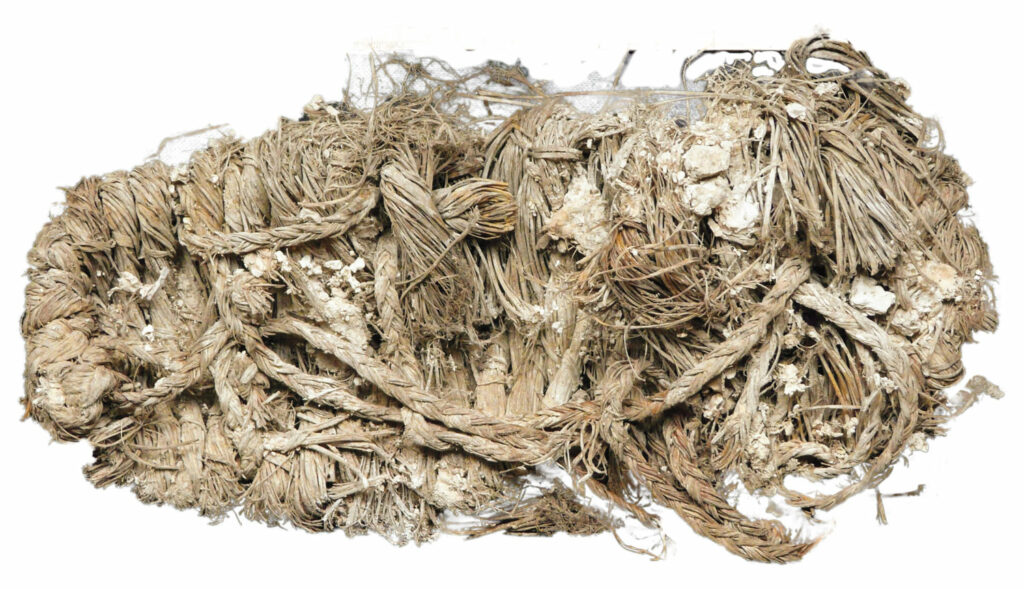
Bearded vultures are among Europe’s most endangered birds and went extinct in southern Spain between 70 and 130 years ago, but their nests have survived in high-altitude cave environments. In the 12 nests, Margalida’s team identified stratigraphy containing 226 odds and ends that have been radiocarbon dated to between the fourteenth and nineteenth centuries. The birds’ finds include a complete 674-year-old grass sandal and a near-contemporaneous piece of sheep leather marked with red pigment. Margalida was particularly intrigued by a crossbow bolt, probably medieval, that he thinks a vulture inadvertently scavenged while picking up an animal that had been killed by a hunter. The vultures used scraps of footwear and clothing to build their nests, or to protect their homes while incubating their young. “The cave conditions enabled the preservation of these materials,” says Margalida, “similar to a museum.”