The Cost of Doing Business

Features January/February 2026

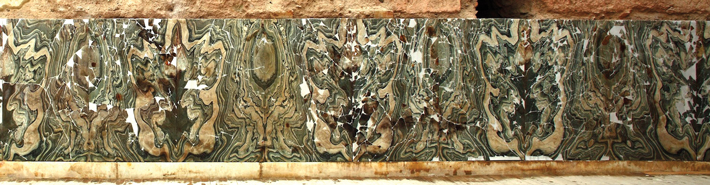
Piecing together the Roman empire’s longest known inscription—a peculiarly precise inventory of prices
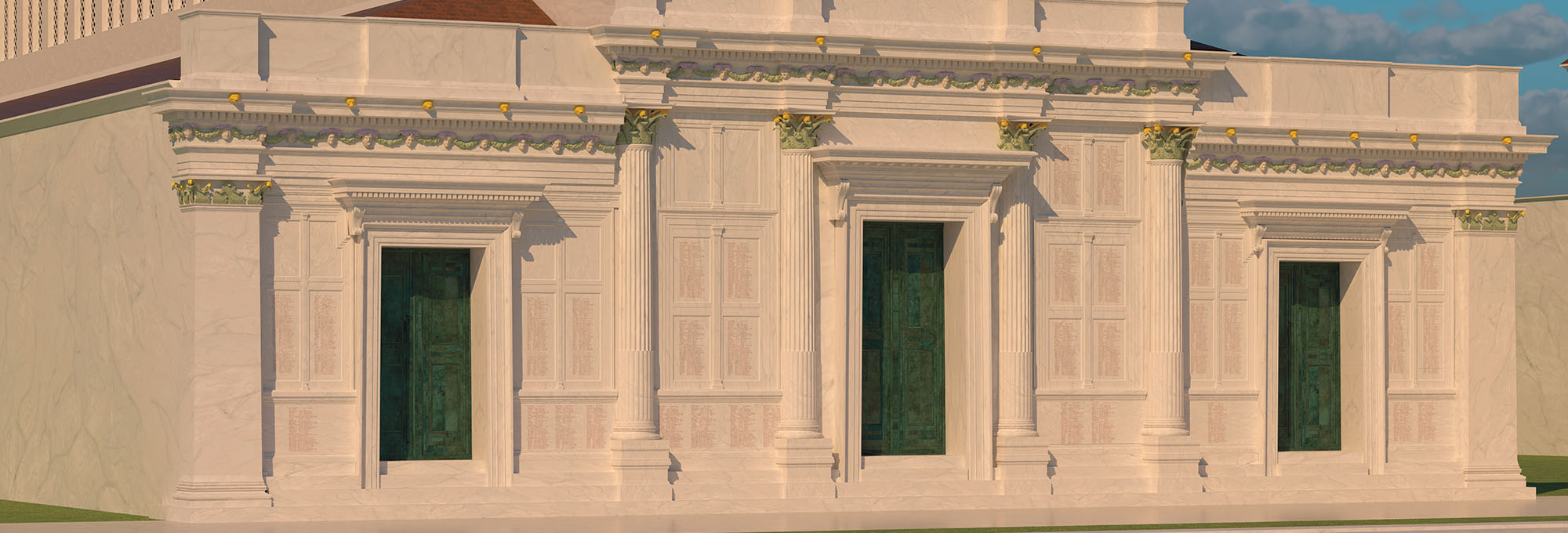
A digital reconstruction shows how the Civil Basilica in the city of Aphrodisias in southwestern Anatolia would have appeared with the Edict of Maximum Prices inscribed on its facade.
Ece Savaş and Philip Stinson
SHARE:

Upheaval and uncertainty swirled around the splendid cities of the Roman Empire at the end of the third century a.d. When a new emperor, Diocletian, took the throne in a.d. 284, he set about righting a system in shambles. By a.d. 301, Diocletian had redrawn the map of the empire’s provinces and refashioned the emperorship as a four-person job, a tetrarchy. From Britannia to Armenia, the tetrarchs’ forces had beaten back usurpers to the throne, bellicose border tribes, and rival empires alike
Become a Digital Subscriber Today

Get full access to all content on the ARCHAEOLOGY website and our PDF archive going back to the first publication in March 1948.

Already a Subscriber? Sign In

  • Features January/February 2026

    Taking the Measure of Mesoamerica

    Archaeologists decode the sacred mathematics embedded in an ancient city’s architecture

    Read Article
    Courtesy Claudia I. Alvarado-León
  • Features January/February 2026

    Stone Gods and Monsters

    3,000 years ago, an intoxicating new religion beckoned pilgrims to temples high in the Andes

    Read Article
    The ritual center of Chavín de Huántar flourished in northern Peru.
    Courtesy John Rick
  • Features January/February 2026

    Top 10 Discoveries of 2025

    ARCHAEOLOGY magazine’s editors reveal the year’s most exciting finds

    Read Article
    Courtesy of the Caracol Archaeological Project, University of Houston
  • Letter from France January/February 2026

    Neolithic Cultural Revolution

    How farmers came together to build Europe’s most grandiose funerary monuments some 7,000 years ago

    Read Article
    © Laurent Juhel, Inrap