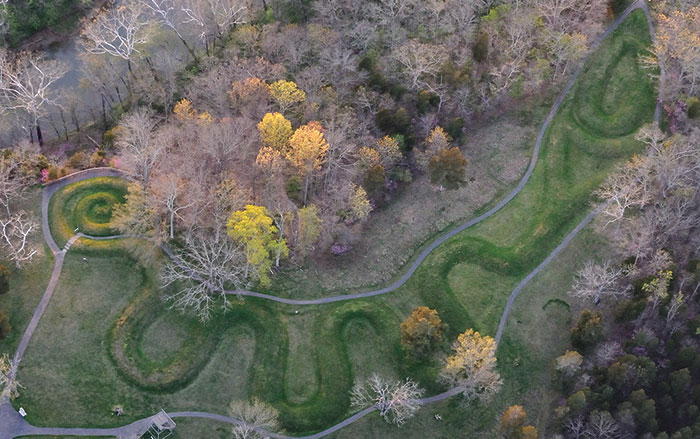
OREGONIA, OHIO—Several years ago, remote sensing equipment revealed three concentric circles once made of large wooden posts in an area now known as the North Fort at Ohio’s Fort Ancient Earthworks. Called the Moorehead Circle, the posts may have been three separate structures built over time, or they may represent one structure supported by all three rings. This year’s excavations, conducted by Robert Riordan of Wright State University, have shown that the entrance to the Moorehead Circle was paved with limestone slabs, and a pit at its center was filled with red earth. Pieces of broken pottery, perhaps from a feast or ceremony, were found around the edges of the pit. Traces of what may have been bleacher seating were also uncovered.
Ohio's 2,000-Year-Old Hopewell Earthworks
News December 28, 2012
Recommended Articles
Off the Grid January/February 2026
Prophetstown, Indiana
Letter from France January/February 2026
Neolithic Cultural Revolution
How farmers came together to build Europe’s most grandiose funerary monuments some 7,000 years ago
Features January/February 2026
The Cost of Doing Business
Piecing together the Roman empire’s longest known inscription—a peculiarly precise inventory of prices
Features January/February 2026
The Birds of Amarna
An Egyptian princess seeks sanctuary in her private palace
-
Features November/December 2012
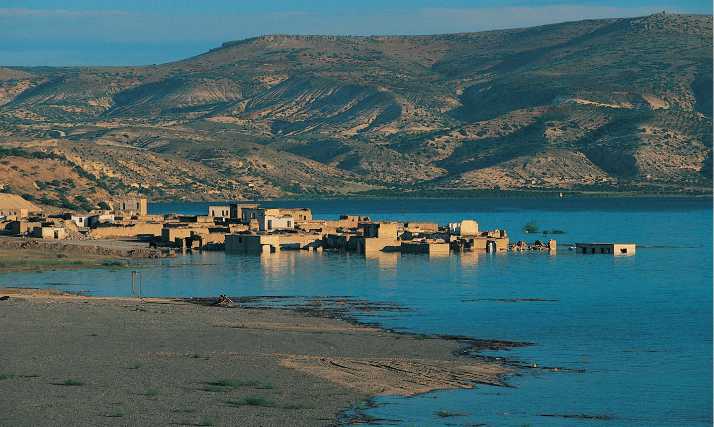
Zeugma After the Flood
New excavations continue to tell the story of an ancient city at the crossroads between east and west
(Hasan Yelken/Images & Stories) -
Letter from India November/December 2012
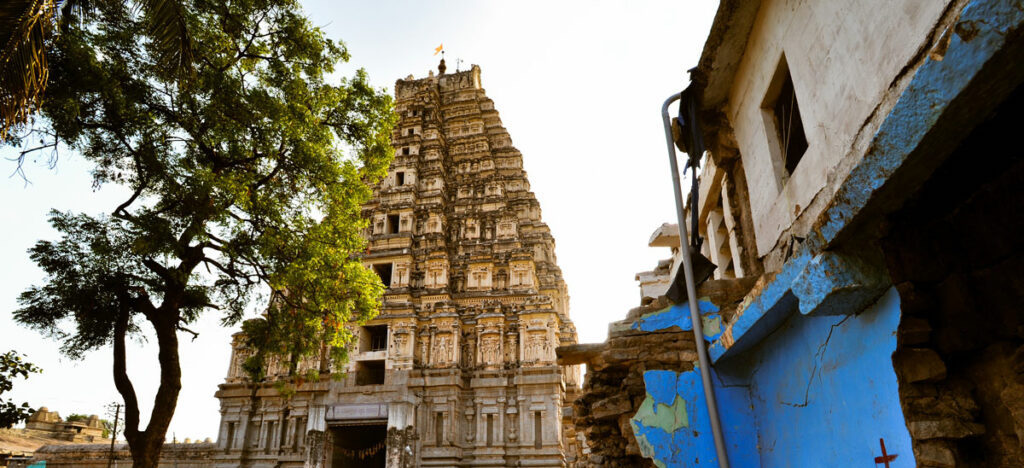
Living Heritage at Risk
Searching for a new approach to development, tourism, and local needs at the grand medieval city of Hampi
(Gethin Chamberlain) -
Artifacts November/December 2012
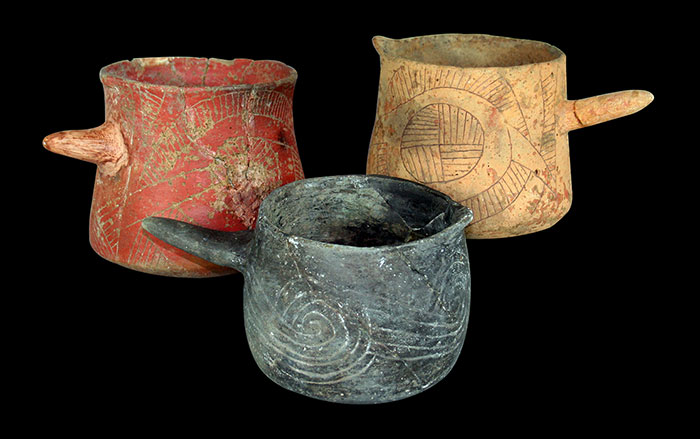
Beaker Vessels
Ceramic beakers were the vessels of choice for the so-called “Black Drink” used at Cahokia by Native Americans in their purification rituals
(Linda Alexander, photographer, use with permission of the Illinois State Archaeological Society) -
Digs & Discoveries November/December 2012
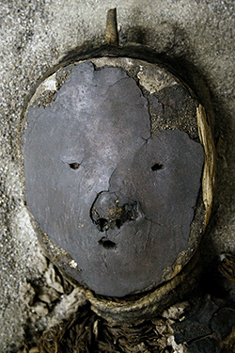
The Desert and the Dead
(Courtesy Bernardo Arriaza)