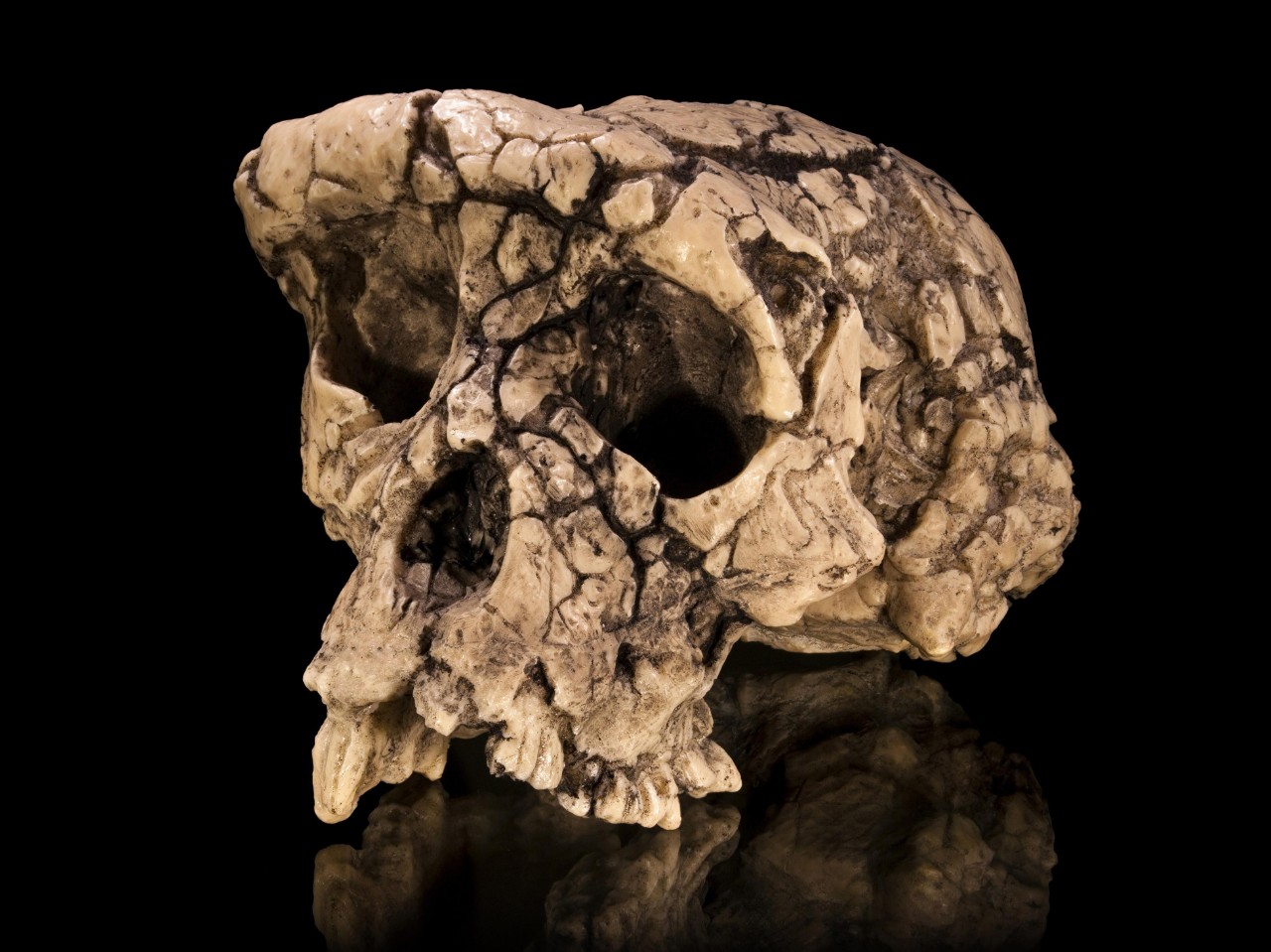
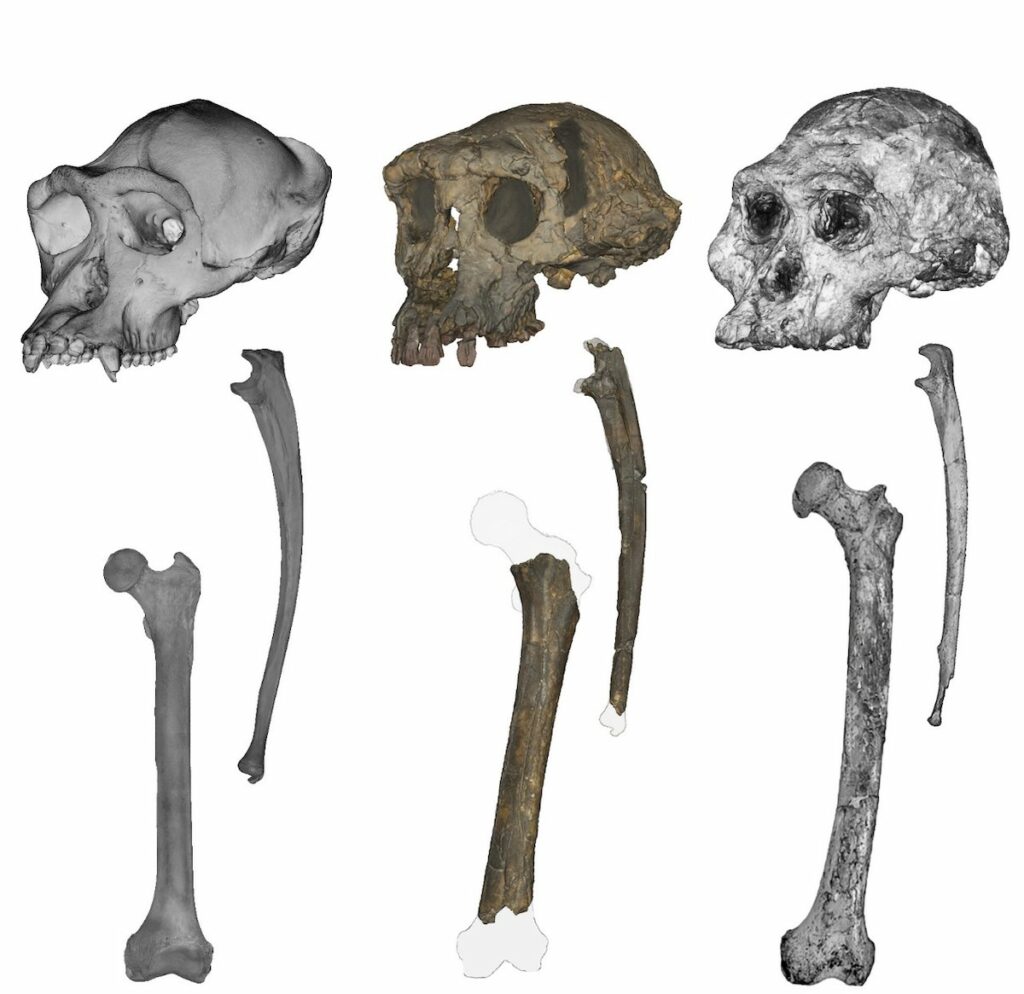
NEW YORK, NEW YORK—A new study of seven-million-year-old Sahelanthropus tchadensis fossils employing 3D imagery suggests that the species was capable of walking upright, according to a statement released by New York University. The fossils were discovered in Chad some 20 years ago. Previous study of these remains found that Sahelanthropus had a small brain and an ape-like appearance. However, Scott Williams of New York University and his colleagues recently identified a femoral tubercle, the attachment point for a ligament that connects the pelvis and femur in hominins, on a Sahelanthropus femur. The Sahelanthropus femur also exhibits a twist understood to help orient the legs for walking. Sahelanthropus likely had gluteal muscles similar to those of early hominins as well. The researchers also determined that the Sahelanthropus ulna, an arm bone, was relatively short when compared to the femur—a proportion associated with bipedal walking. “Our analysis of these fossils offers direct evidence that Sahelanthropus tchadensis could walk on two legs, demonstrating that bipedalism evolved early in our lineage and from an ancestor that looked most similar to today’s chimpanzees and bonobos,” Williams concluded. To read more about the development of bipedalism in hominins, go to "The Human Mosaic."