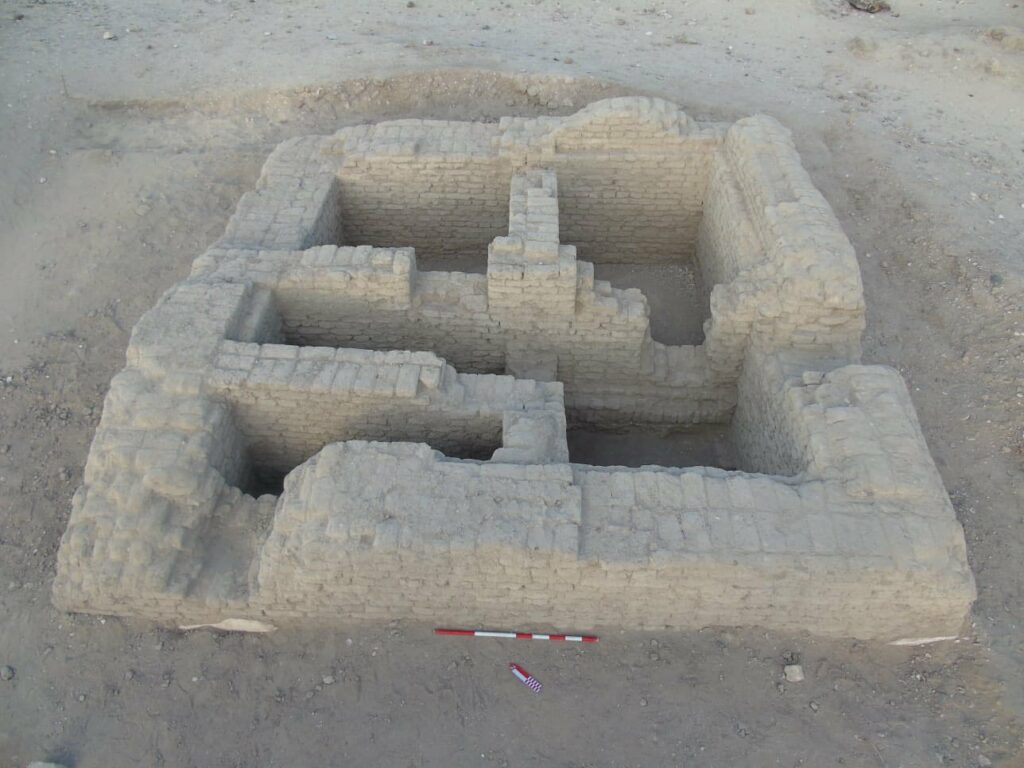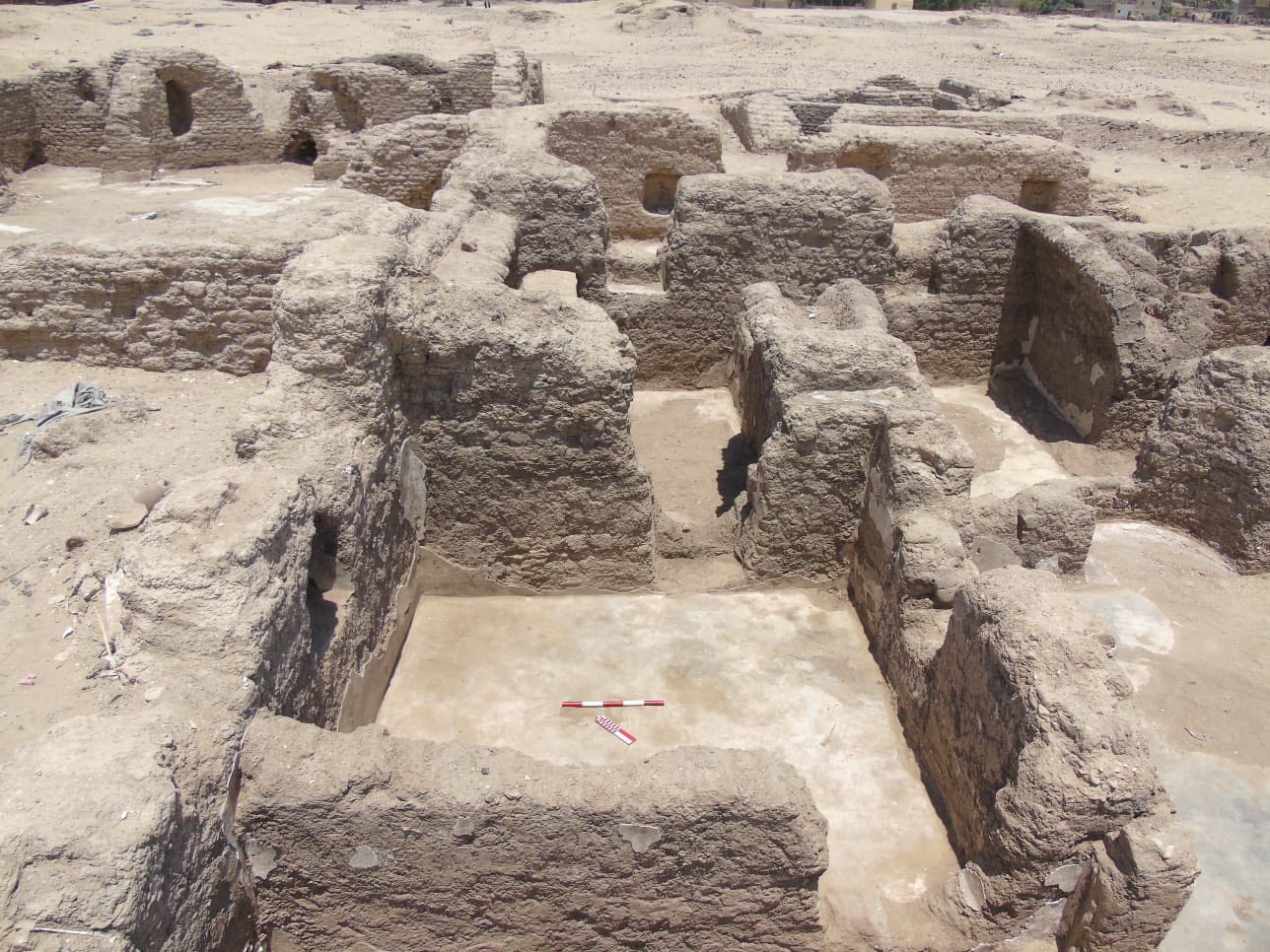
SOHAG, EGYPT—Ahram Online reports that the foundations of buildings in a monastic complex dated to the fifth or sixth century A.D. have been unearthed at the site of Al-Qarya bi-Al-Duweir in Upper Egypt. Mohamed Ismail Khaled of Egypt’s Supreme Council of Antiquities said that the largest structure at the site measured about 45 feet long by 33 feet wide, and is thought to have been used as the Christian monastery’s main church. It features a nave with traces of mudbrick pillars to support a central dome, choir, and a semicircular sanctuary flanked by two side chambers. The site’s other mudbrick buildings were oriented west to east, and ranged in size from about 26 feet long and 23 feet wide to about 45 feet long and 26 feet wide. Some of these buildings had courtyards to the south, and apses or niches set into their walls. Traces of plaster remain on the walls and in the niches. The floors were also finished with several layers of plaster. Circular structures in the buildings may have been used as communal dining tables. The excavation also uncovered basins made of red brick and limestone coated with red plaster. These structures are thought to have held water, although they may have also been used in industrial activities. To read about the world's oldest monastery in Egypt's Sinai Peninsula, go to "Recovering Hidden Texts."