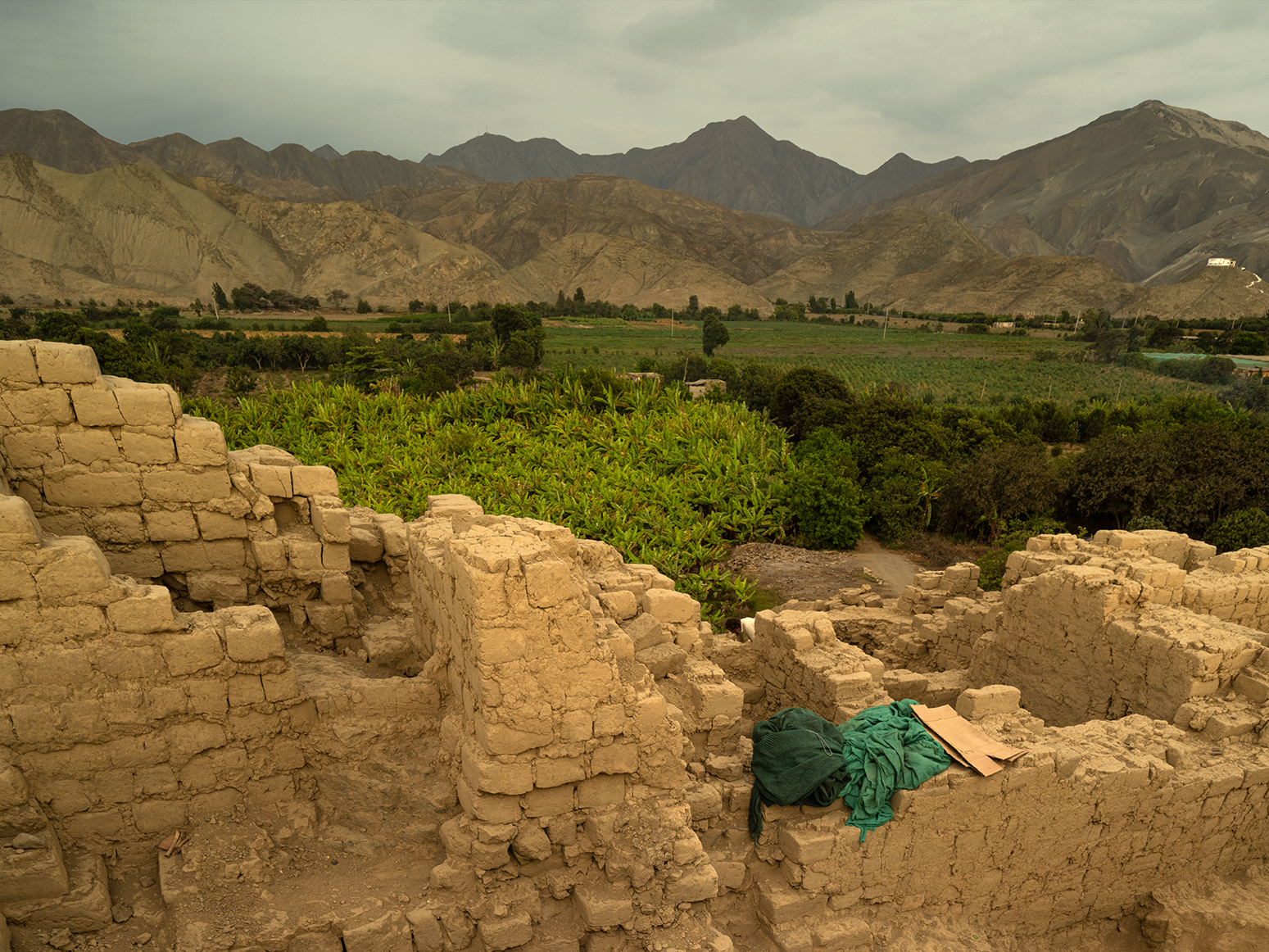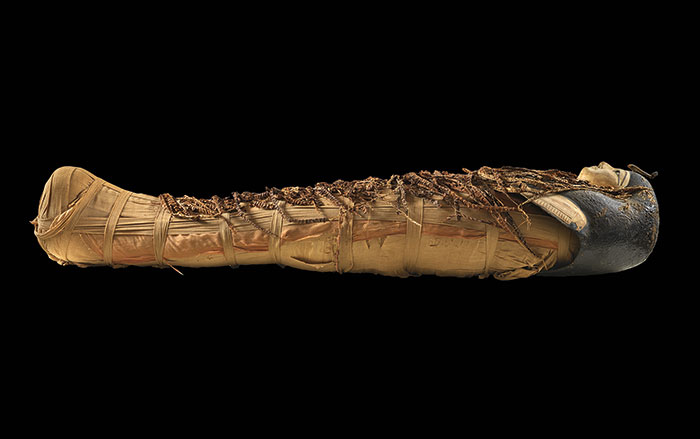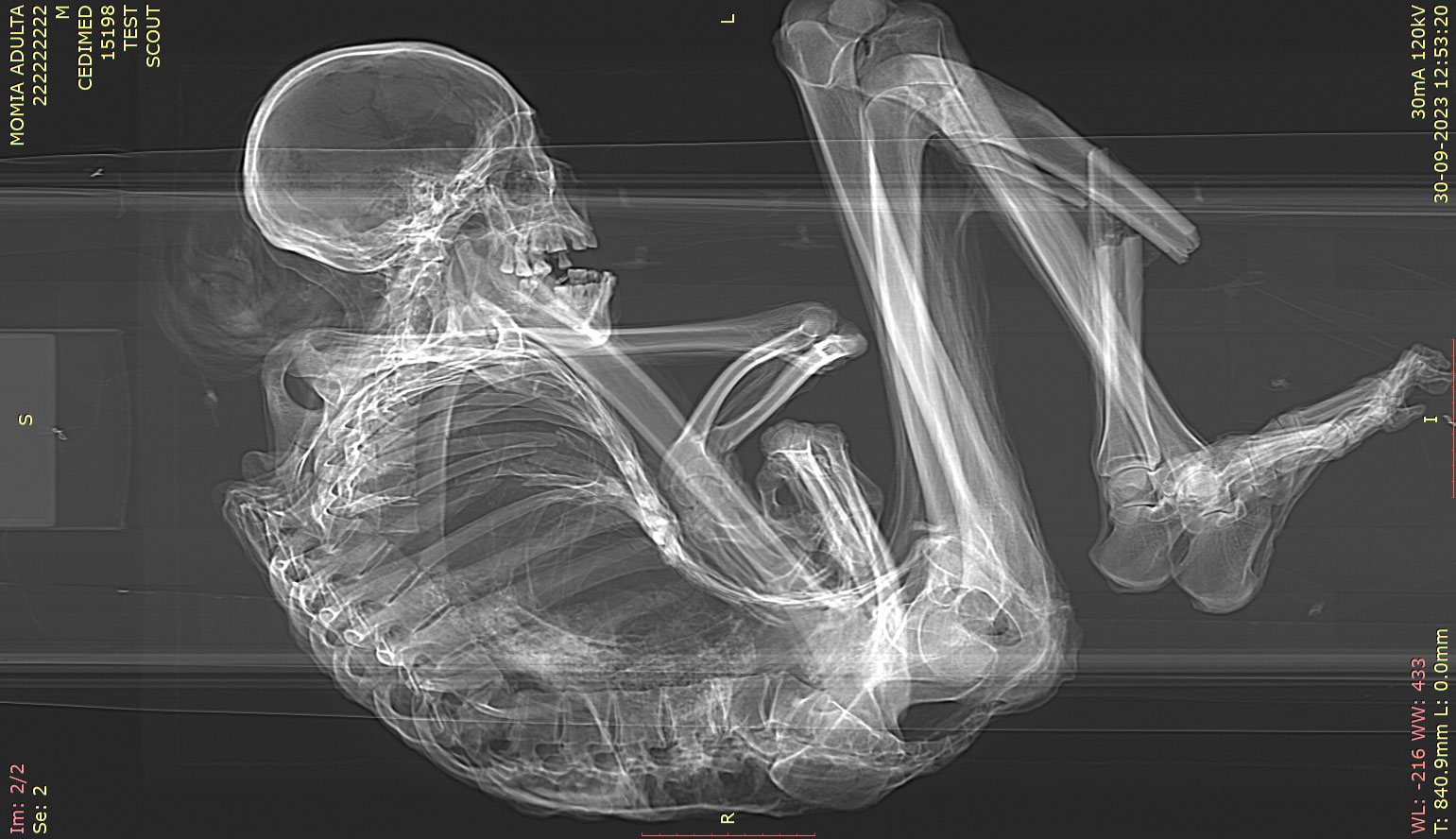
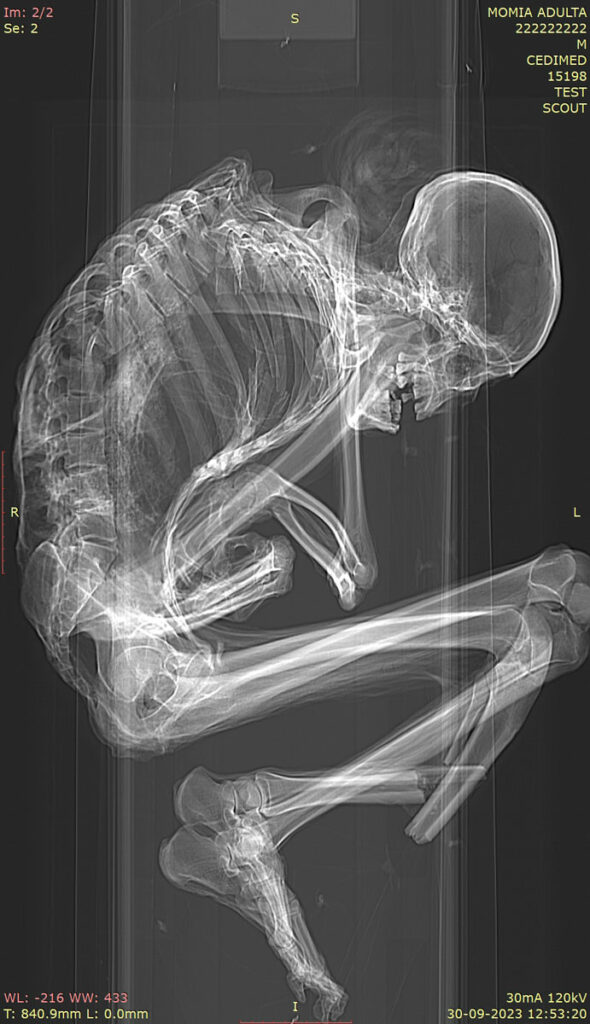
SANTIAGO, CHILE—Live Science reports that Catalina Morales and Francisco Garrido of Chile’s National Museum of Natural History examined the 1,100-year-old remains of a man unearthed in the Atacama Desert. At the time of the discovery in the 1970s, it was noted that the man’s lower left leg was broken, and that he had likely been involved in an accident in a nearby turquoise mine. The new study suggests that the man was between the ages of 25 and 40 at the time of death, sometime between A.D. 894 and 1016. X-rays and CT scans of the mummy show that he had suffered extensive trauma, likely caused by a rockfall or collapse in the mine. The injuries included fractures in the upper spine and displaced vertebrae; shoulder blade and collarbone fractures; and rib fractures and a collapsed rib cage. Such injuries are typically associated with severe spinal cord damage, the researchers explained. He was likely in a head-down position when the accident occurred, since there were no injuries found in his skull, neck, or arms. This suggests that he may have been mining—using a stone hammer to extract turquoise from the rock—or may have covered his head with his arms to protect himself from falling rocks. To read about the preservation of the region's mummified individuals, go to "Atacama's Decaying Mummies."