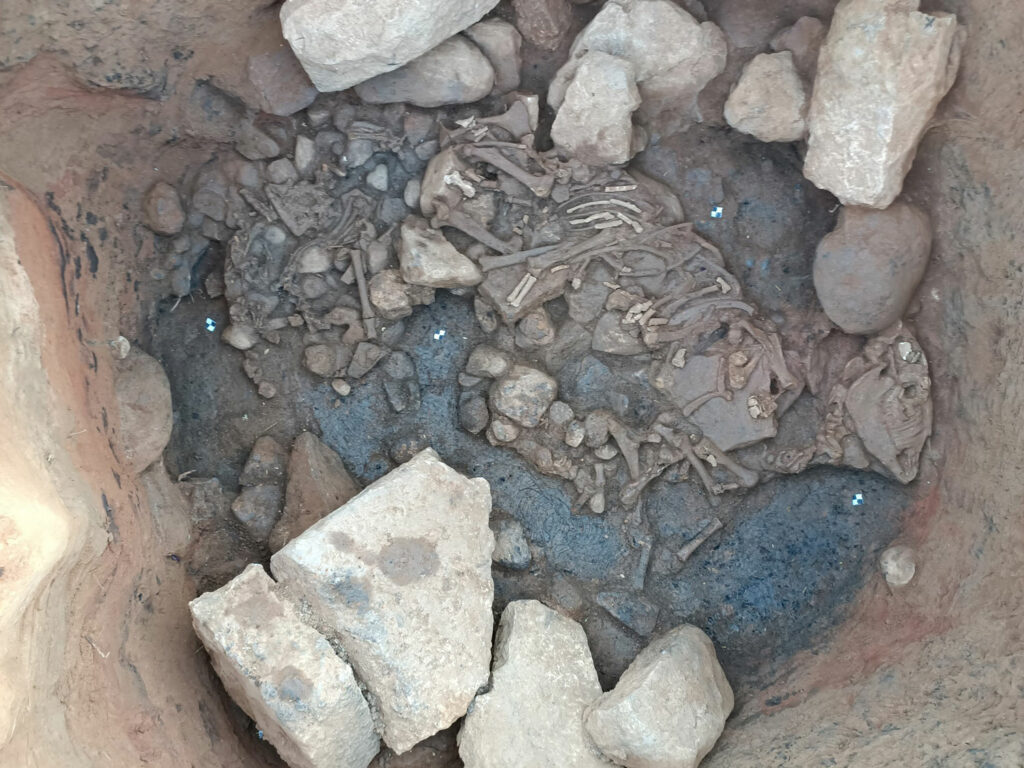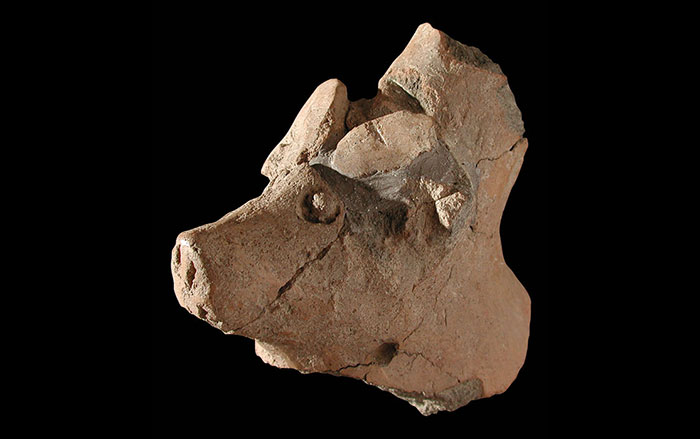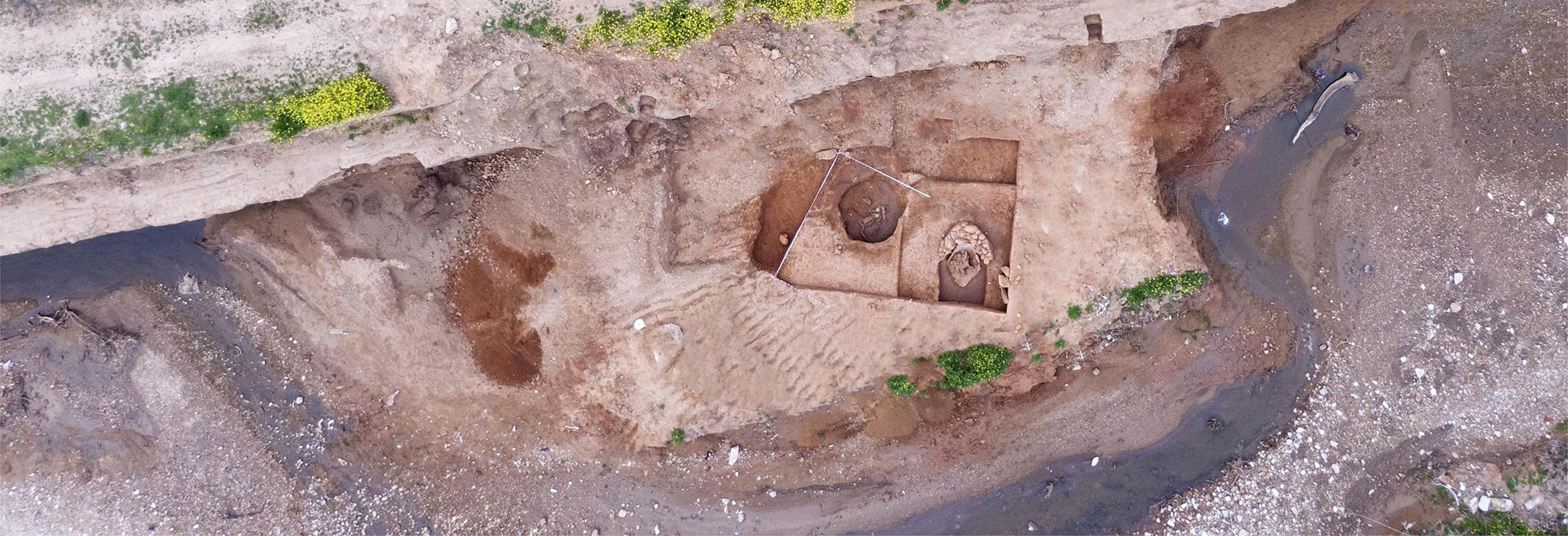
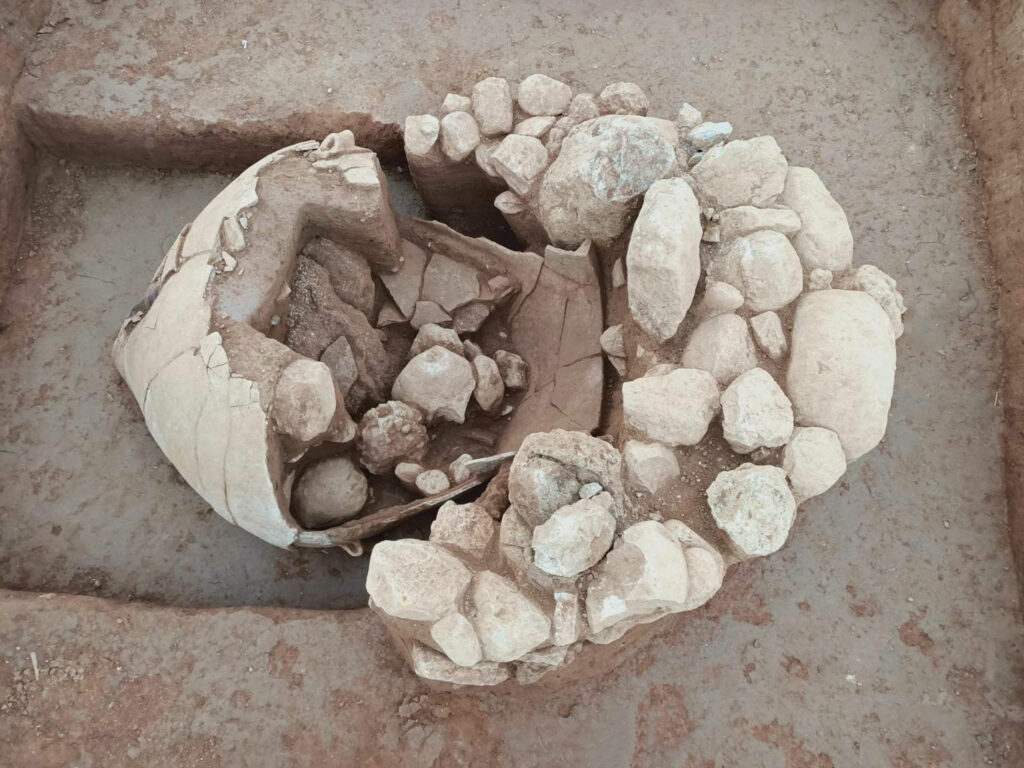
RAFINA, GREECE—La Brújula Verde reports that a Bronze Age burial and a large circular pit were uncovered on the banks of a stream in eastern Attica. Researchers from Greece’s Ephorate of Antiquities of Eastern Attica found a pithos measuring nearly six feet long in the tomb. The jar features corded relief decorations around its neck and handles, which had been placed horizontally on its belly. The mouth of the vessel was sealed with a simulated door made of two large stones and smaller slabs that was then covered with a semicircular wall made of river pebbles. Resting on sand and pebbles within the jar, the researchers found the bones of two people that had been covered with large stones. A copper awl, an ovoid stone thought to have served as a plaque, obsidian points, and ceramic vessels were also found in the burial. Some six feet away, the excavators discovered a large circular pit bearing traces of fire and long ritual use. The skull of a bull, ceramics, and copper coins were recovered from the upper layers of the pit. Near the bottom, a layer of ash and burned materials, the bones of an equid, and the bones of smaller animals were found. The animal bones are thought to be cremains, or the remains of animals that had been cooked as sacrifices. Dating of the burial and the contents of the pit could help researchers determine if the two are linked. For more on the archaeology of Attica, go to "Regime Change in Athens," one of ARCHAEOLOGY's Top 10 Discoveries of 2016.