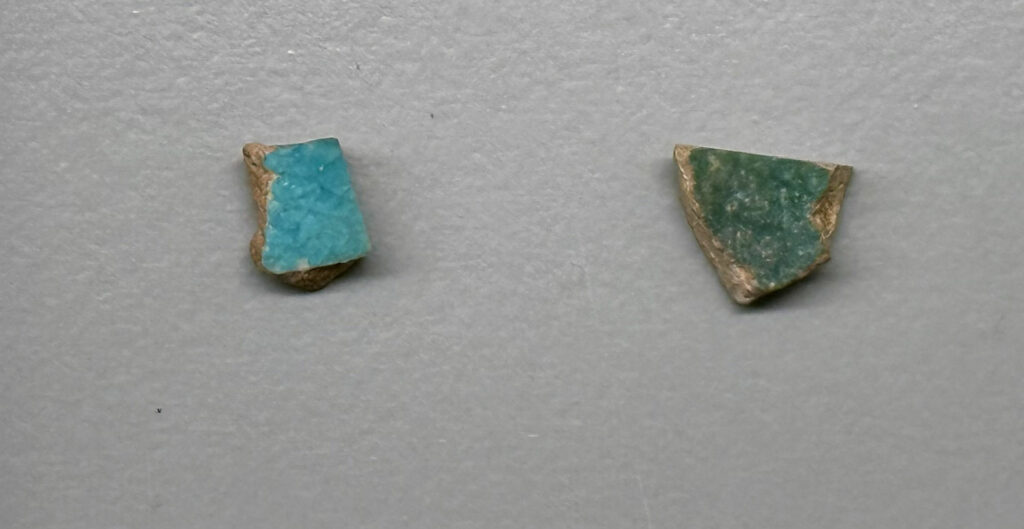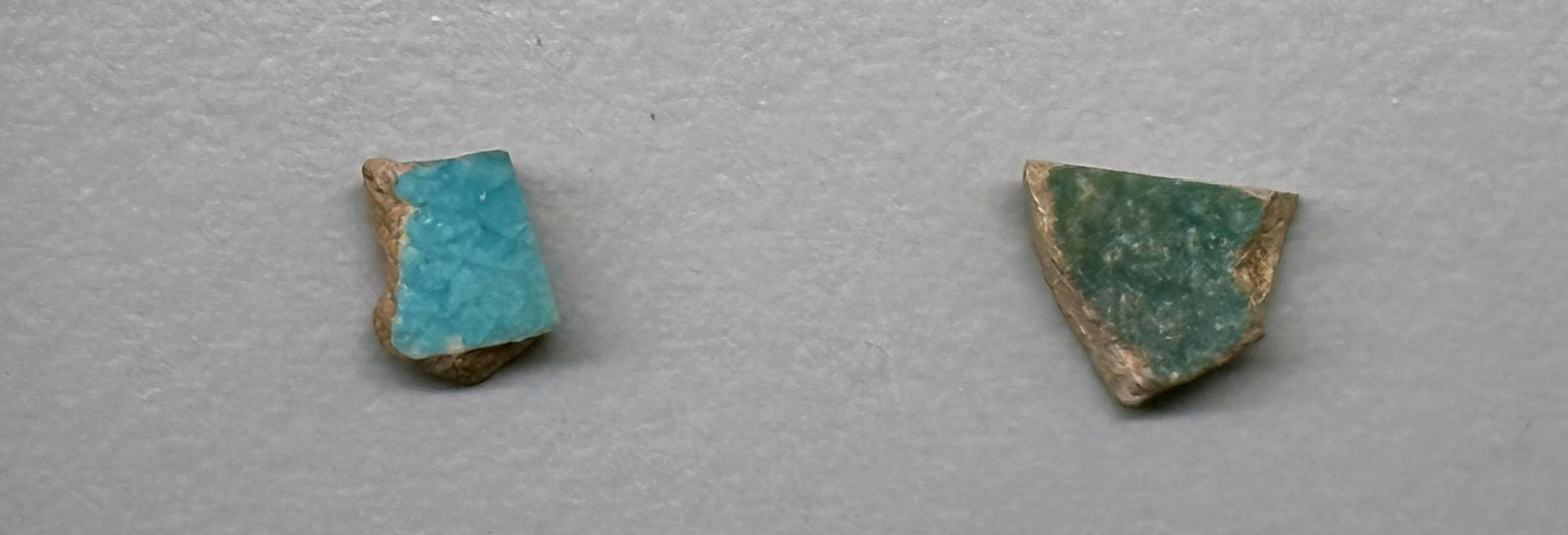
NEW HAVEN, CONNECTICUT—An international team of scientists has determined that two pieces of medieval blue-green glazed ceramic recovered in 2016 from seasonal herding camp sites in southeastern Mongolia were imported from the Persian Empire, according to a Phys.org report. The camps were discovered in the Gobi Desert during a study of nomadic communities dating back to the Early Bronze Age. These two small pieces of turquoise pottery, recovered from two nomad camps, were analyzed with electron microscopy with energy-dispersive X-ray spectrometry and portable X-ray fluorescence at Yale University. The results of these tests were then compared with the composition of medieval pottery from Persia and China. The glaze on the samples, which date to between the tenth and fourteenth centuries A.D., was found to be consistent with glazes from Persia. Higher levels of sodium oxide, and lower levels of aluminum oxide and lime, reflect the use of soda and pure silica sand. This type of pottery had been previously thought to have been reserved as gifts for the Mongol elite. The Persian glazed vessels are now thought to have traveled along the Silk Road to Mongolia, and then on to nomadic herding camps through trade fairs or marketplaces. “Probably for future research the most important thing is that we now know about this phenomenon of Persian links, and we and others cannot only keep an eye out for more such glaze-ware sherds but also keep in mind that there might be much less obvious indicators of these far-flung connections that should be watched for and scrutinized,” concluded team leader Ellery Frahm of Yale University. To read about evidence for the capital of an independent state within the Mongol Empire, go to "Searching for Lost Cities: Palaces of the Golden Horde."