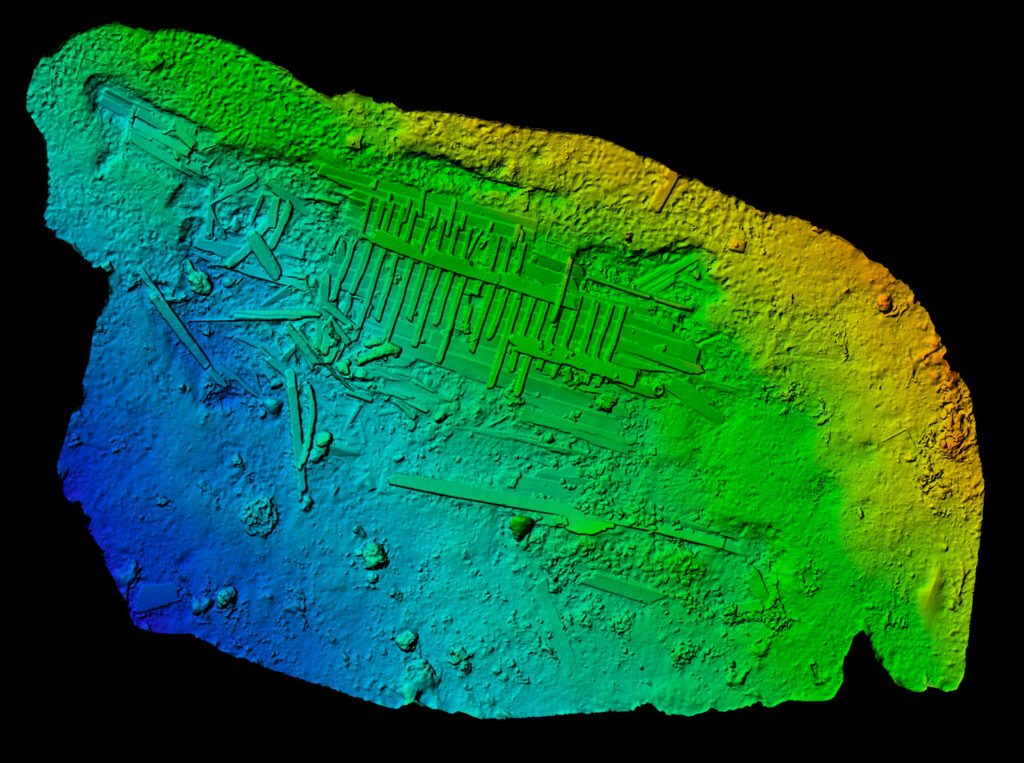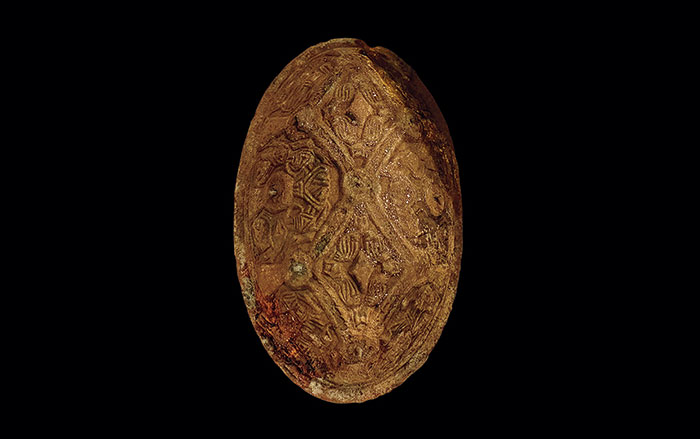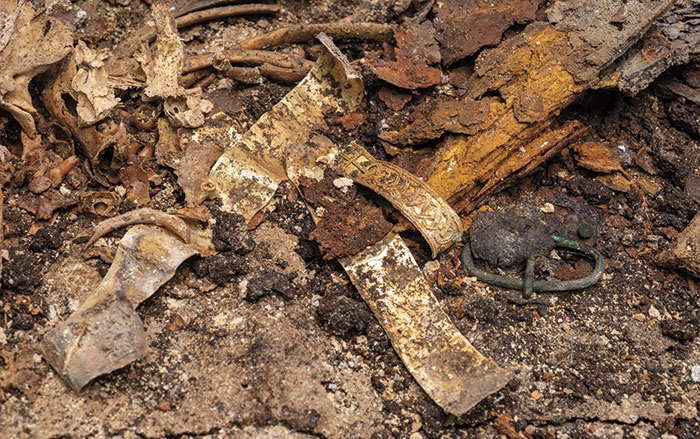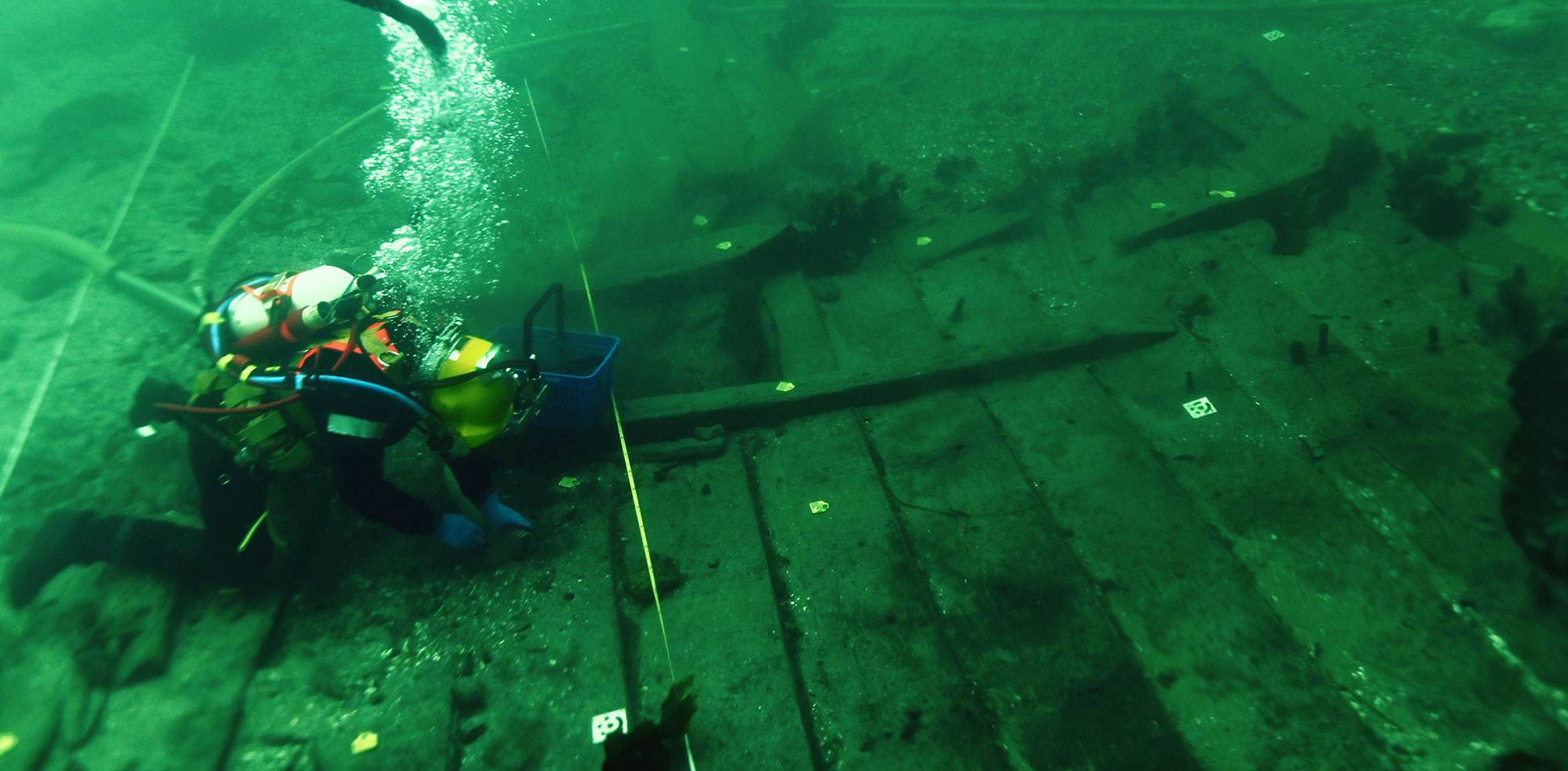
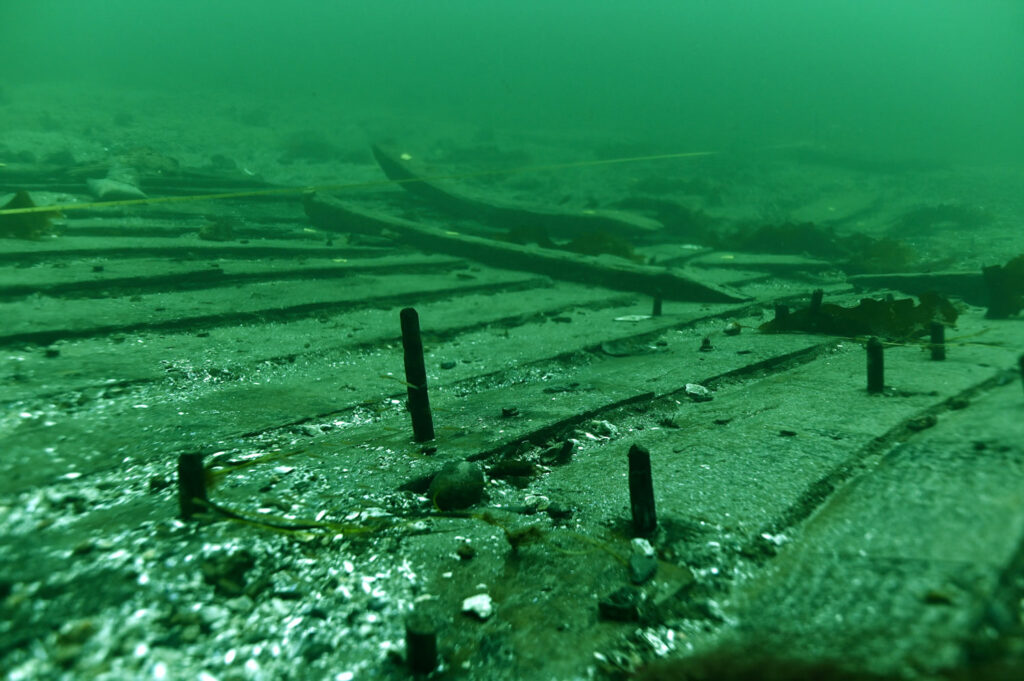
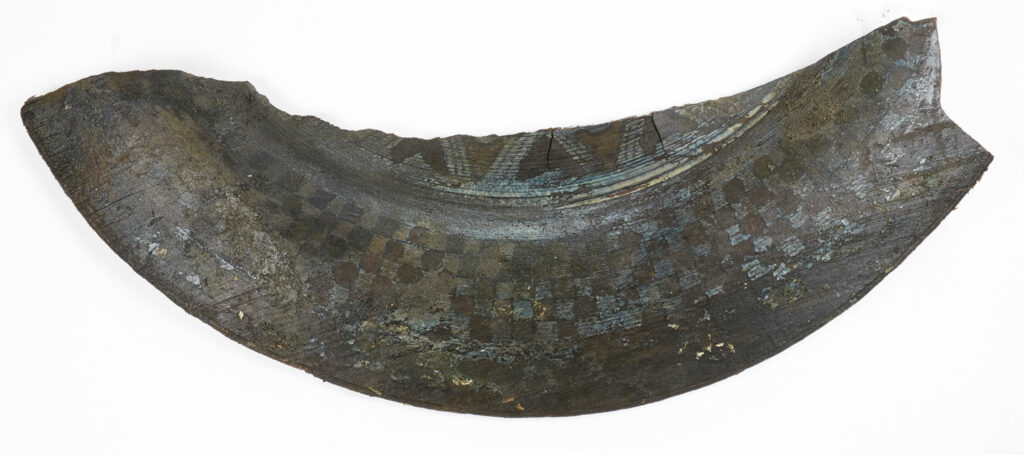
COPENHAGEN, DENMARK—According to an IFL Science report, a medieval shipwreck has been discovered in the strait between Denmark and Sweden by a team of marine archaeologists led by Otto Uldum of Copenhagen’s Viking Ship Museum. The shipwreck is located in the waterway connecting the Baltic Sea to the Atlantic Ocean—an important medieval trade route. The wreckage has been identified as a cog, a cargo ship featuring a single mast and a single square sail, measuring about 90 feet long, 30 feet wide, and 20 feet tall. “It is the largest cog we know of, and it gives us a unique opportunity to understand both the construction and life on board the biggest trading ships of the Middle Ages,” Uldum said. Tree-ring analysis of the ship’s timbers shows that it was constructed around A.D. 1410, with oak planks from what is now Poland. The ship’s “ribs” were made with wood from the Netherlands. The defensive high castle structure on this vessel has also been preserved. “We have plenty of drawings of castles, but they have never been found because usually only the bottom of the ship [usually] survives,” Uldum explained. Shoes, combs, rosary beads, bronze cooking pots, tableware, painted wooden bowls, and traces of fish and meat recovered from the site offer clues to life on board the vessel. To read about the cargo of a seventeenth-century shipwreck recovered off a Dutch island, go to "An Elegant Enigma."