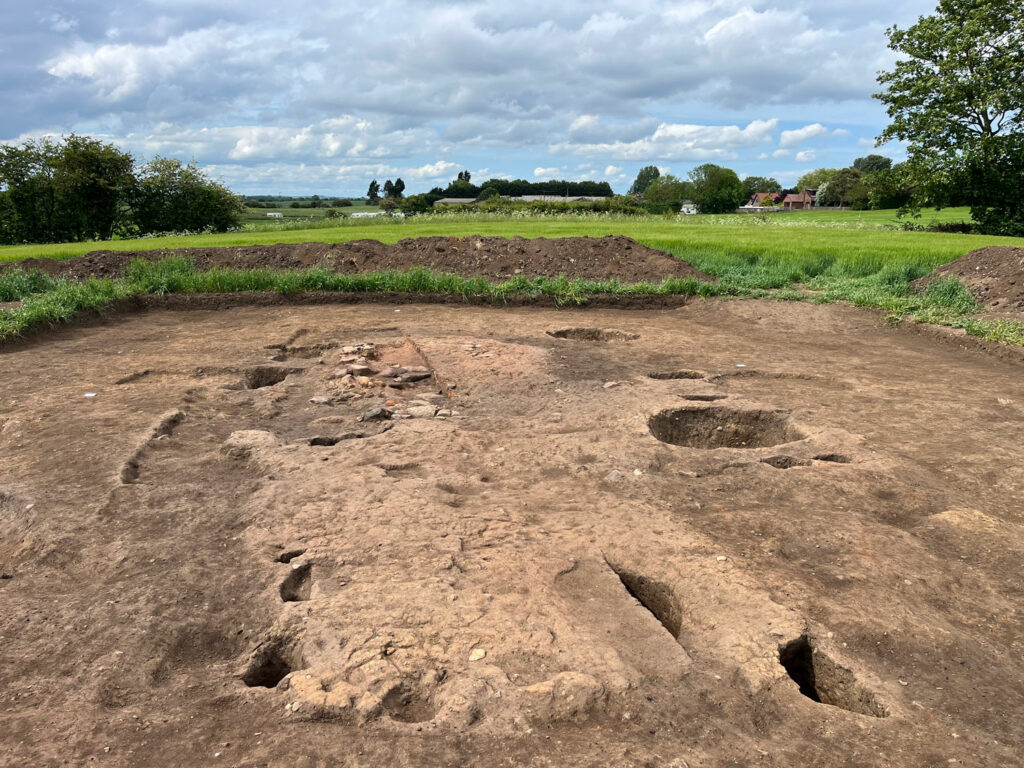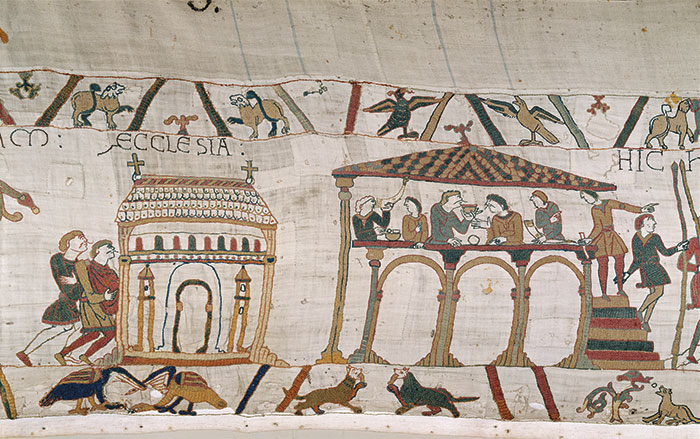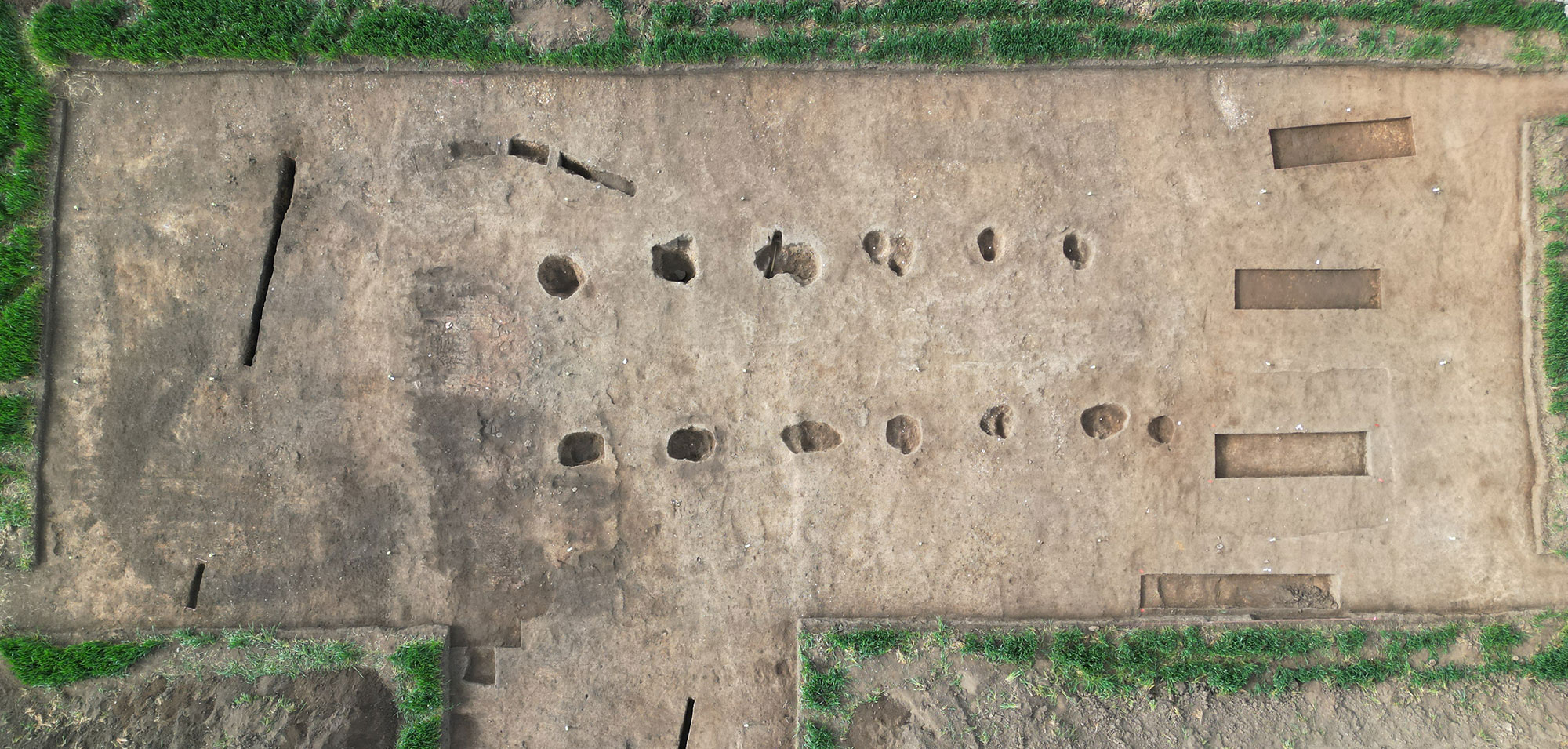
EAST YORKSHIRE, ENGLAND—According to a statement released by the University of York, an excavation in northern England near the site of Skipsea Castle, built by the Normans around A.D. 1086 on an Iron Age mound, has uncovered traces of high-status Anglo-Saxon buildings such as a possible malthouse, a timber tower, and a feasting hall. The malthouse, dated to between A.D. 750 and 850, was timber-framed with wattle-and-daub walls, a clay floor, and a drying oven. The surviving cellar of the wooden tower is square and lined with timber and mortar. The tower may have been used as a watchtower, a bell tower, or part of a church. The feasting hall, found above the remains of the malthouse, was surrounded by a defensive ditch. “We know the area later belonged to the last Anglo-Saxon king of England, Harold Godwinson, before becoming the estate center of the Lords of Holderness after the Norman Conquest,” said Jim Leary of the University of York. “Although we have not yet found any evidence that Harold Godwinson ever visited Skipsea, our discoveries fit with a landscape shaped by power and wealth in the late Anglo-Saxon period,” he explained. To read about evidence on the Bayeux Tapestry for the location of Harold's home, go to "The King's Throne."