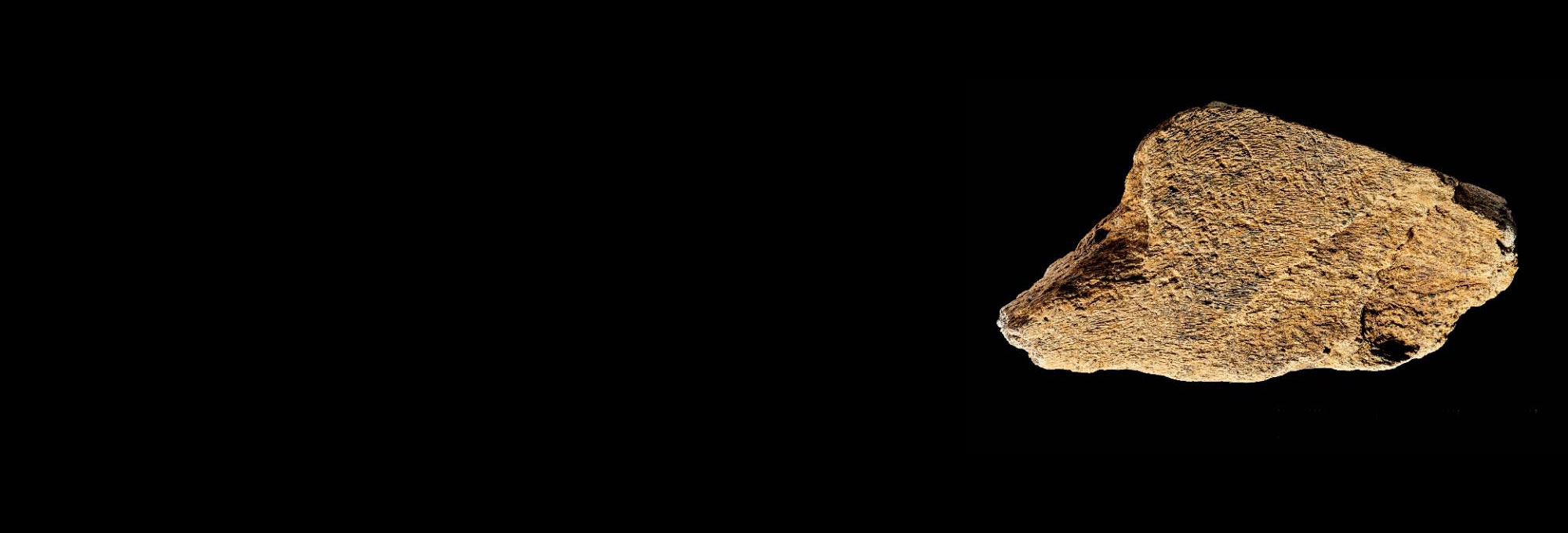
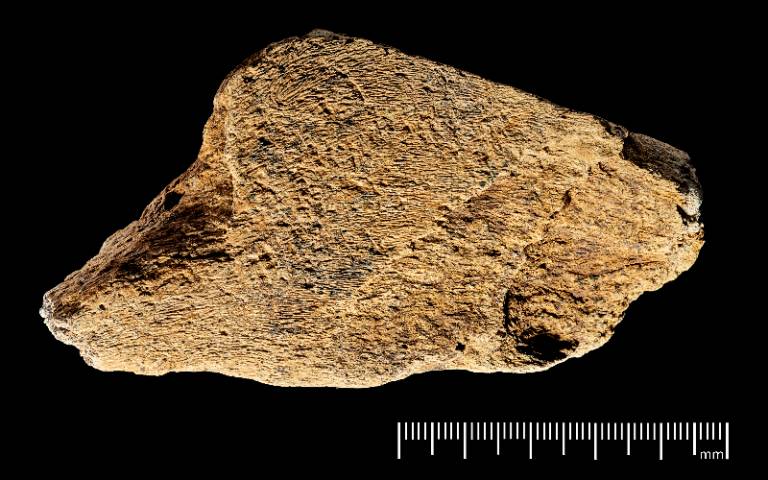
LONDON, ENGLAND—According to a statement released by University College London, a team of researchers led by Simon Parfitt of University College London and London’s Natural History Museum reviewed materials unearthed at the Boxgrove Paleolithic site in southern England in 1990. Among the artifacts, the scientists identified a 500,000-year-old tool made of elephant or mammoth bone. The outer layer of elephant bone would have been softer than stone, and yet harder than the bones of other animals. “Elephant bone would have been a rare but highly useful resource, and it’s likely this tool was of considerable value,” Parfitt said. The age of the hammer suggests that it was made and used by either Neanderthals or members of Homo heidelbergensis. Examination with 3D scanning methods and electron microscopes revealed notches and impact marks in the bone. Fragments of flint were detected in some of these notches. The researchers conclude that the elephant bone tool had been used as a “retoucher” to sharpen stone tools and restore their shape after use. Read the original scholarly article about this research in Science Advances. To read about 1.5-million-year-old elephant bone implements unearthed in Tanzania, go to "The Bone Toolkit."