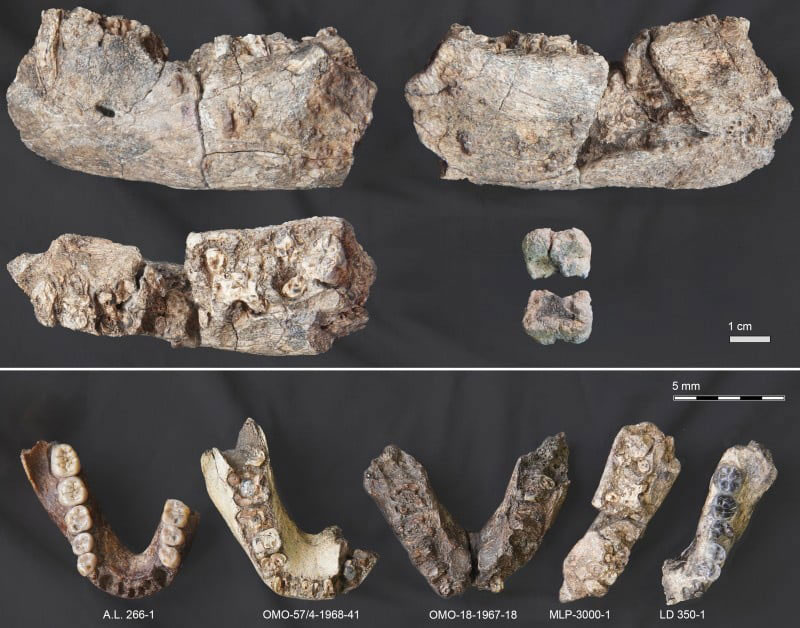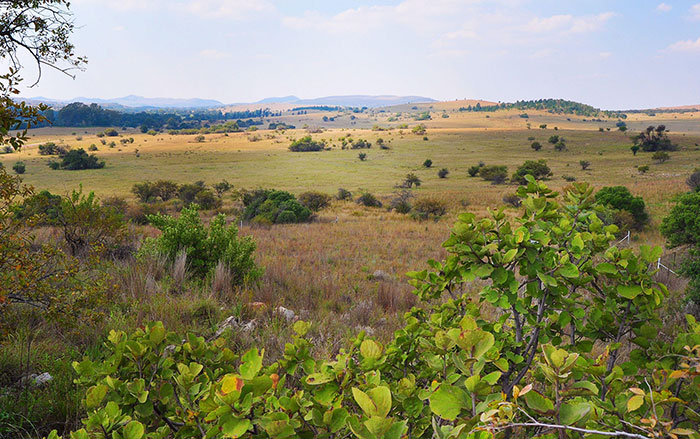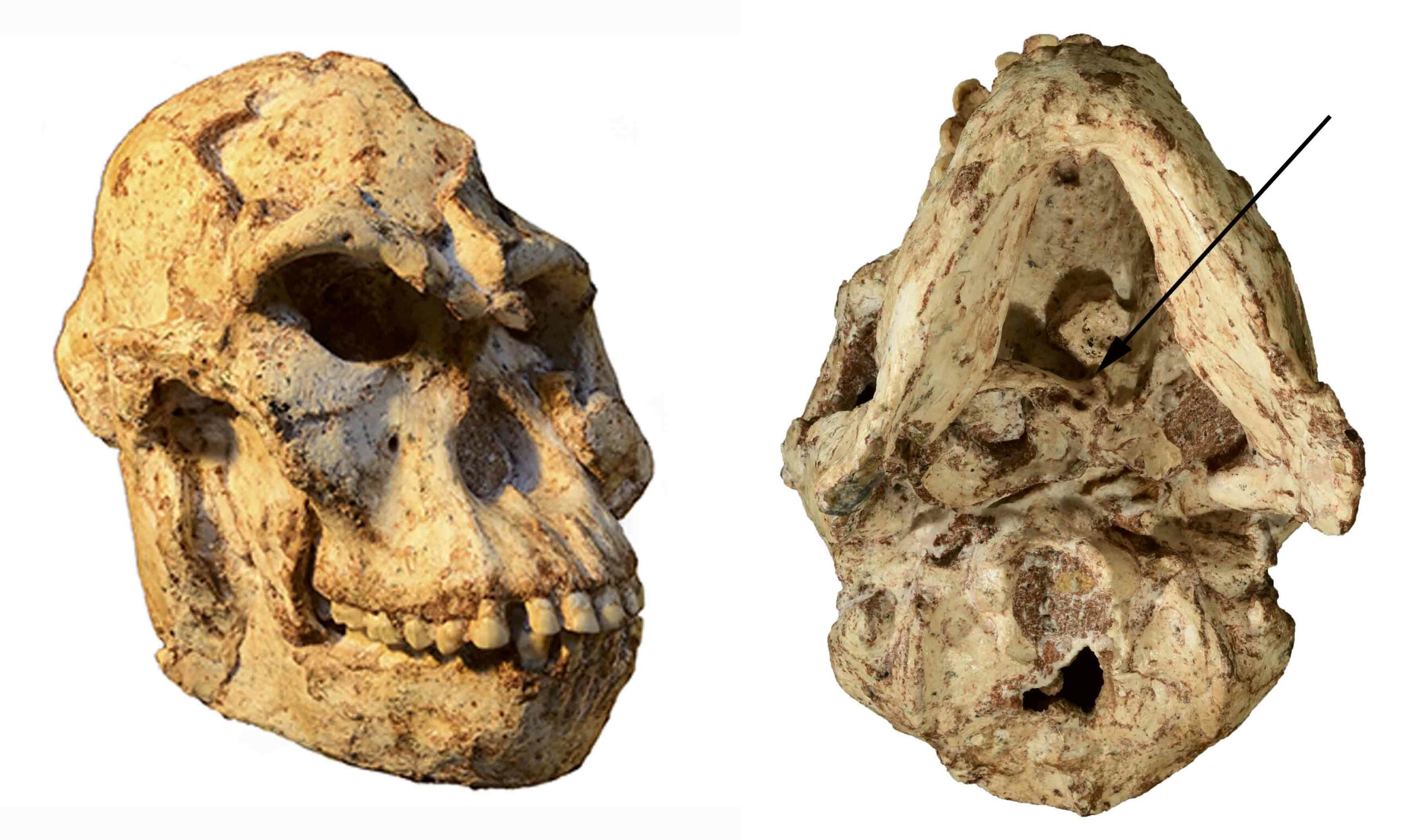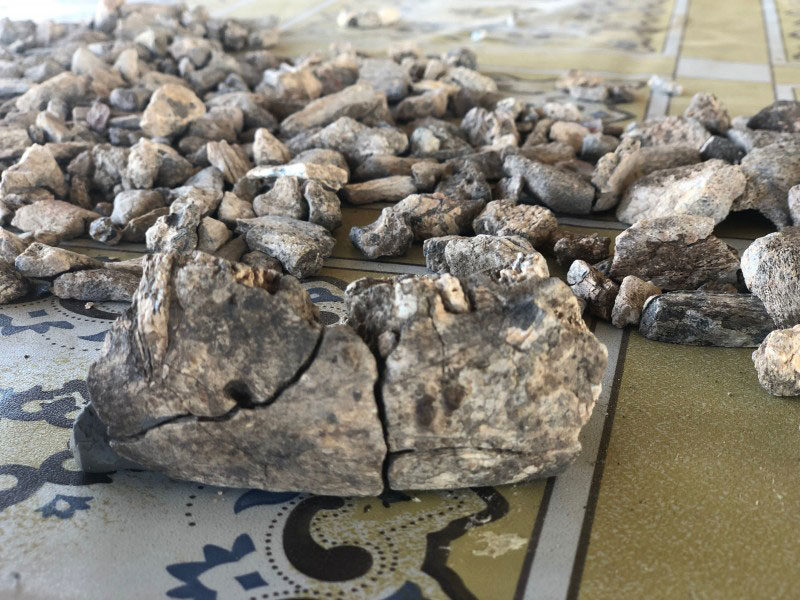
CHICAGO, ILLINOIS—Fragments of a 2.6-million-year-old Paranthropus jaw have been discovered in the Afar region of northeastern Ethiopia, about 620 miles farther north than other known Paranthropus remains, according to a Live Science report. As extinct human relatives, Paranthropus species, including P. robustus, P. boisei, and P. aethiopicus, were bipedal and had massive teeth and jaws, resulting in the nickname “Nutcracker Man.” However, the discovery of the jaw in the Afar region suggests that Paranthropus probably survived in diverse habitats and had a more flexible diet than had been previously thought. It could also indicate that Paranthropus encountered Australopithecus and Homo individuals living in the Afar region between 2.8 and 2.5 million years ago. “Discoveries like this really trigger interesting questions in terms of reviewing, revising, and then coming up with new hypotheses as to what the key differences were between the main hominin groups,” said paleoanthropologist Zeresenay Alemseged of the University of Chicago. To read about the best-preserved Paranthropus robustus fossil, go to "Consider the Craniums."