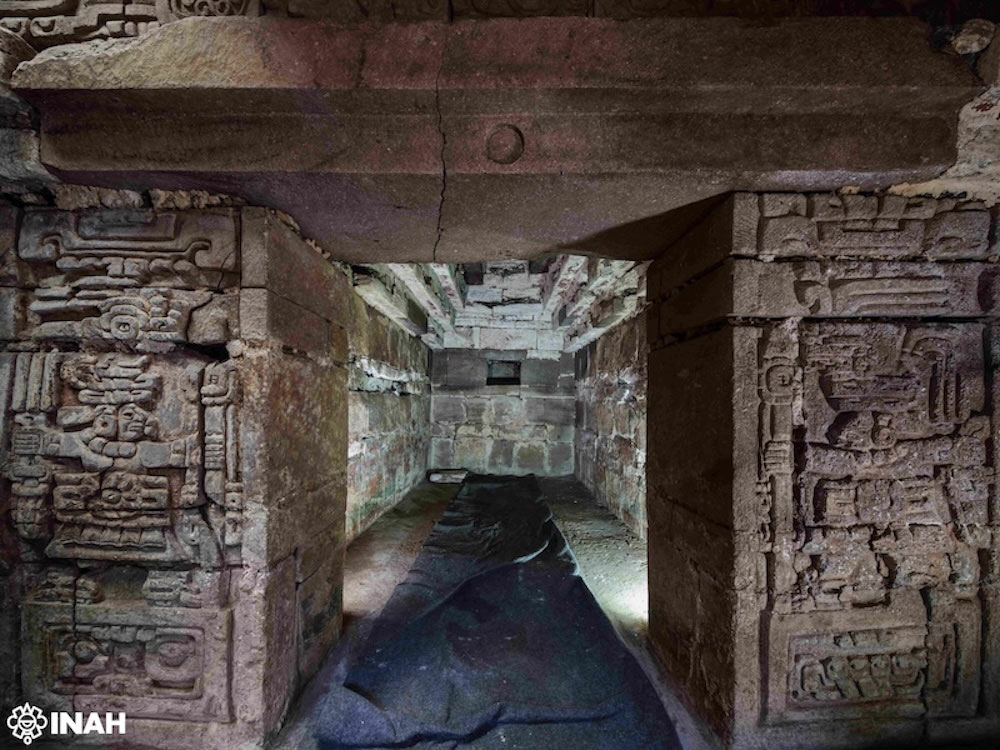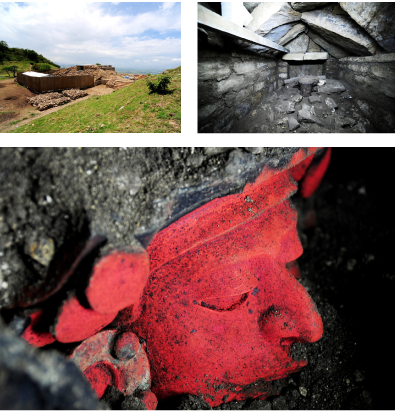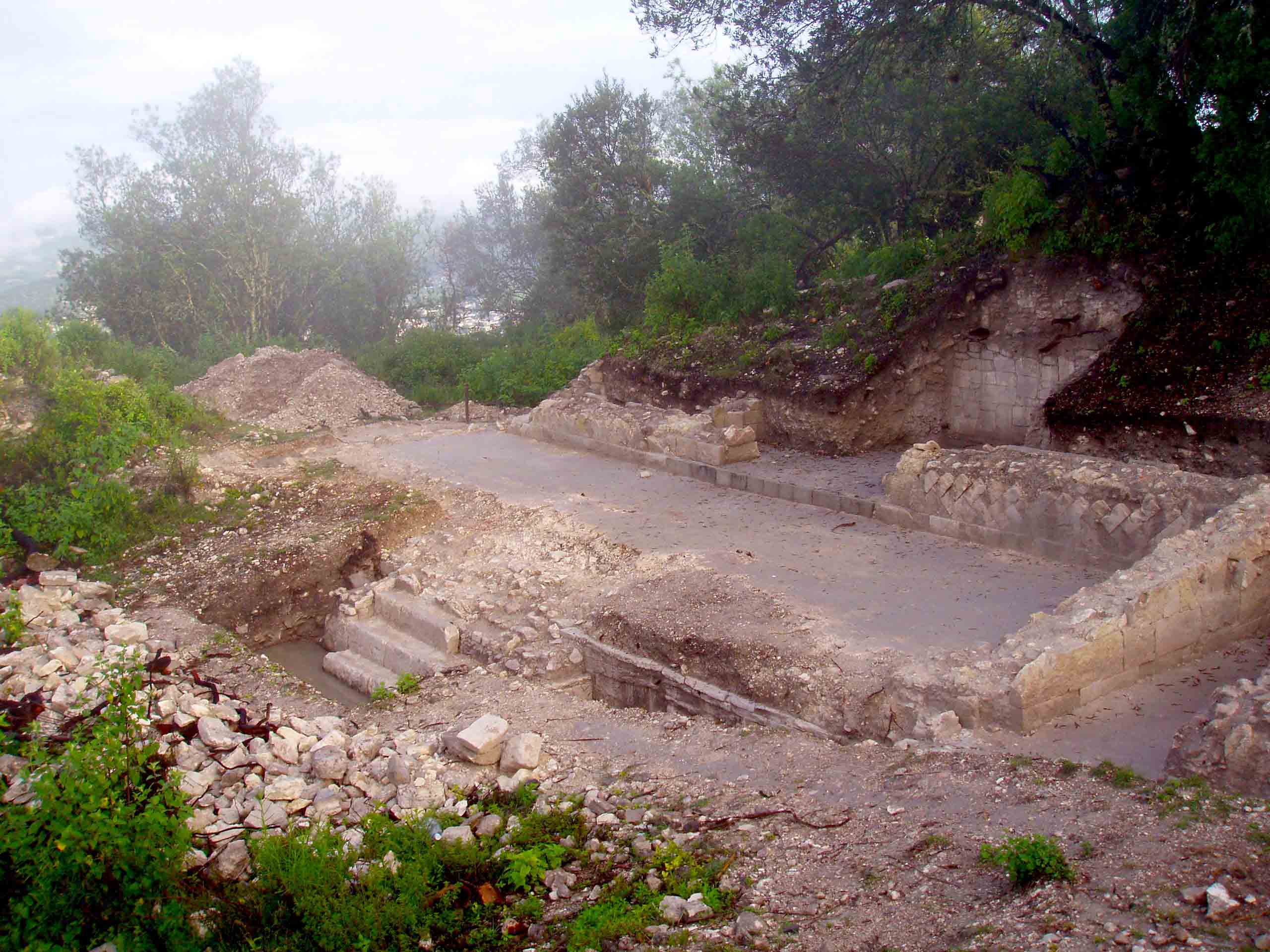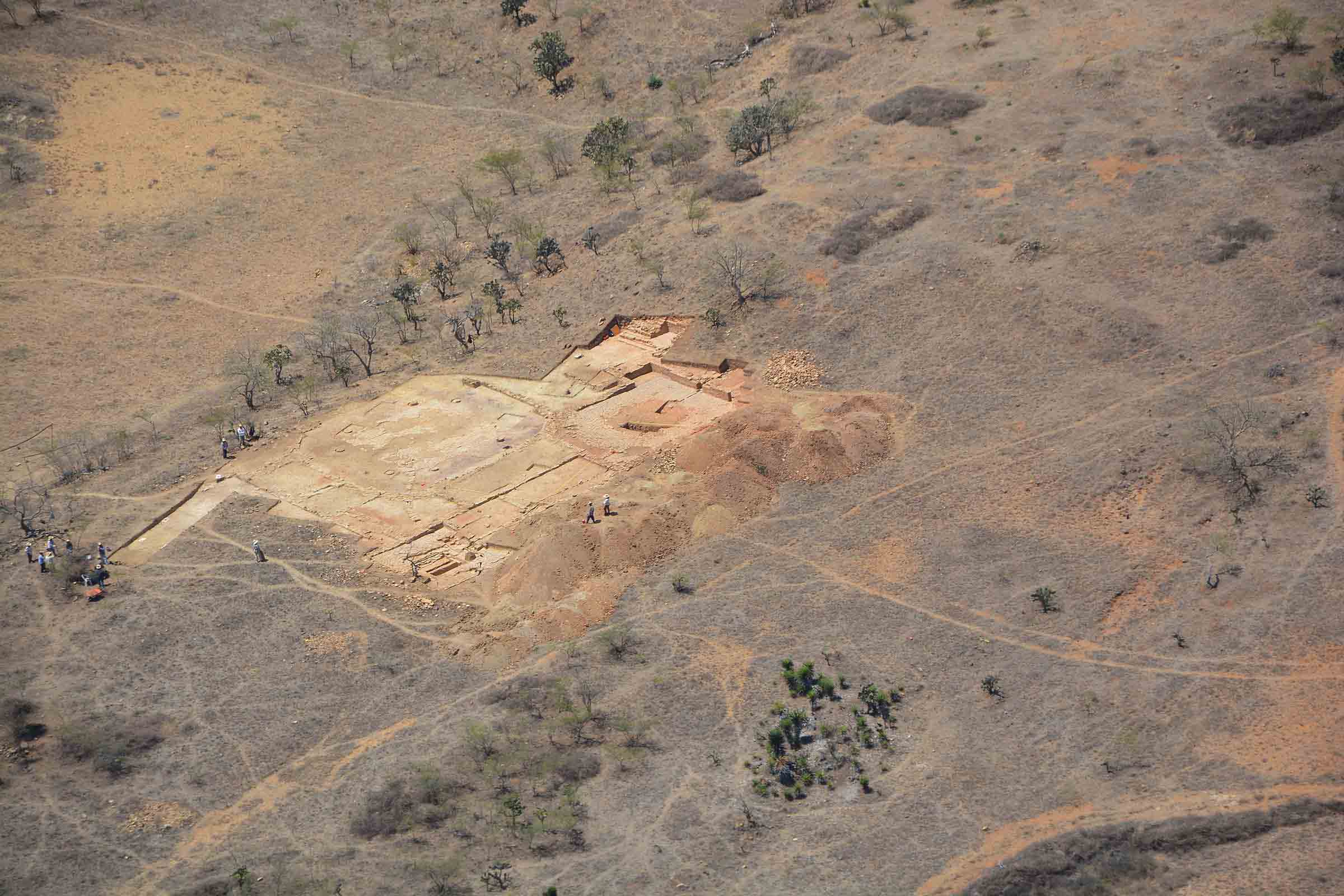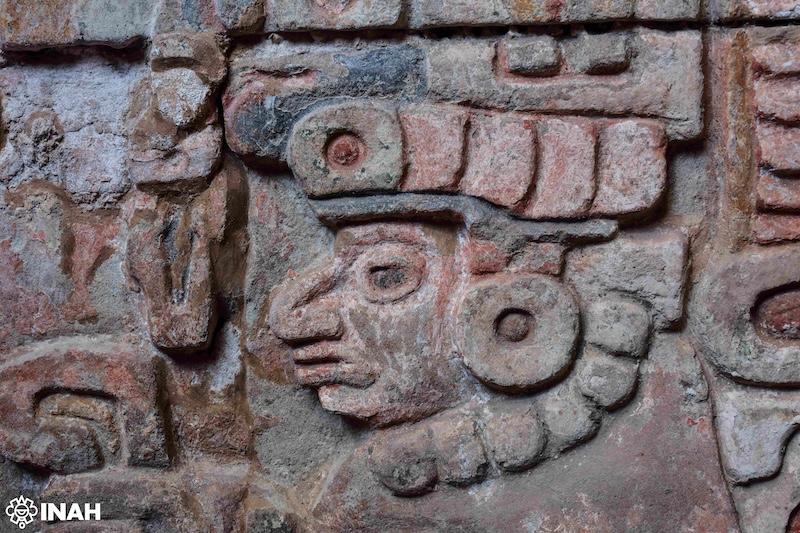
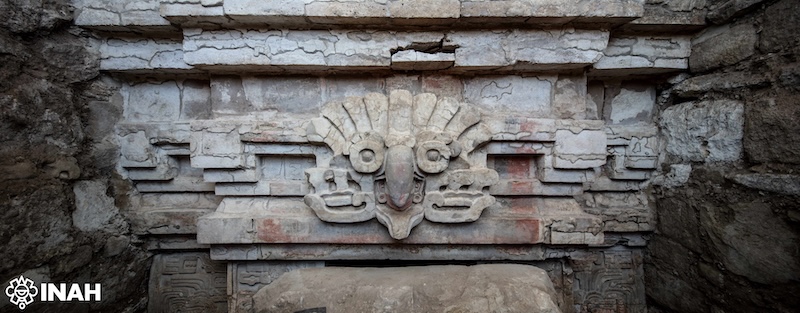
OAXACA, MEXICO—La Brújula Verde reports that a 1,400-year-old Zapotec tomb has been found in the Central Valleys region of southern Mexico by a team of researchers from Mexico’s National Institute of Anthropology and History (INAH). The well-preserved tomb complex features an antechamber and a funerary chamber. A depiction of an owl, representing night and death in Zapotec iconography, was found at the entrance to the antechamber. The bird’s beak shelters a man’s face, which is presumed to represent the owner of the tomb. Calendrical information was found on a frieze at the entrance to the funerary chamber. Carvings of a man and a woman wearing headdresses flank the door, and are thought to have been placed there as guardians. A mural within the funerary chamber, painted on stucco with ocher and other white, green, red, and blue pigments, shows a funerary procession carrying offerings of copal incense. Scientists from INAH Oaxaca are now working to stabilize the microclimate within the delicate tomb, document and preserve the mural, and analyze the calendrical inscriptions and the tomb’s many relief sculptures. To read about three Zapotec burial chambers stacked atop one another, go to "High Rise of the Dead."