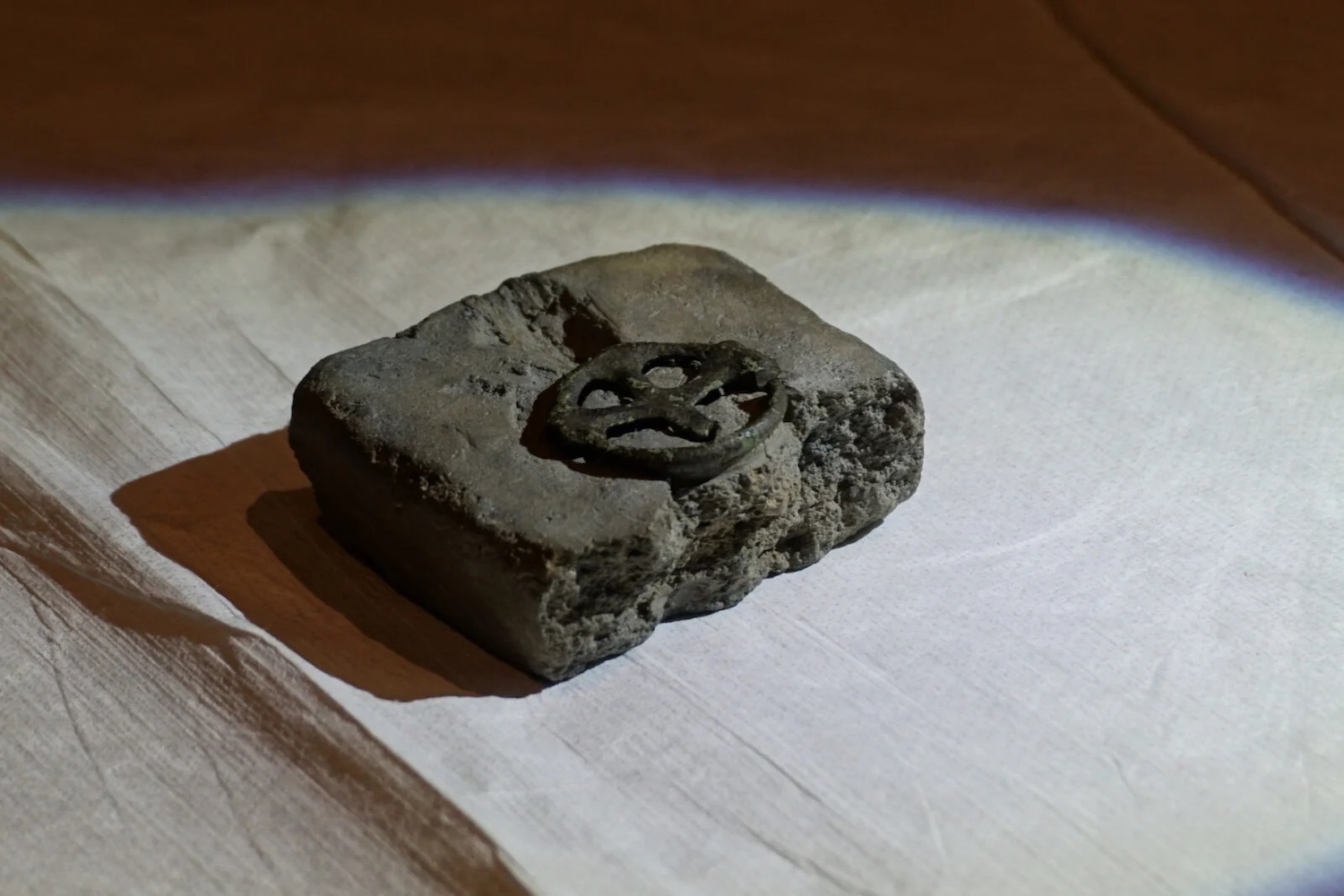
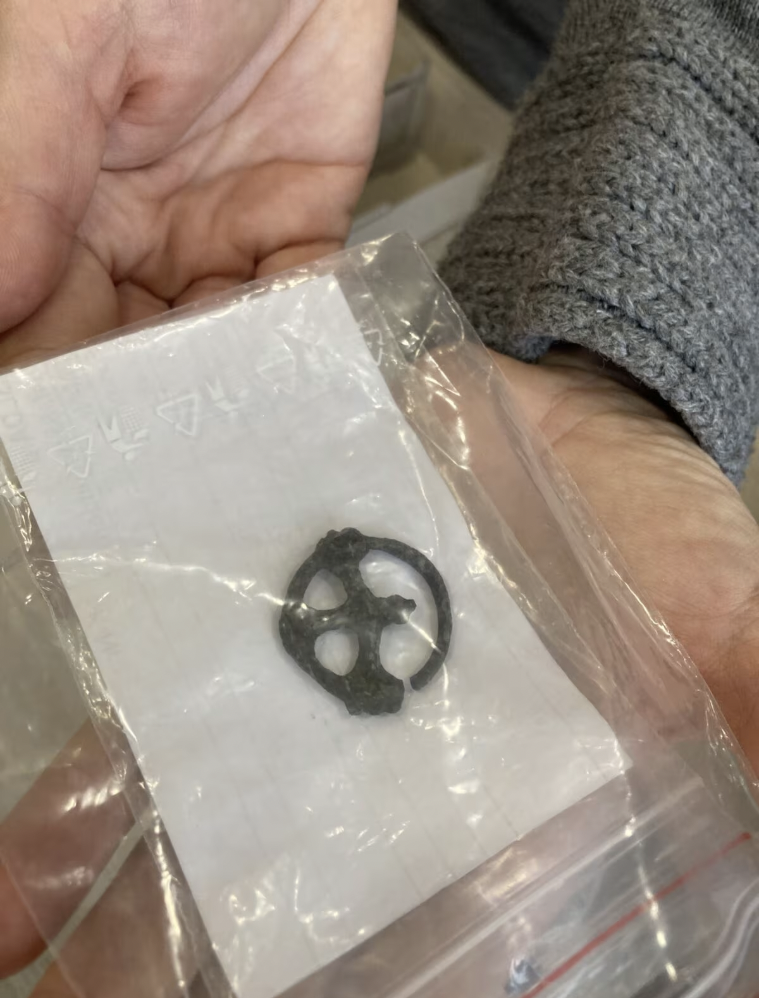
BRANDENBURG, GERMANY—Gizmodo reports that volunteer archaeological conservator Juliane Rangnow discovered a medieval bronze wheel cross with a metal detector while investigating a site with wooden traces of a church in northeastern Germany. Study of the object revealed that it fits in a mold unearthed in 1983 at a castle rampart in the Spandau area of Berlin, about 45 miles away. Brandenburg state archaeologist Matthias Wemhoff said that the bronze wheel cross was likely produced by a blacksmith in Spandau for a large market. “Christian symbols were widespread before the Slavic uprising of 983,” he said. In this revolt, Slavic tribes rejected the new religion and only became Christian after the region became part of the Holy Roman Empire. “The new find is one of the rare early pieces of evidence of the unique history of Christianization of the northwestern Slavs, which continues to shape northeastern Germany to this day,” said Lukas Goldmann of the Brandenburg State Office for Monument Preservation and Archaeological State Museum. For more on the country's medieval period, go to "Letter from Germany: Berlin's Medieval Origins."