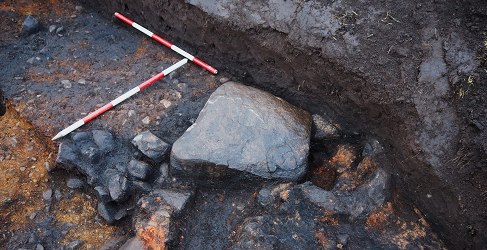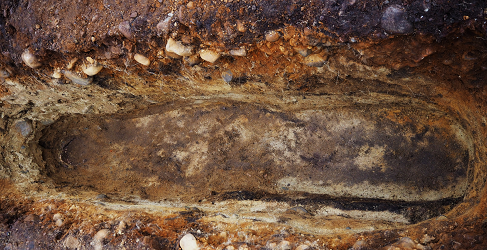
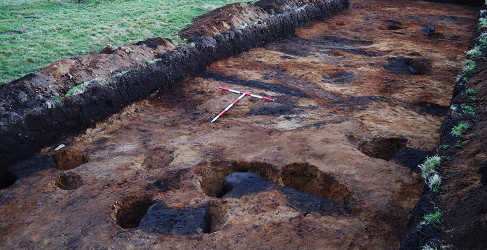
WINDHILL, SCOTLAND—During construction of a mile-long trench in advance of sewer improvements in the Highlands of northern Scotland, archaeologists have discovered the remains of an Iron Age village and burials that likely date to the sixth century a.d. According to a statement released by Scottish Water, the team identified two Iron Age dwellings known as roundhouses, as well as traces of two iron smelters just outside the structures. “The evidence for metalworking at the site, which most likely took place during the first few centuries a.d. will form an important addition to the archaeological record for this area,” said archaeologist Steven Birch of West Coast Archaeological Services. The team discovered no pottery at the site, which offers support to the theory that Iron Age people living in this part of Great Britain did not use clay pots, likely relying instead on wooden vessels. The three early medieval burials the archaeologists discovered are known as round barrows and measure some 30 feet in diameter. To read in-depth about the ancient inhabitants of Scotland, go to “Letter from Scotland: Land of the Picts.”