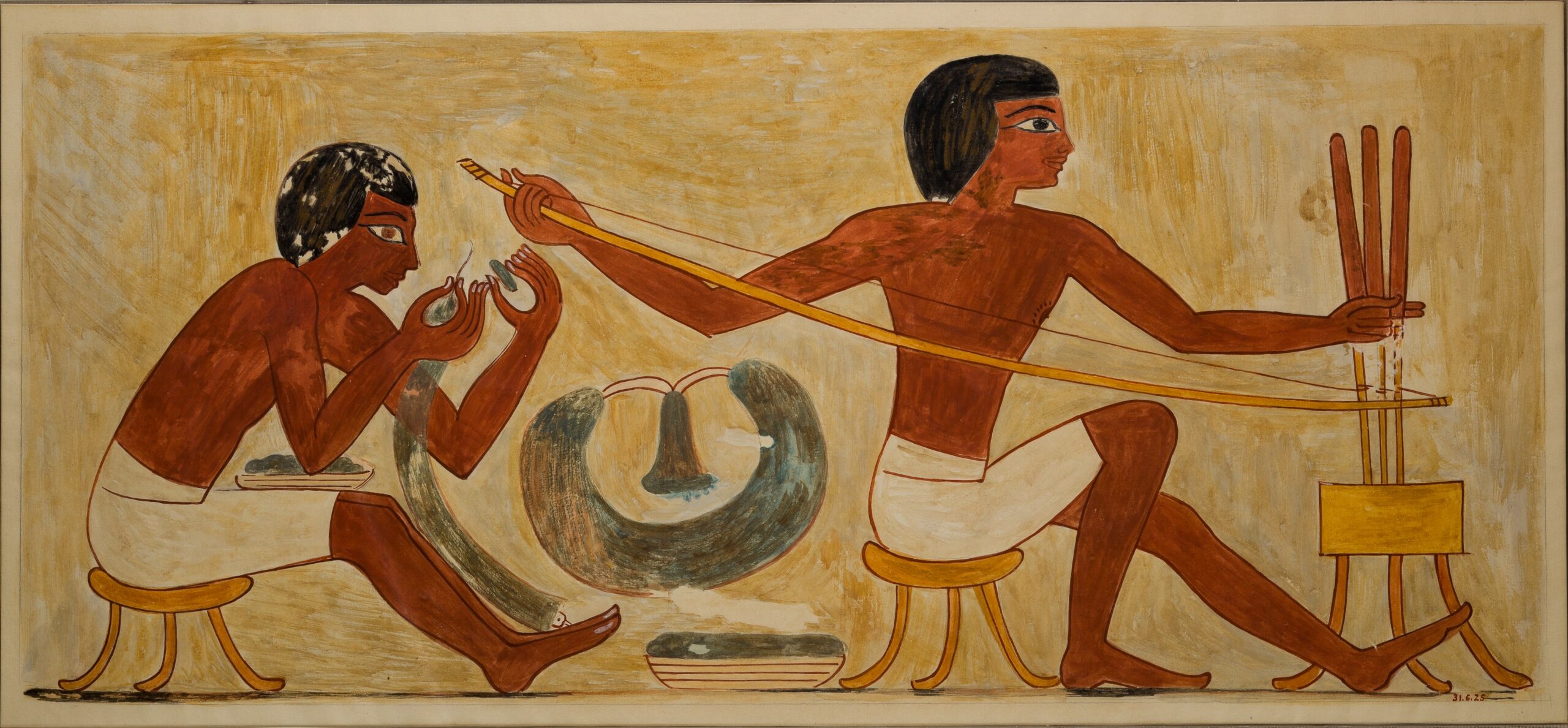
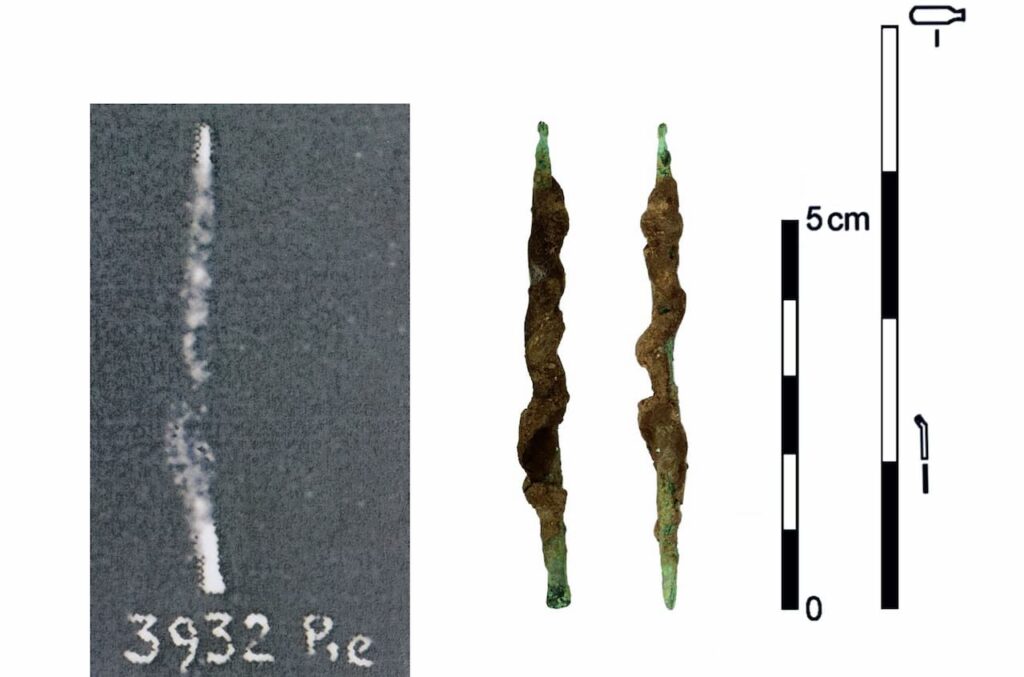
BADARI, EGYPT—According to a statement released by Newcastle University, archaeologists have identified the earliest known metal drill from Egypt, a 2.5-inch-long copper-alloy tool used some 5,300 years ago, long before ancient Egyptians were thought to have used such technology. Egyptologists originally thought that the artifact, which was excavated at the site of Badari in the 1920s, was an awl or a simple punching tool. But recent microscopic examination of the artifact revealed telltale marks suggesting it was manipulated by a bow to pierce wood or stone in a rotary motion. “This re-analysis has provided strong evidence that this object was used as a bow drill, which would have produced a faster, more controlled drilling action than simply pushing or twisting an awl-like tool by hand,” said Newcastle archaeologist Martin Older. “This suggests that Egyptian craftspeople mastered reliable rotary drilling more than two millennia before some of the best-preserved drill sets.” Chemical analysis of the tool shows that it is composed of an unusual copper alloy that includs silver and lead, which were either obtained from long-distance trade networks or from unexplored ore sources in Egypt. To read about recent research into early Egyptian beliefs, go to "Egypt's Temple of Creation."