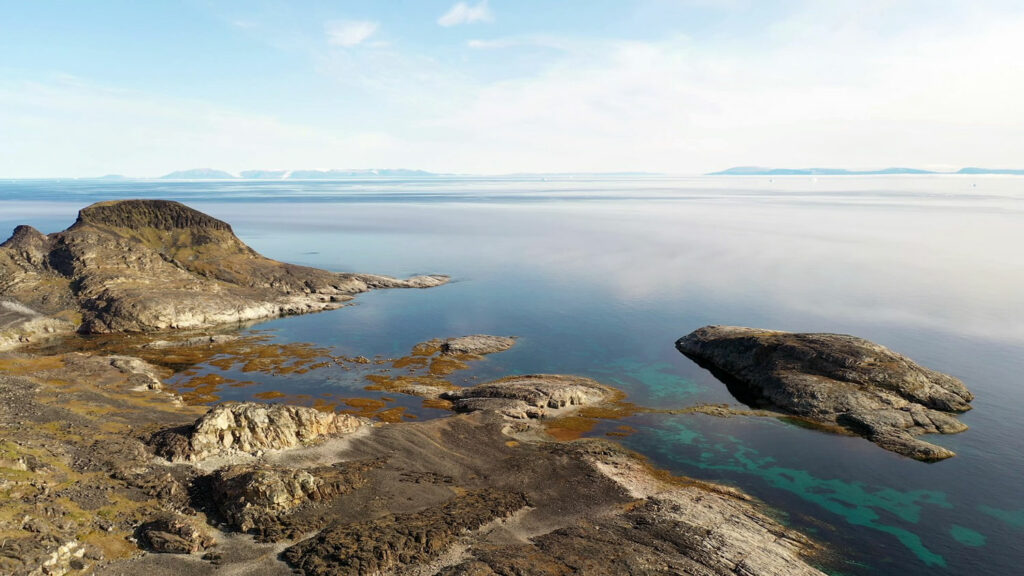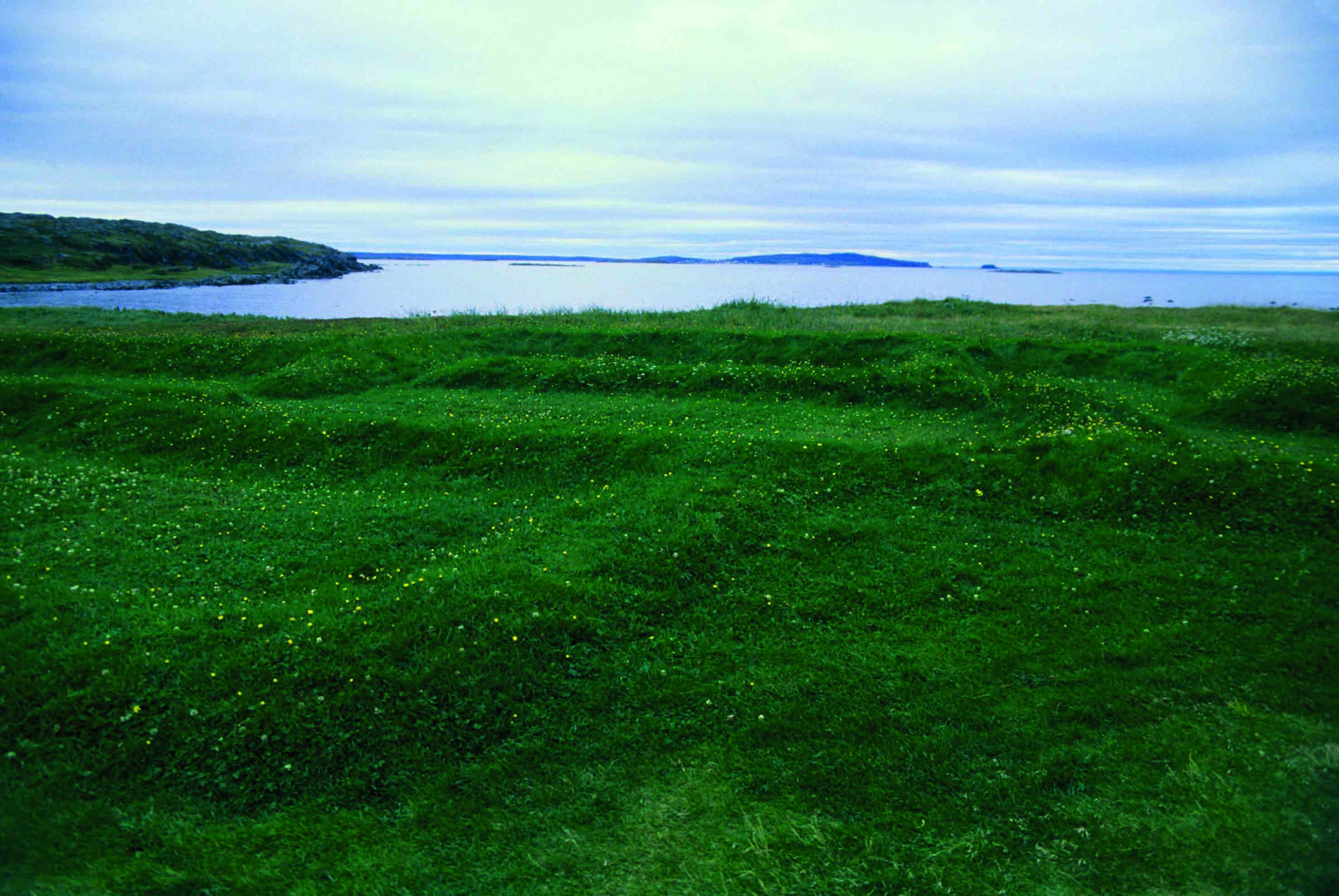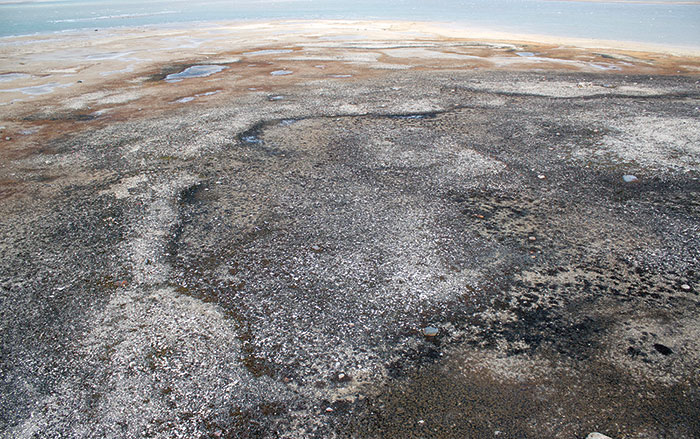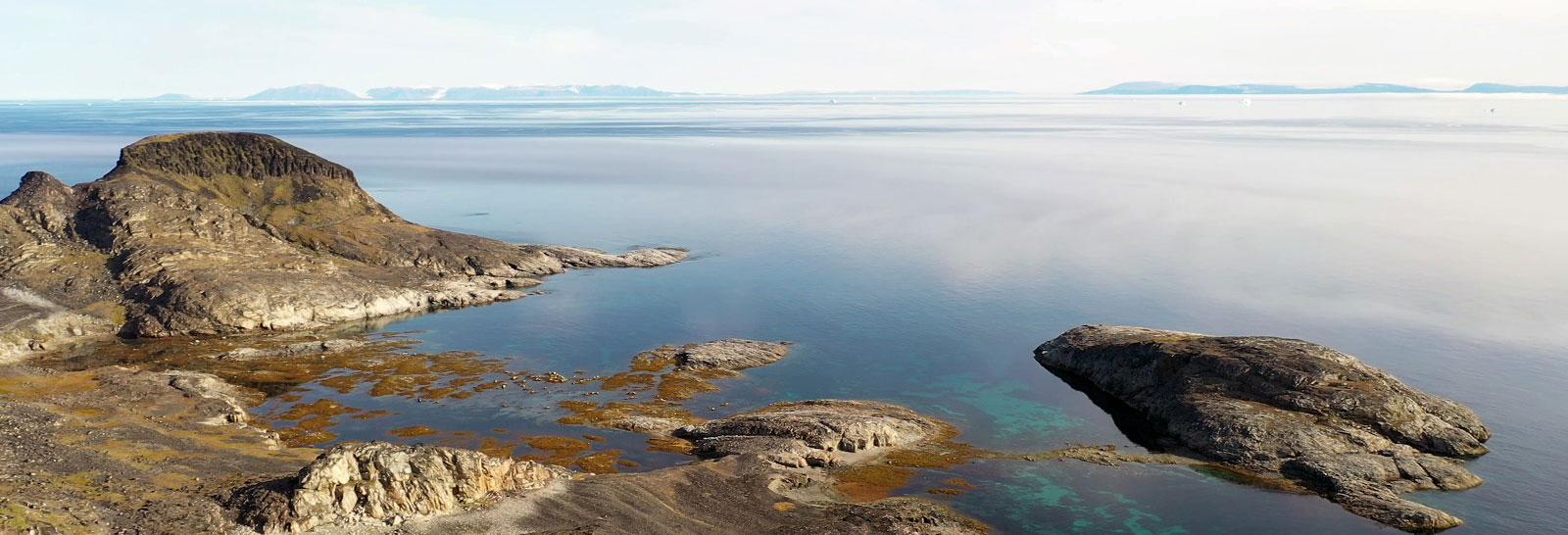
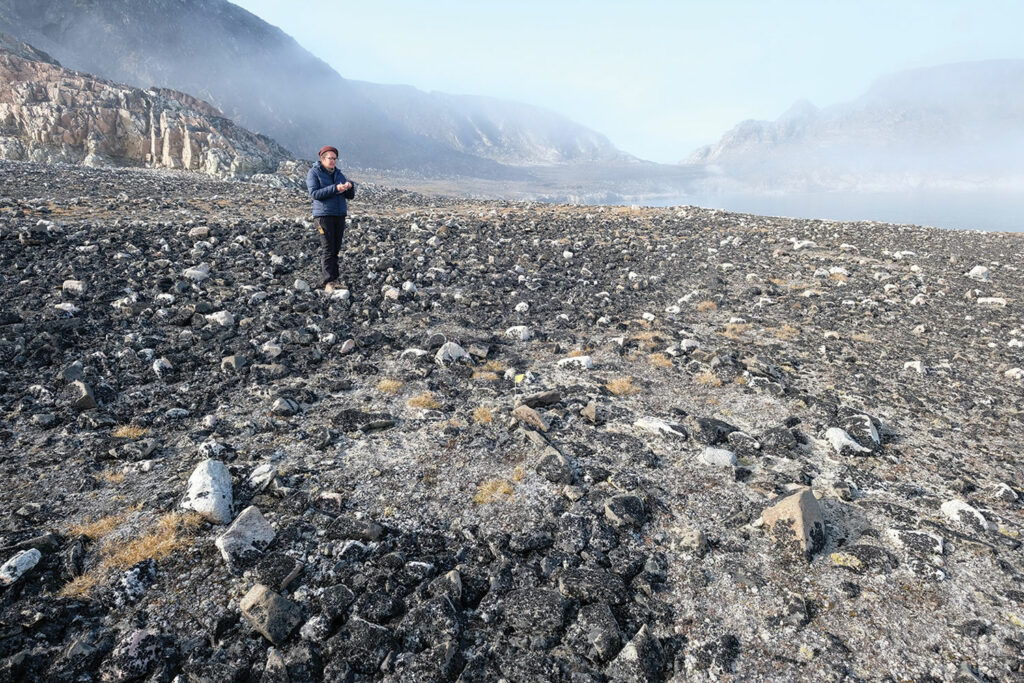
KITSISSUT, GREENLAND—Paleo-Inuit people were able to make lengthy journeys on the rough waters of the High Arctic more than 4,000 years ago, according to a CBC report. Archaeologists working with local Inuit people discovered the remains of ancient camps in Kitsissut, a group of rocky islands between Greenland and Canada’s Ellesmere Island. The camps, which contained evidence that numerous people made repeated visits, consisted of at least 18 tent rings—circular areas cleared of rocks and surrounded by rings of stones. These stones may have been used to hold down the edges of tents, likely made of sealskin stretched over driftwood frames. A seabird bone found inside one of the tent rings was radiocarbon dated to between 4,000 and 4,400 years ago. At the time, an unusually rich ecosystem was developing in Kitsissut due to formation of a rare channel of open water in the ice, allowing for phytoplankton blooms. The cliffs of Kitsissut are home to nesting seabirds, and marine mammals that hunt in the area were likely drawn by the open water. Getting to the islands would have required an arduous trip of more than 30 miles from the nearest shore. “It would have been a fairly extraordinary journey for them to get to this location by watercraft,” said University of Calgary archaeologist Matthew Walls, who estimates that traveling to Kitsissut by canoe or kayak would have required 12 to 15 hours of difficult paddling in often mercurial weather conditions. Read the original scholarly article about this research in Antiquity. For more on nautical navigation in the High Arctic, go to “Wooden Inuit Maps.”