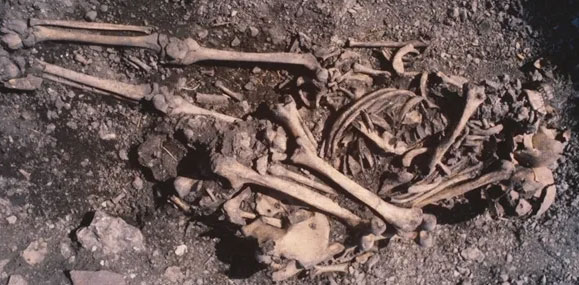
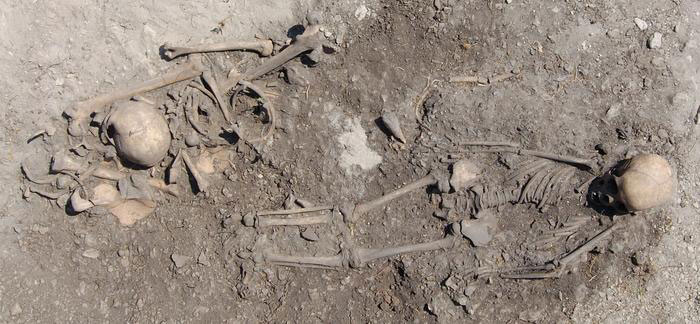
UPPSALA, SWEDEN—According to a Live Science report, geneticist Tiina Mattila of Uppsala University and her colleagues have completed a genetic study of remains recovered from four multiple burials at Ajvide, a 5,500-year-old hunter-gatherer cemetery on the Swedish island of Gotland. In all, just eight of the 85 graves in the cemetery held the bones of more than one person. The first grave in the study held the remains of a woman and two young children. The children were found to be full brother and sister, while the woman may have been their father’s sister or their half-sister. The second grave held the remains of a boy and a girl who were probably cousins. The third grave held the remains of a girl and a young woman who may have been cousins or great-aunt and great-niece. The final grave in the study held the remains of a teenage girl. The bones that had been piled on top of her outstretched form belonged to her father. His remains had probably been dug up and reinterred with his daughter’s. “Surprisingly enough, the analysis showed that many of those who were buried together were second- or third-degree relatives, rather than first-degree relatives—in other words, parent and child or siblings—as is often assumed,” said Helena Malmström of Uppsala University. “This suggests that these people had a good knowledge of their family lineages and that relationships beyond the immediate family played an important role,” she explained. The scientists will continue analyzing the family relationships in the rest of the burials in the cemetery. Read the scholarly paper at the Proceedings of the Royal Society B. To explore more about hunter-gatherers in northern Europe, go to "Mapping a Vanished Landscape."