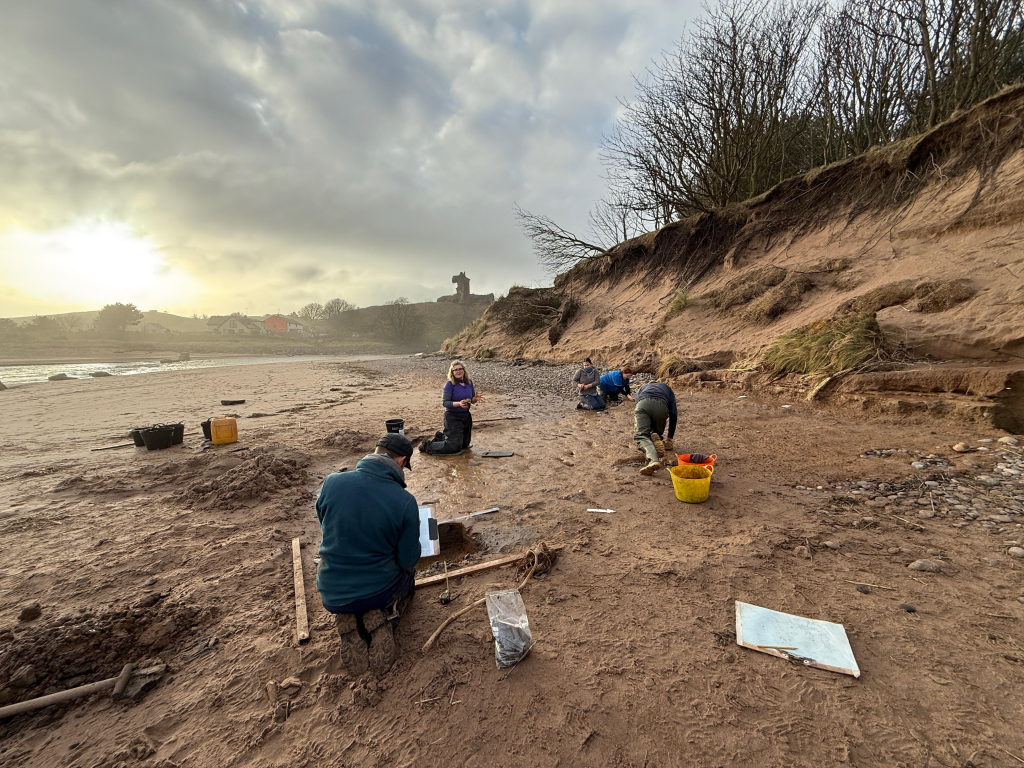
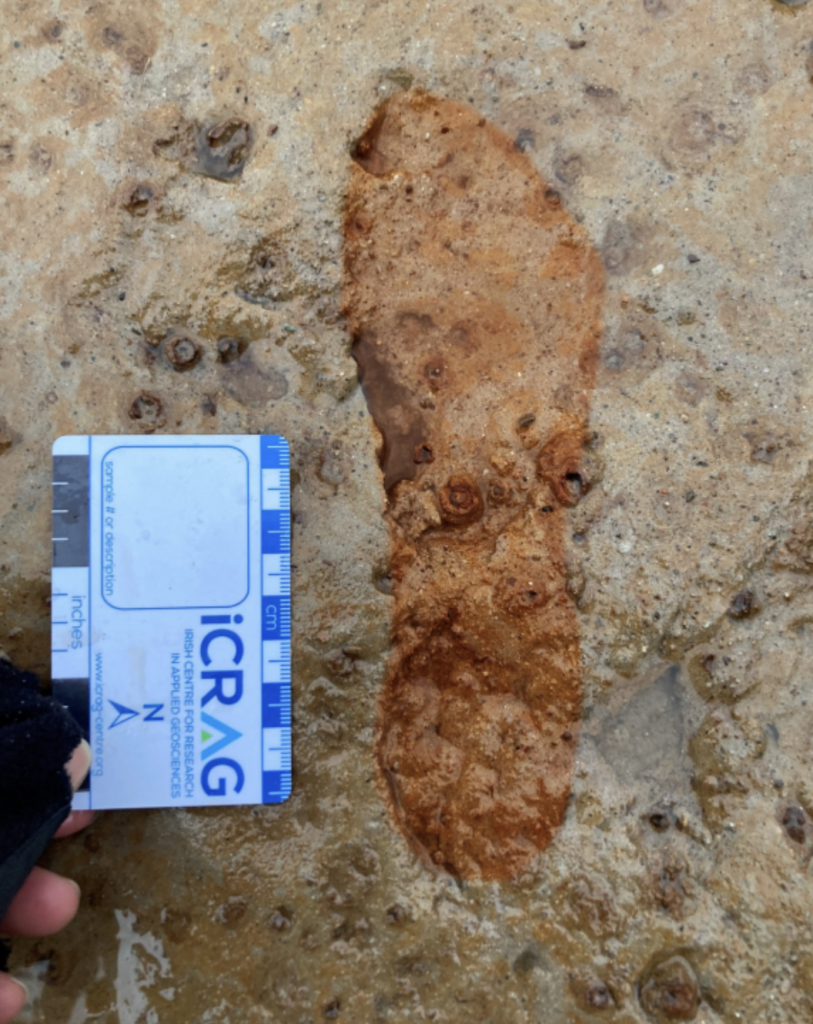
ABERDEEN, SCOTLAND—Erosion caused by storms at eastern Scotland’s Angus Beach revealed an ancient clay surface marked with the footprints of animals and barefooted humans, according to a statement released by the University of Aberdeen. Local dogwalkers spotted the markings in the clay and alerted council archaeologist Bruce Mann, who called in a team from the University of Aberdeen. “We knew we were dealing with a really rare site and that this discovery offered a unique snapshot in time—but it was also clear that the sea would soon take back what had so recently been revealed,” said team leader Kate Britton of the University of Aberdeen. The researchers were able to map the site, take physical casts of the footprints, and capture 3D models of them before the tides and 50-mile-an-hour winds destroyed the ancient ground surface. They were also able to gather plant remains from beneath the layer of the prints for radiocarbon dating, confirming that they were about 2,000 years old. “With sea levels rising and coastal erosion accelerating around Scotland it’s more important than ever that local community members keep an eye on their local coasts and report potential new discoveries,” commented Elinor Graham of the University of Aberdeen. To read in-depth about recent archaeological discoveries in Scotland, go to "Land of the Picts."