

SYDNEY, AUSTRALIA—The city of Mahendraparvata has been mapped on Phnom Kulen Mountain, located to the north of the Angkor Wat Complex in Cambodia, by archaeologists using airborne laser technology carried by a helicopter. Some 36 buildings had previously been recorded on the jungle-covered mountain, but it wasn’t known how they fit together. More than two dozen temples, and traces of canals, dykes, and roads laid out in regular city blocks have now been mapped. “We see from the imagery that the landscape was completely devoid of vegetation. One theory we are looking at is that the severe environmental impact of deforestation and the dependence on water management led to the demise of the civilization,” said Damian Evans of the University of Sydney.
Angkor City Mapped in Cambodia
News June 17, 2013
Recommended Articles
Off the Grid September/October 2026
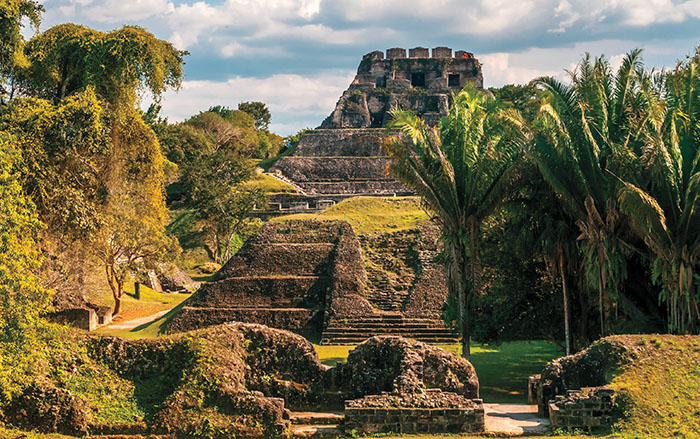
Xunantunich, Belize
Letter from Ireland September/October 2026
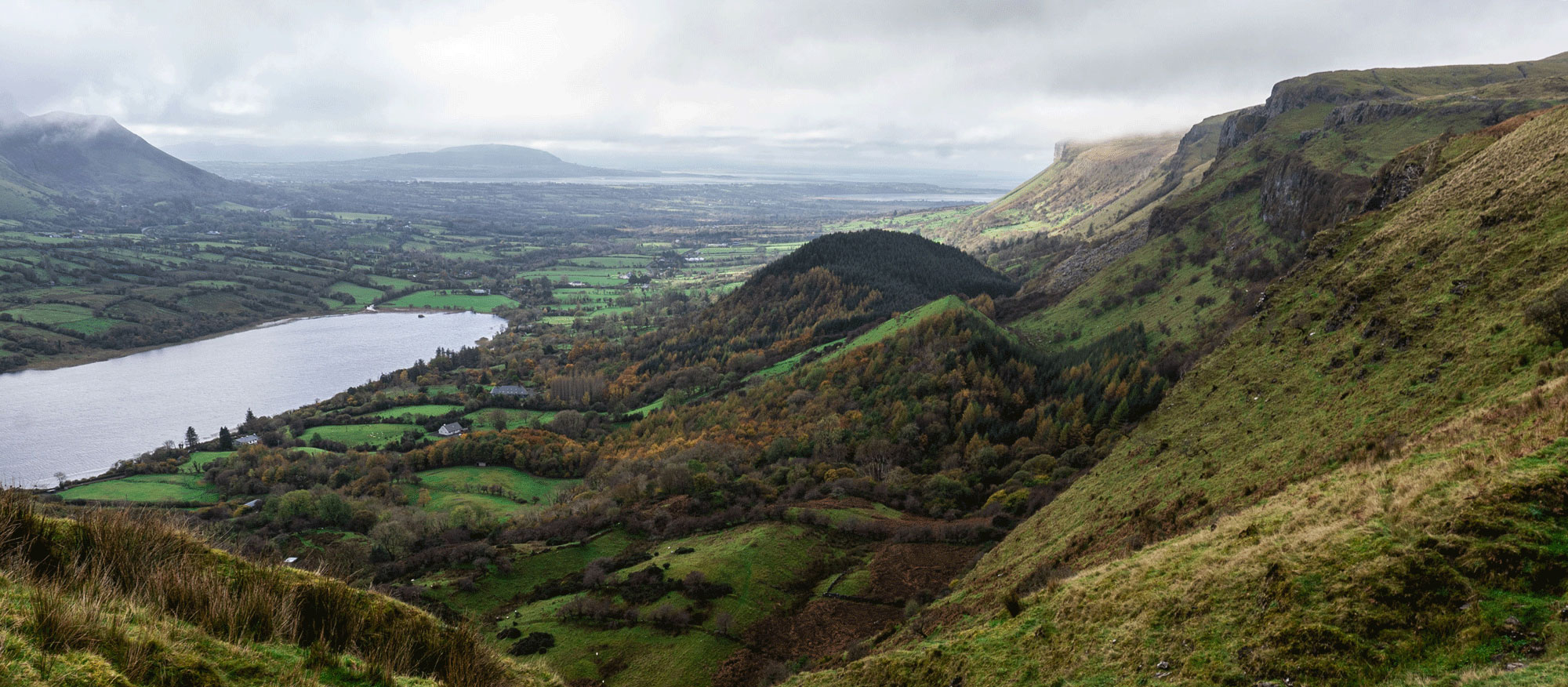
A War Between Friends
How IRA volunteers survived the Irish Civil War in a secret mountain hideout
Features September/October 2026
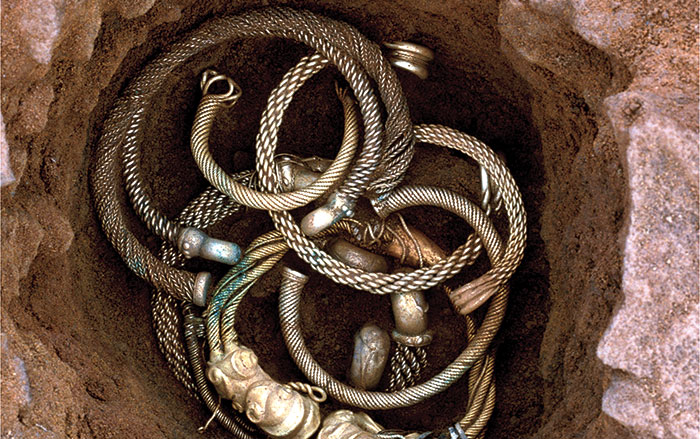
A Change in Fashion
Hoards of lavish gold and silver neck rings buried on an English hill reflect dramatic social change
Features September/October 2026
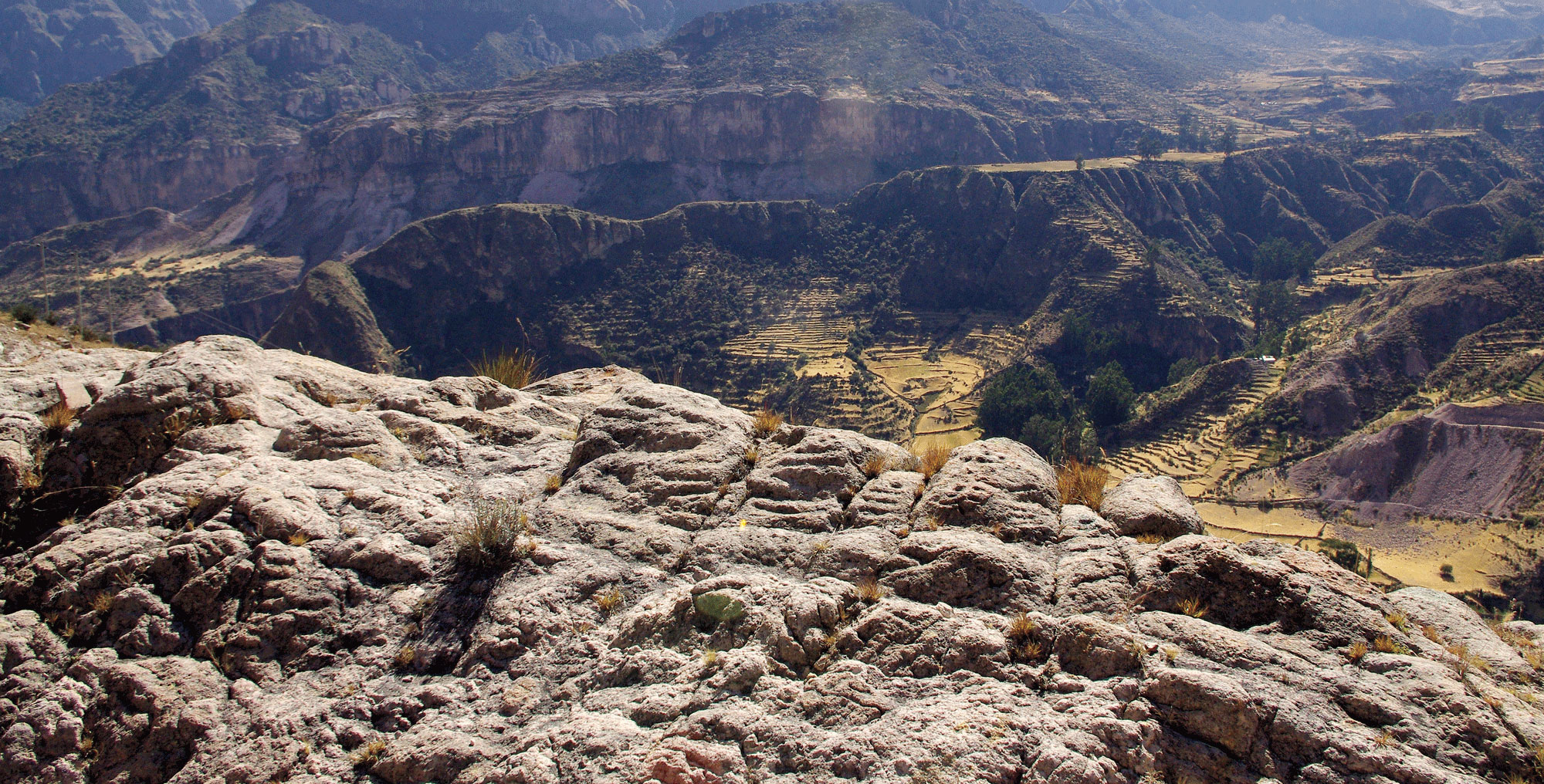
Cultivating Fields of Stone
Peru’s ancient farmers used intricate rock maps to plan for the future
More to Discover
Features May/June 2013
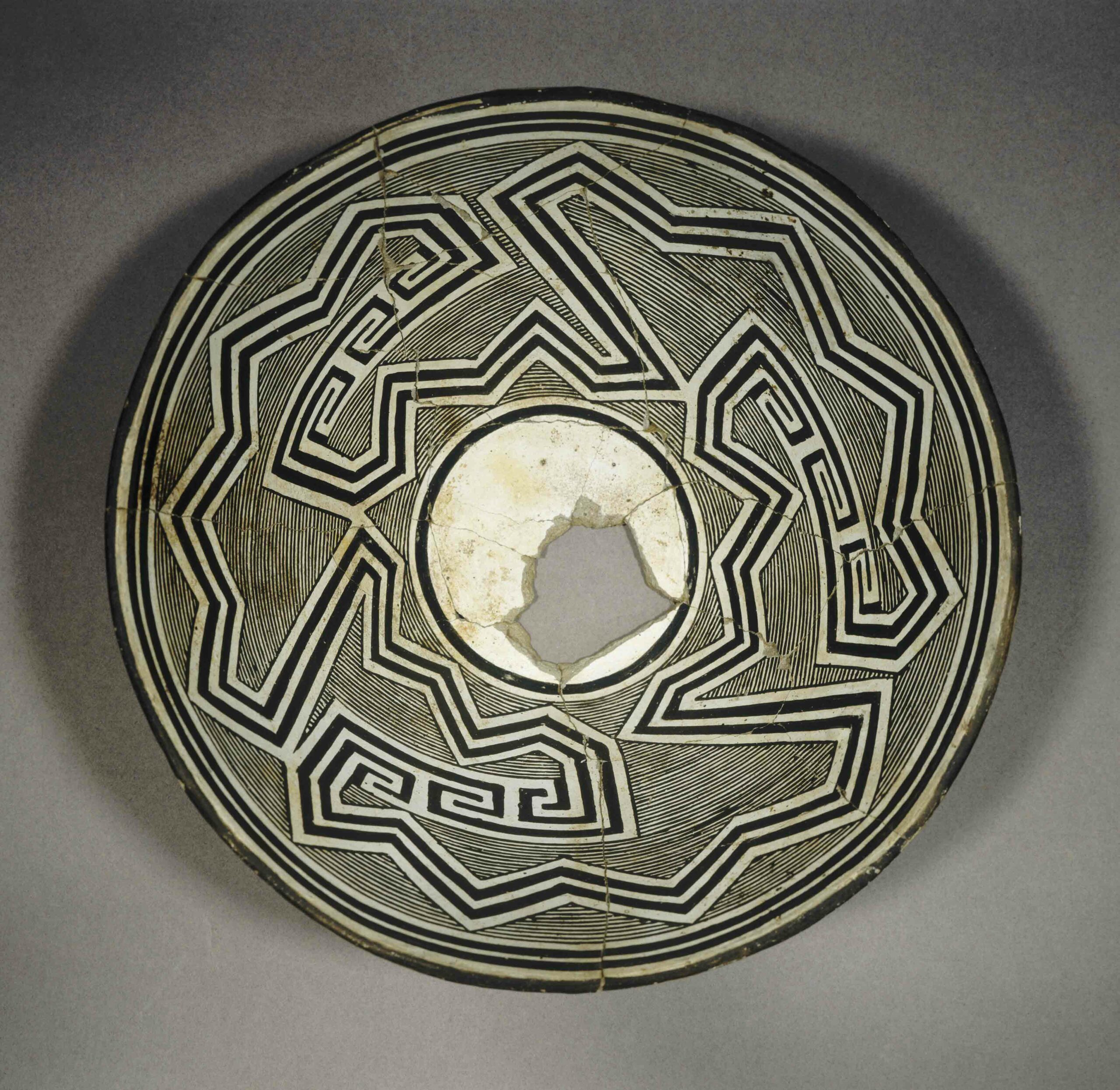
On the Trail of the Mimbres
Archaeologists are tracking the disappearance of a remarkable type of pottery to rewrite the story of a culture’s decline
-
Features May/June 2013
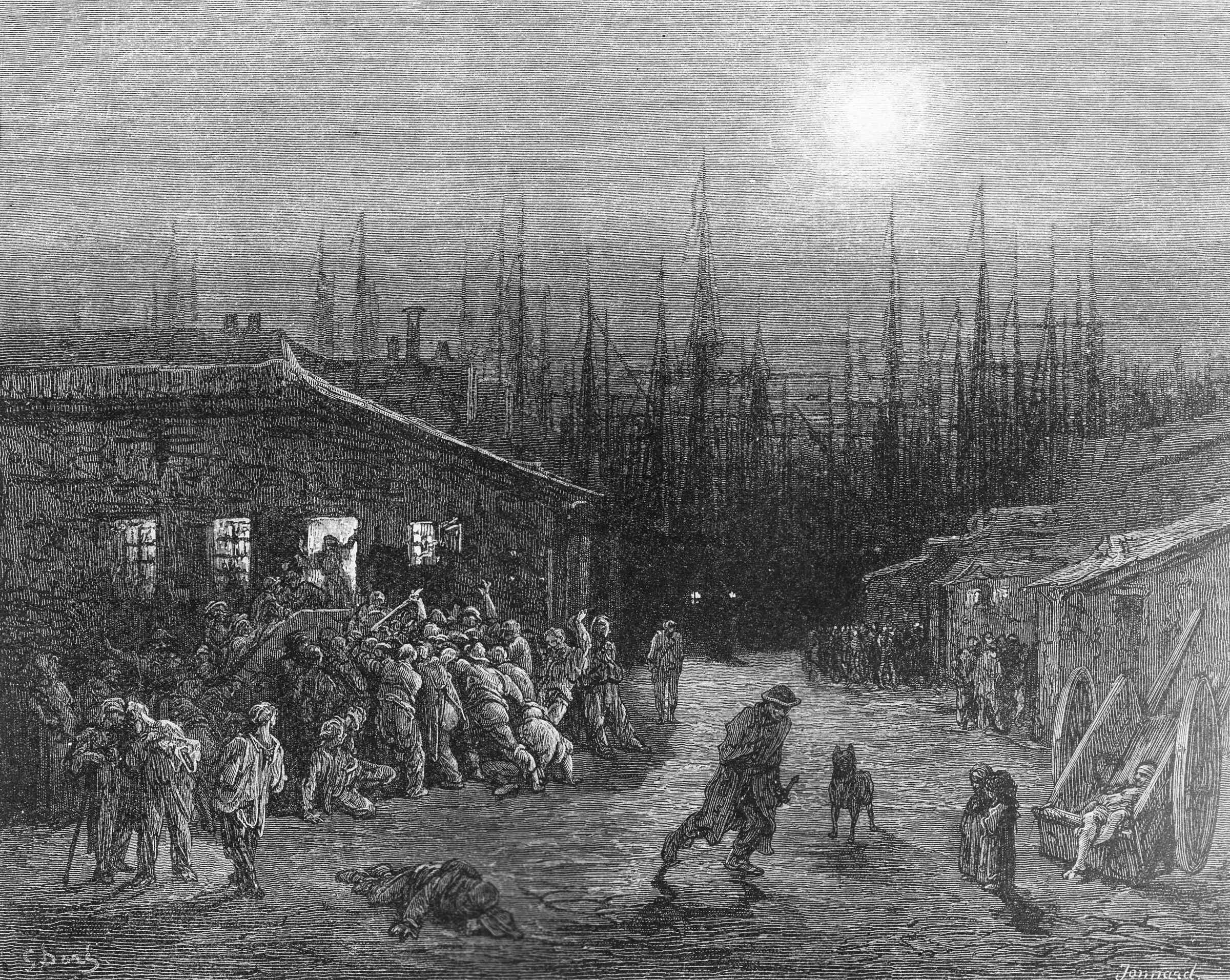
Haunt of the Resurrection Men
A forgotten graveyard, the dawn of modern medicine, and the hard life in 19th-century London
 (Private Collection/The Bridgeman Art Library)
 -
Features May/June 2013
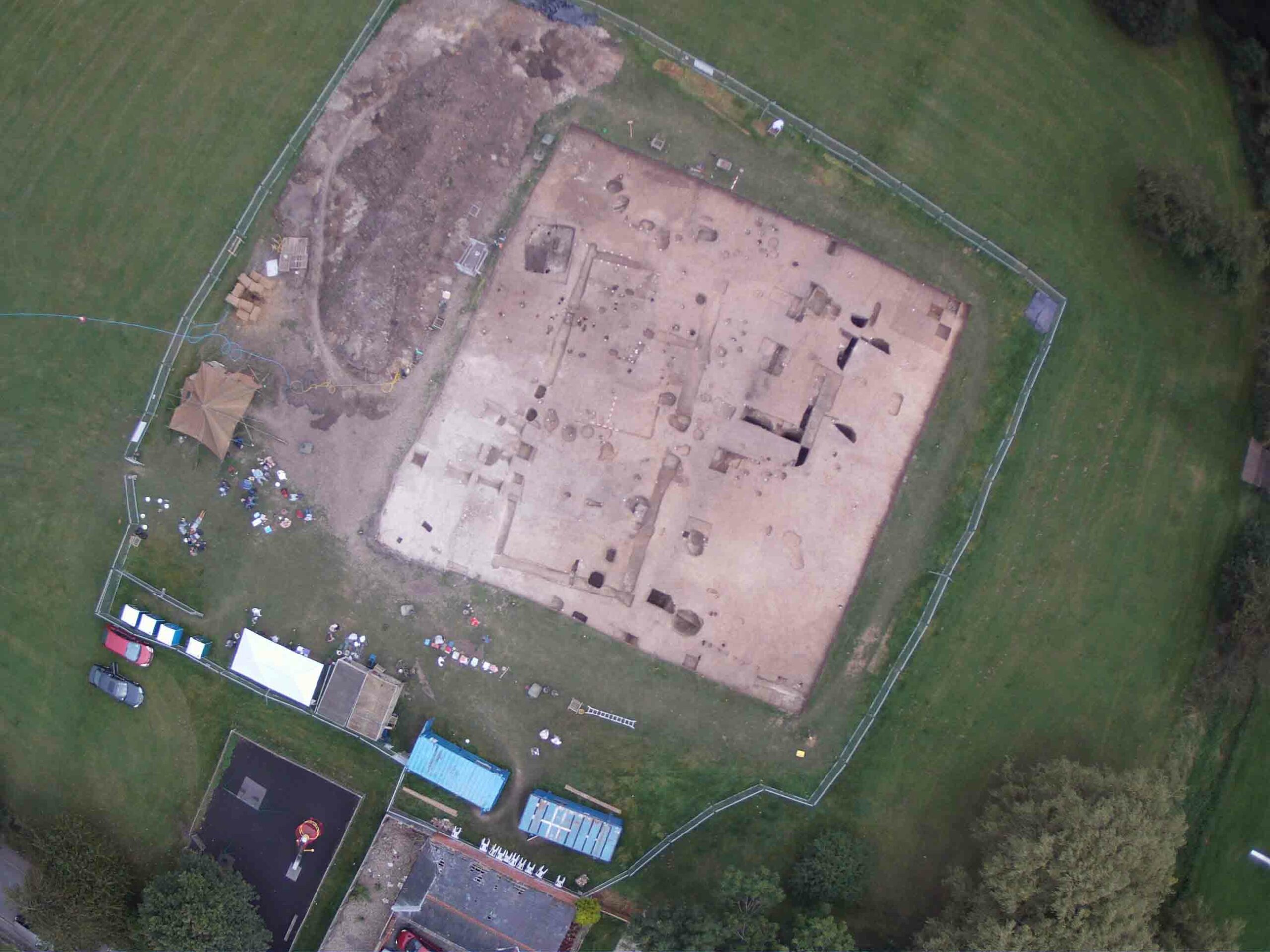
The Kings of Kent
The surprising discovery of an Anglo-Saxon feasting hall in the village of Lyminge is offering a new view of the lives of these pagan kings
 (Photo by William Laing, © University of Reading)
 -
Letter from Turkey May/June 2013
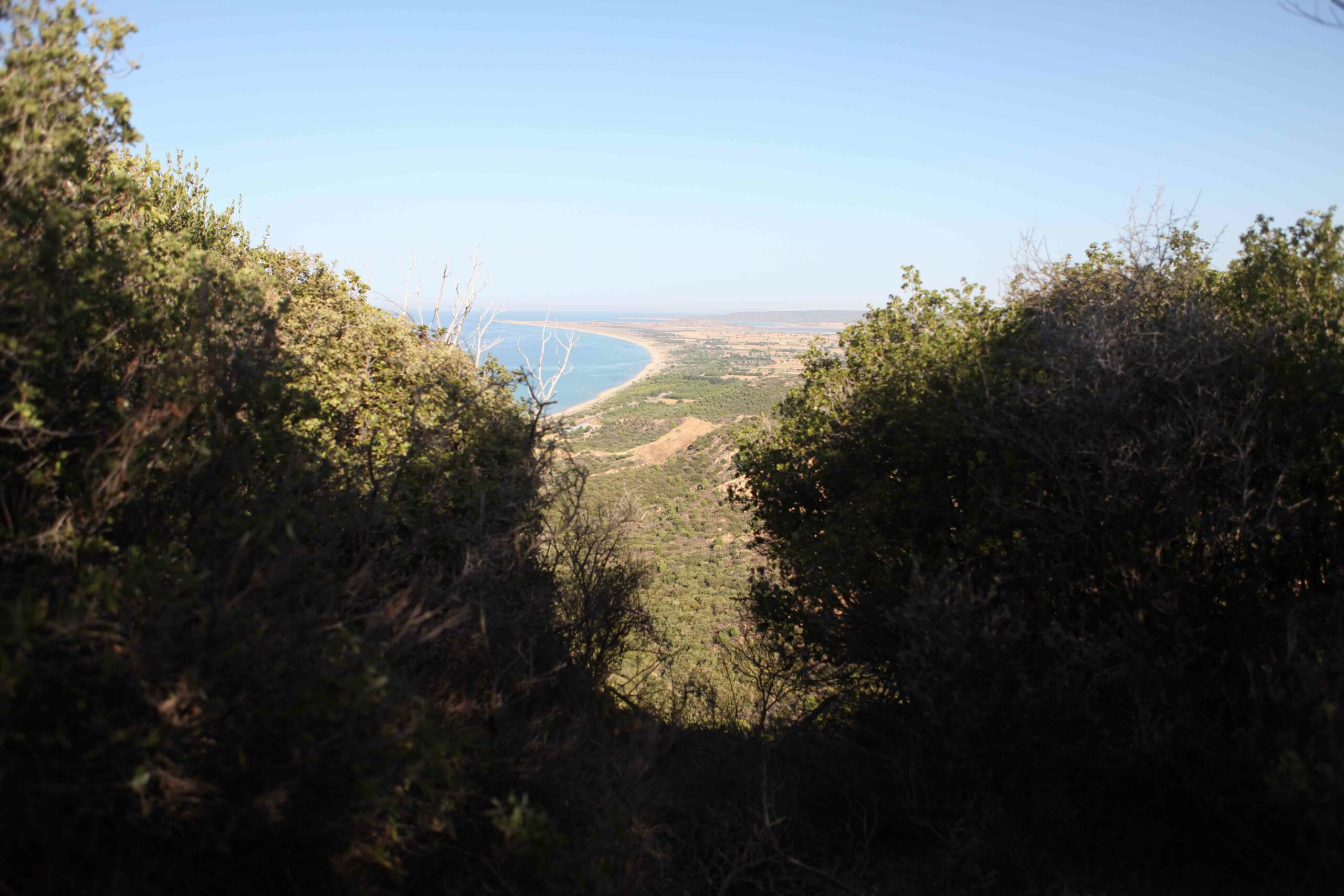
Anzac's Next Chapter
Archaeologists conduct the first-ever survey of the legendary WWI battlefield at Gallipoli
 (Samir S. Patel)
 -
Artifacts May/June 2013
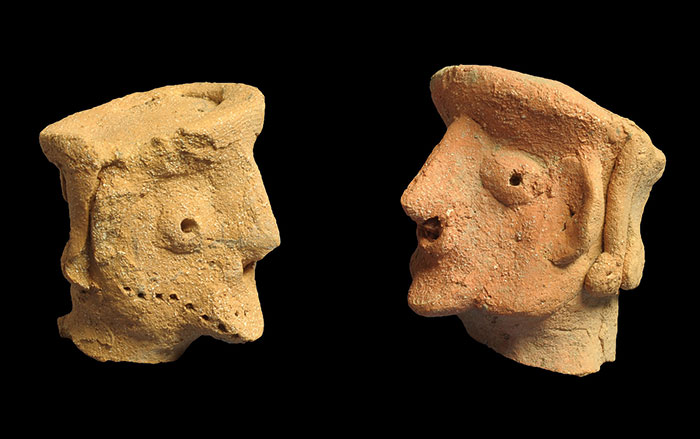
Ancient Near Eastern Figurines
Ceramic figurines were part of a cache of objects found at an Iron Age temple uncovered at the site of Tel Motza outside Jerusalem
 (Clara Amit, courtesy of the Israel Antiquities Authority)