Ireland's Viking Fortress

Digs & Discoveries January 1, 2011

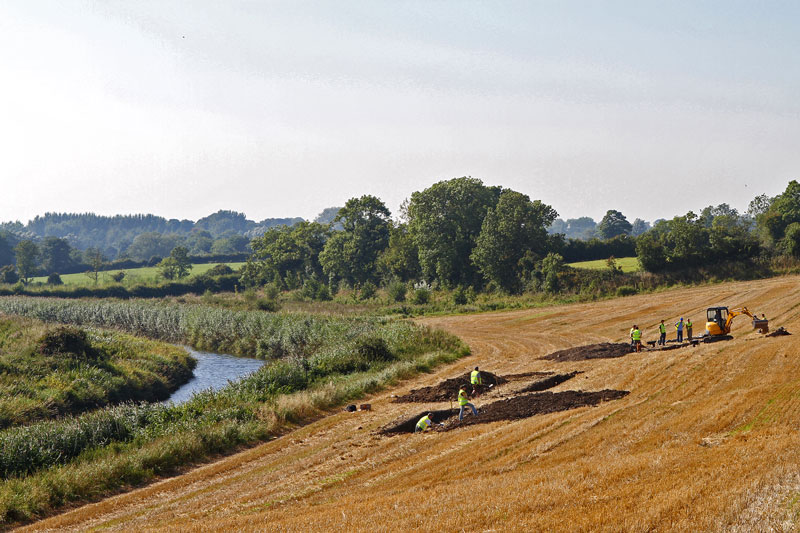
The remains of the legendary Viking fortress Linn Duachaill have been discovered in northeastern Ireland, 45 miles north of Dublin. "Historians and archaeologists have been trying to locate Linn Duachaill for more than 200 years," says Eamonn Kelly, Keeper of Antiquities with the National Museum of Ireland, who led a lengthy research and targeted excavation effort that resulted in the discovery of the infamous Viking base.
SHARE:

The remains of the legendary Viking fortress Linn Duachaill have been discovered in northeastern Ireland, 45 miles north of Dublin. "Historians and archaeologists have been trying to locate Linn Duachaill for more than 200 years," says Eamonn Kelly, Keeper of Antiquities with the National Museum of Ireland, who led a lengthy research and targeted excavation effort that resulted in the discovery of the infamous Viking base.

Linn Duachaill was founded in A.D. 841, the same year as Viking Dublin. The fortress was used as a center by the Vikings to trade goods, organize attacks against inland Irish monasteries, and send captured Irish slaves abroad. For more than 70 years, Linn Duachaill rivaled Dublin as the preeminent Viking holding on the east coast of Ireland before it was eventually abandoned.

The discovery of Linn Duachaill will finally allow archeologists to compare the actual site with medieval documents. The names of leaders of the garrison are recorded, along with extensive accounts of attacks they carried out. The site is often referred to as a longphort, a term used to describe a fortification built by the Vikings to protect their ships.

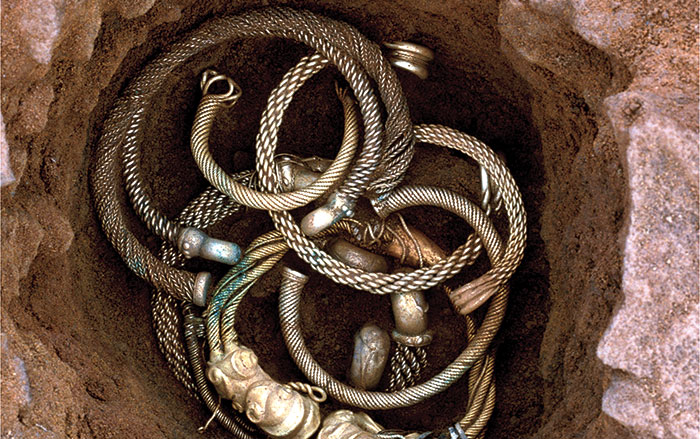
A defensive rampart has already been excavated at the site and examples of Viking silver and ecclesiastical metalwork looted from native Irish sites have also been recovered. "We are excited to learn what insights into medieval times Linn Duachaill will reveal," says Kelly.
  • Features May/June 2026

    Pioneers of Lakefront  Living

    Why Neolithic and Bronze Age farmers in the Alps built their villages on stilts

    Read Article
    Modern replicas of Bronze Age houses in Lake Constance
    © APM/Frank Müller
  • Features May/June 2026

    The Last Maya Kingdom

    On the shores of a lake in Guatemala, the Itzá people defied the Spanish for nearly 200 years

    Read Article
    Flores Island, Guatemala
    Courtesy Timothy Pugh/Itzá Archaeological Project
  • Features May/June 2026

    Art for the Ages

    A surreal style of painting endured for 4,000 years in the canyonlands of West Texas

    Read Article
    Shumla Archaeological Research and Education Center Archive
  • Features May/June 2026

    Bridge to the Past

    The Yellow River brought both prosperity and calamity to China’s dazzling medieval capital By Ling Xin

    Read Article
    Henan Provincial Institute of Cultural Heritage and Archaeology