


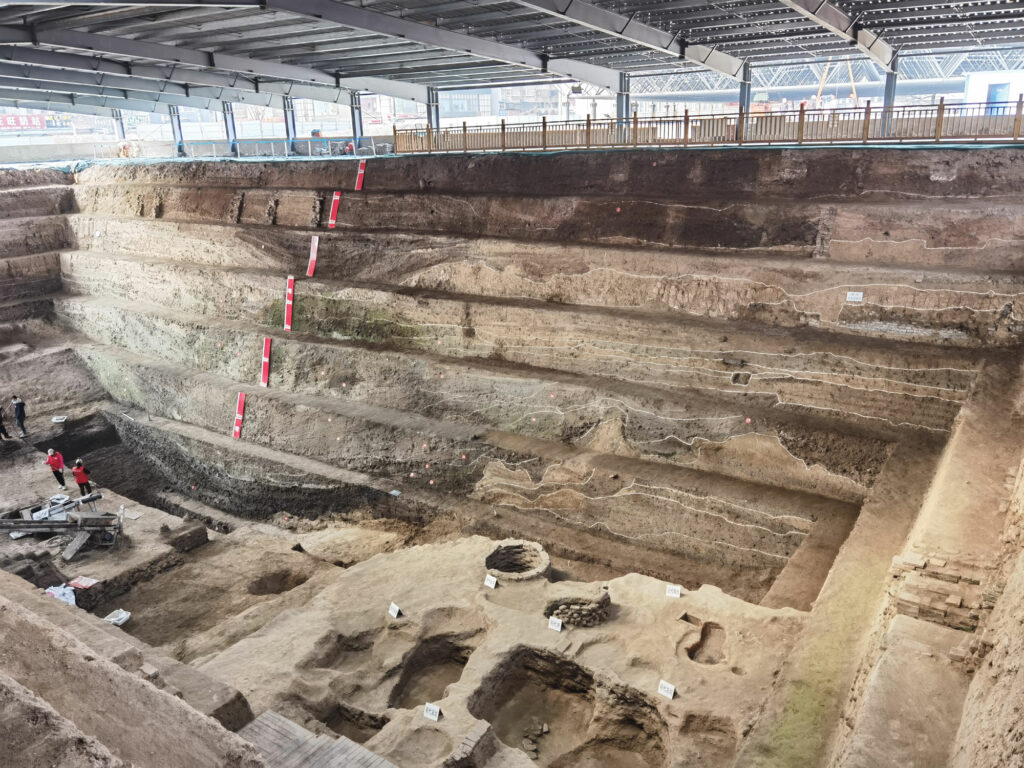
In 1147, a scholar named Meng Yuanlao set down his memories of Dongjing, the fallen capital of China’s Northern Song Dynasty, in his book The Eastern Capital: A Dream of Splendor. Meng had lived in Dongjing, which is now known as Kaifeng, before the city was overrun by Jurchen nomads who invaded China from their Manchurian heartland in the north. Exiled from his boyhood home, Meng composed an elegy for a vanished city. “Decorated chariots vied to park in the Heavenly Avenue, and bejeweled horses competed to spur through the Imperial Street. Gold and kingfisher bluedazzled the eye, silky cloth and silken gauze let float their perfumes,” he writes. “New sounds and sly giggles were found in the willowy lanes and flowered paths, pipes were fingered and strings were harmonized in the tea districts and wine wards.” The city Meng remembered had thrived on the Bianhe River, a branch of the Yellow River. By the time Meng penned his memoir, those waterways had sustained Kaifeng’s prosperity for more than 1,000 years. Among the city’s marvels was the Zhouqiao, a grand stone bridge at its center that was later buried beneath layers of river silt and for centuries was thought lost.