
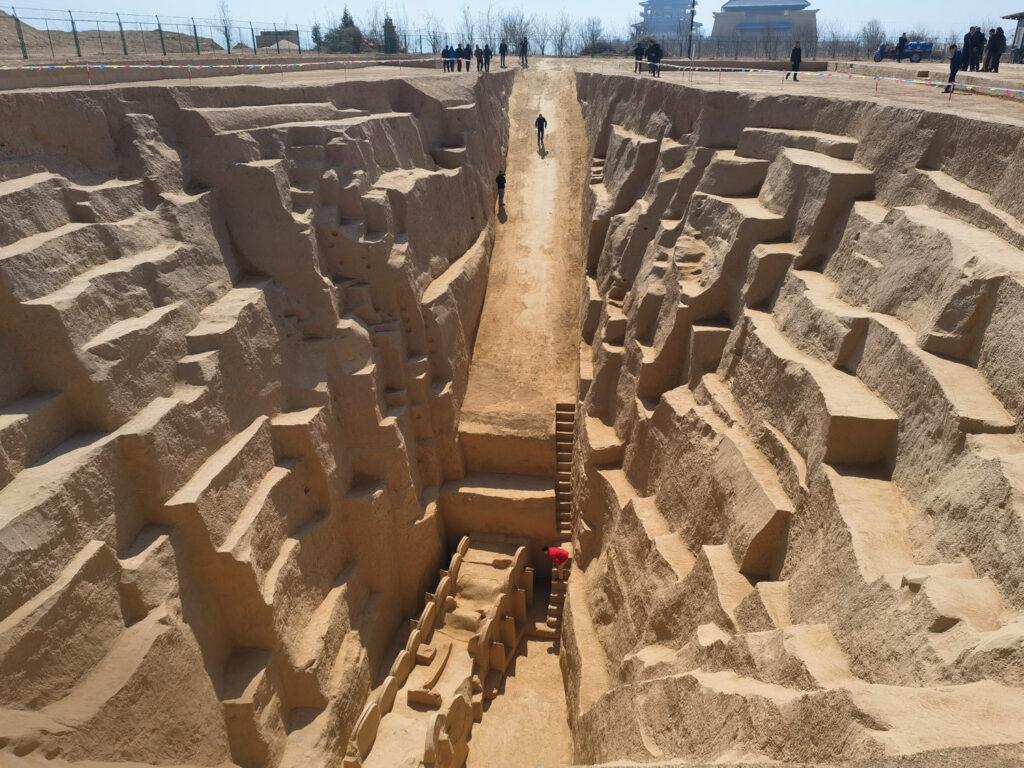
The earliest known Chinese writing is some 3,200 years old and survives on pieces of cattle bones and turtle shells, their cracked surfaces covered with finely carved characters. These artifacts, which date to the Bronze Age, are known as oracle bones and were used by the kings of the Shang Dynasty (ca. 1600–1046 B.C.) to seek guidance from their ancestors. Shang rulers would instruct diviners to write questions about future events, such as harvests, on oracle bones, which would then be heated. The diviners interpreted the resulting cracks, which were thought to impart the ancestors’ responses. The outcome of the events about which a king had sought divine advice were often later described on the bones. Among the thousands of oracle bone inscriptions that have been found at the Shang capital of Anyang, many refer to fang guo, or border states, a term the Shang used for tribal confederacies that lay beyond their direct rule. The oracle bones largely describe fang states as implacable enemies, though some were steadfast allies. Others swung between the two roles.