
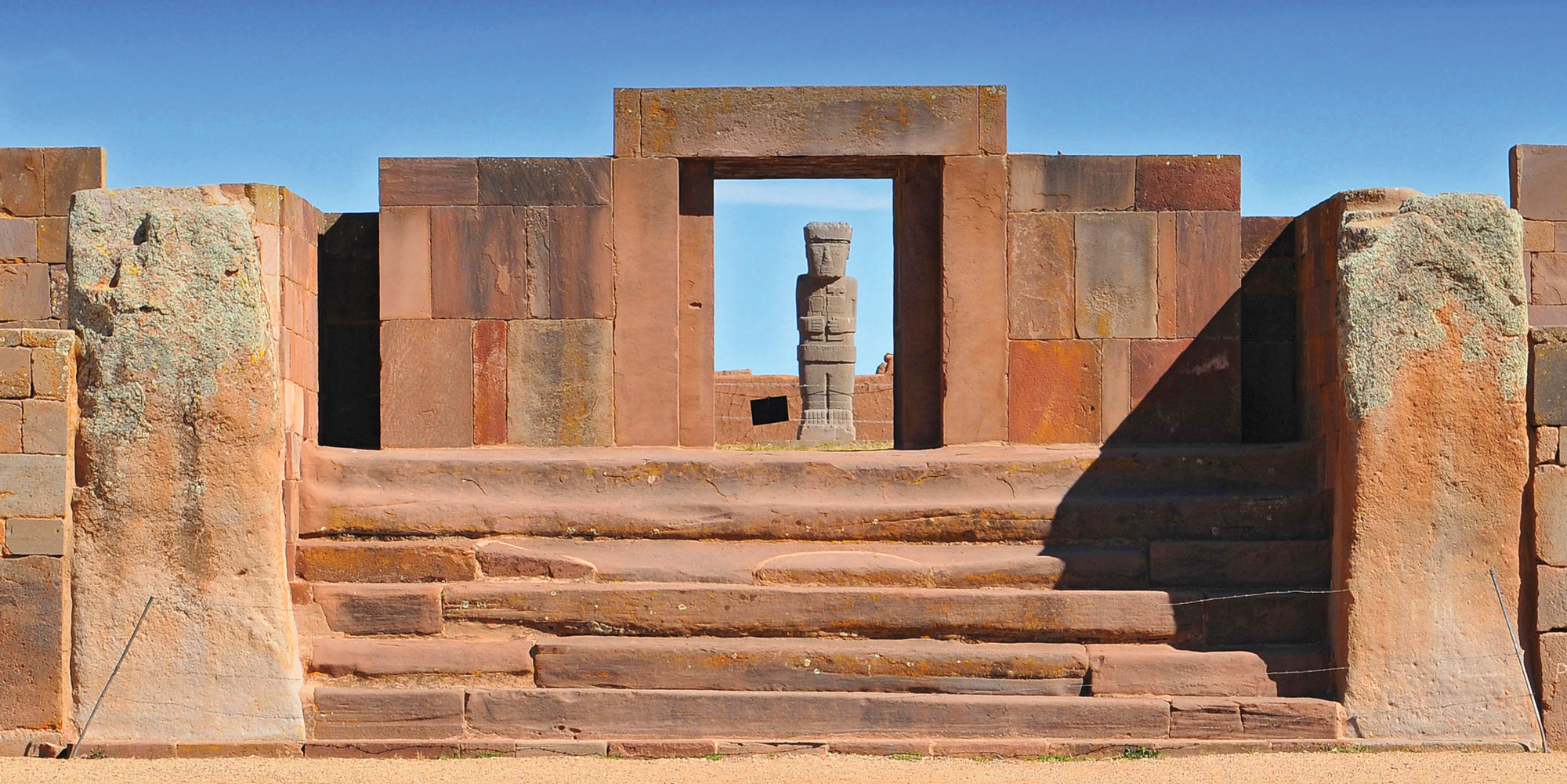

Around A.D. 600, migrants from across the southern Andes were drawn to a city just south of Bolivia’s Lake Titicaca, the world’s highest large lake, at 13,000 feet above sea level. Founded in A.D. 150, Tiwanaku—a name possibly based on the local Aymara people’s term meaning “stone in the center”—was one of the earliest cities in the Andes. It eventually stretched across 1.5 square miles of harsh altiplano, or high plain landscape, between the Cordillera Occidental and Oriental ranges of the Andes Mountains. Amid monumental mudbrick and stone buildings were adobe homes where, between 10,000 and 20,000 people once lived, and around which they buried their dead in underground tombs. These new arrivals were likely drawn to this seemingly inhospitable landscape by extravagant sacred festivals held in and around Tiwanaku’s monuments.