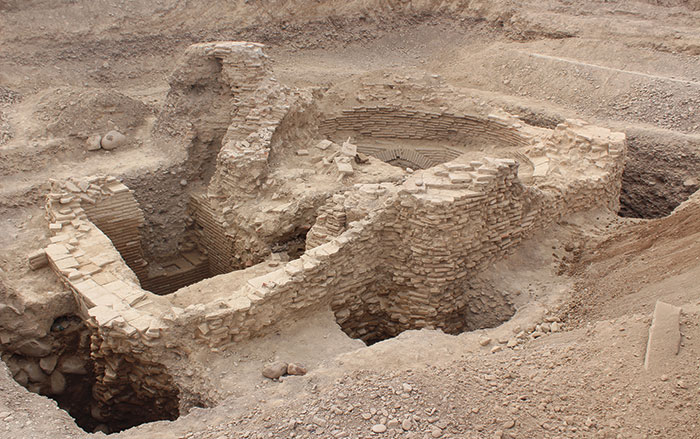
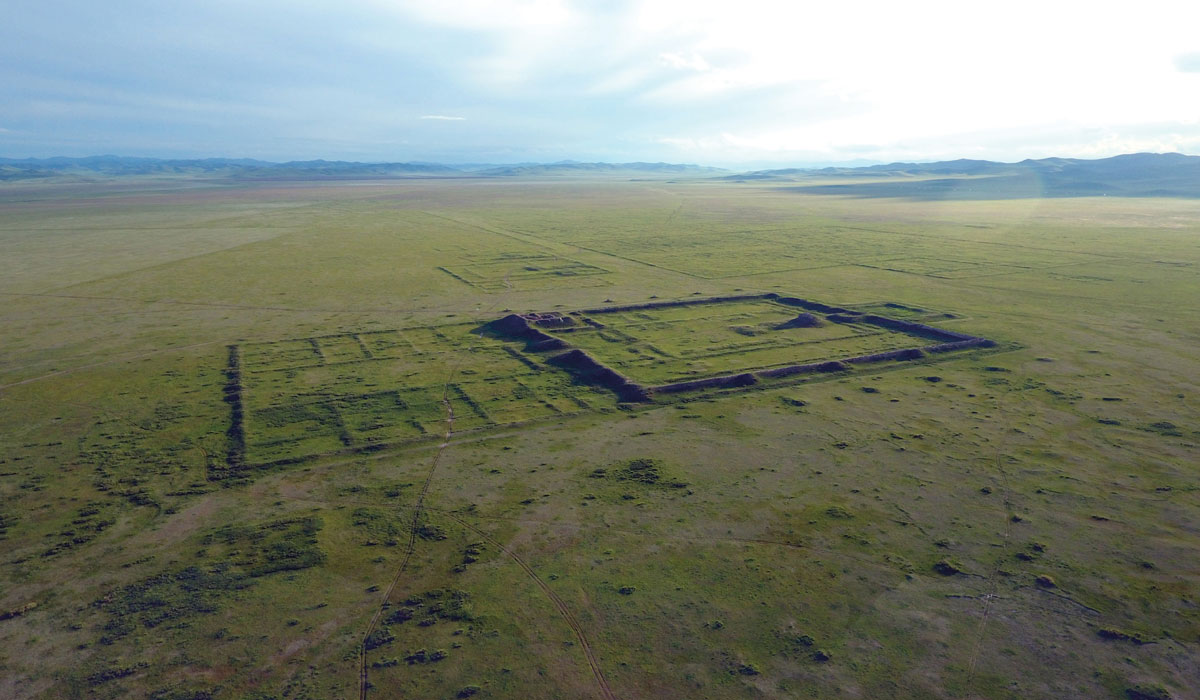
The story of how cities come into being usually goes something like this: Mobile groups settle down and start to farm. Agricultural surpluses, in turn, make it possible for some people to spend their days engaging in activities other than farming, leading to, for example, castes of priests and armies of soldiers with their associated bureaucracies. Eventually, people completely abandon their nomadic past, and some settlements become cities. Some of these cities become capitals of states or even empires. It’s a story as old as the mudbrick urban centers of Sumer and Akkad in Mesopotamia. But on the Eurasian steppe over the last 1,500 years, this process has sometimes been turned on its head. There, nomadic tribes came together to form centrally ruled states—all while staying on the move. A few of these nomadic groups then did something surprising: They recruited skilled workers from neighboring states and built settlements on the expansive grasslands surrounded by walls, featuring palaces and temples, and crisscrossed by streets. In a word, cities.
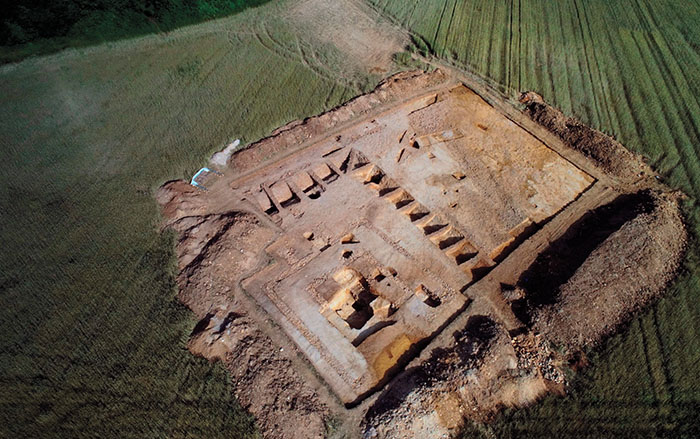
Likely the best-known examples of this unusual phenomenon are the cities built by the Mongols. In 1220, using the spoils of his military conquests across Eurasia, the Mongol ruler Genghis Khan (reigned 1206–1227) founded the city of Karakorum in present-day Mongolia’s Orkhon Valley. The unspectacular remnants of this once-great capital, eroded by time and now mostly covered by grass, can be found 200 miles west of the modern capital of Ulaanbaatar. Karakorum’s walls enclose an area of a little more than a square mile, in which archaeologists have discovered the foundations of a huge Buddhist temple, the remains of what may be a Christian church, and remnants of Genghis Khan’s palace, all hinting at the splendors that voyagers including Marco Polo described in vivid travelogues.