
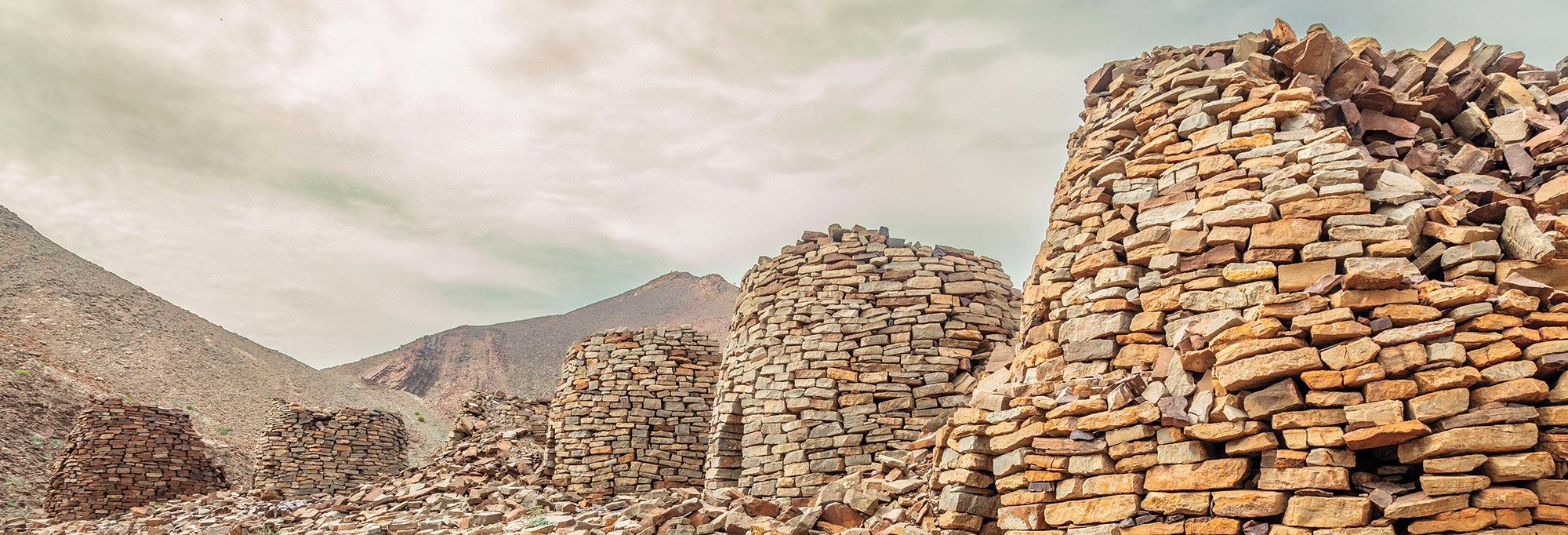

Today, water flows through a canal shaded from the fierce Arabian sun by overhanging palm trees in the remote village of Maqabil in northern Oman. The settlement is at the edge of the Bat Oasis, a pinpoint of green in the otherwise rocky and barren landscape of Oman’s desert interior. While oases might seem as natural to this landscape as the dunes themselves, that’s just a mirage. Oases are often the careful creations of generations subtly manipulating the arid environment. On hills around Maqabil stand mute reminders that people have been altering their surroundings in this hard country for millennia. Those who lived in a settlement in the Bat Oasis more than 4,000 years ago buried their dead in conical tombs standing as tall as two stories that were constructed of meticulously stacked limestone blocks. Together with other well-preserved tombs at sites such as Al-Ayn and Shir, the monuments of the Bat necropolis are the most prominent of thousands of Early Bronze Age (3300–2000 b.c.) tombs that stud the craggy foothills of the Al Hajar Mountains, peaks that rise to more than 4,000 feet near Oman’s eastern coast.