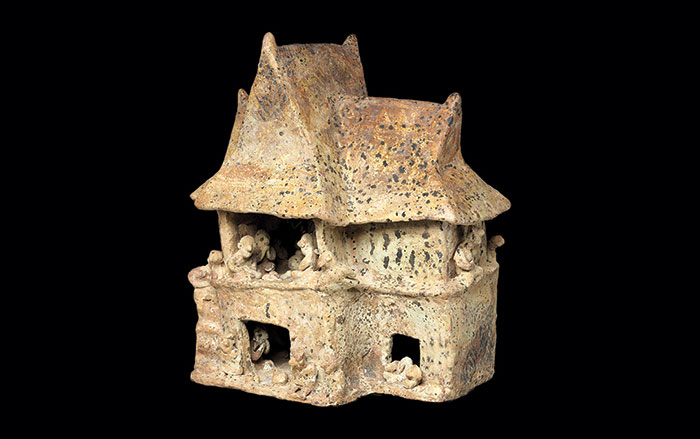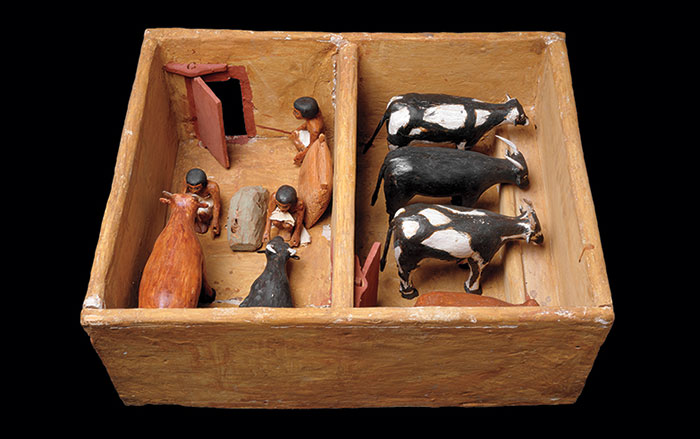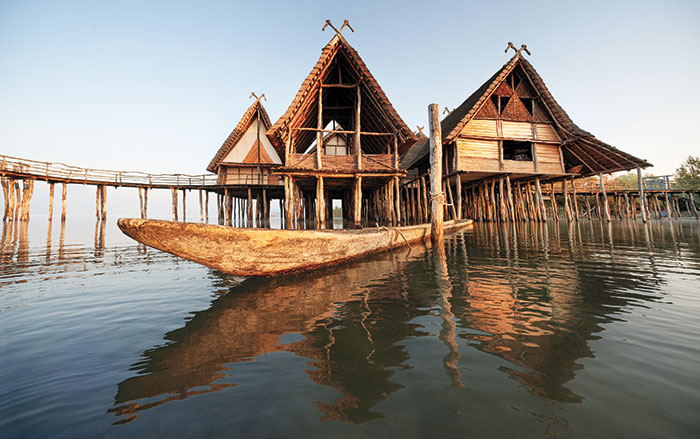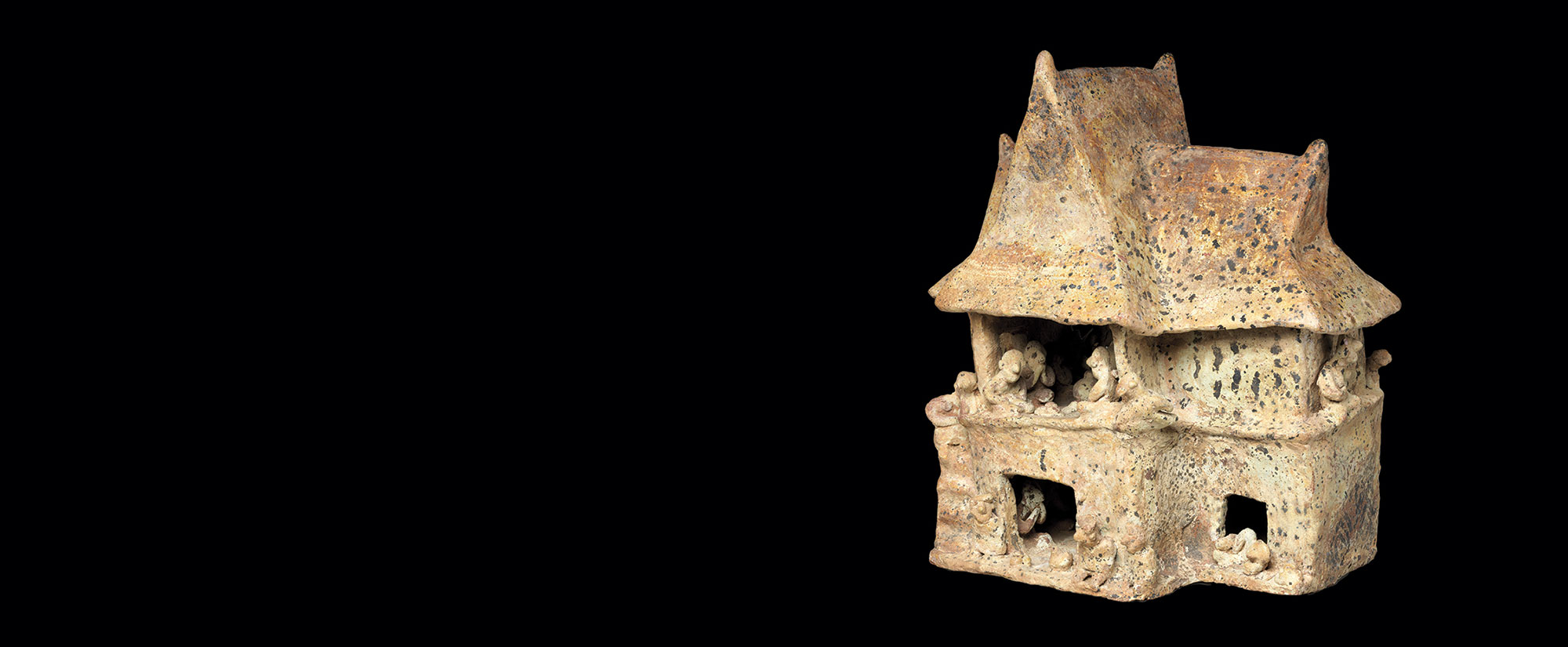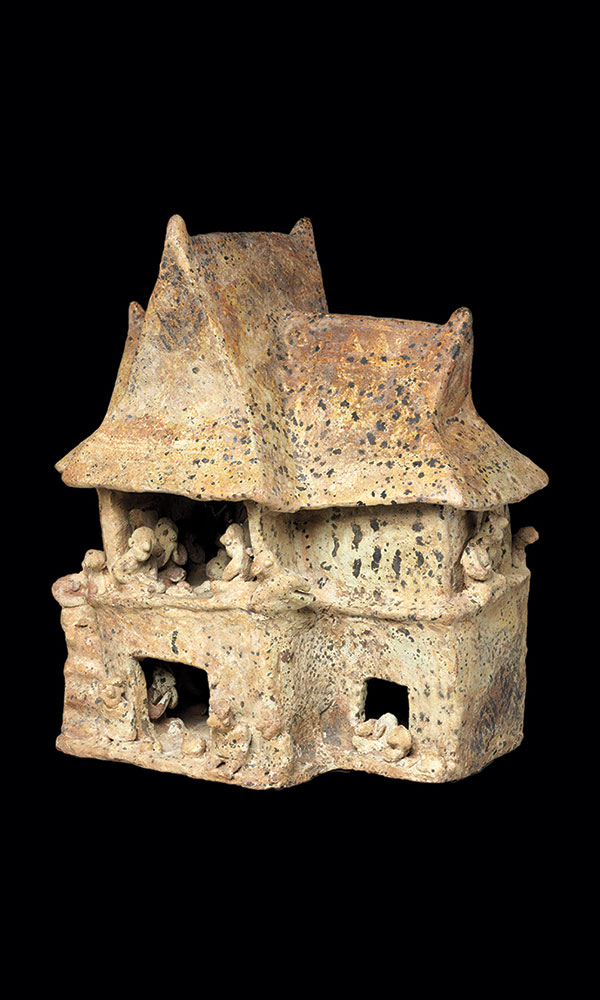



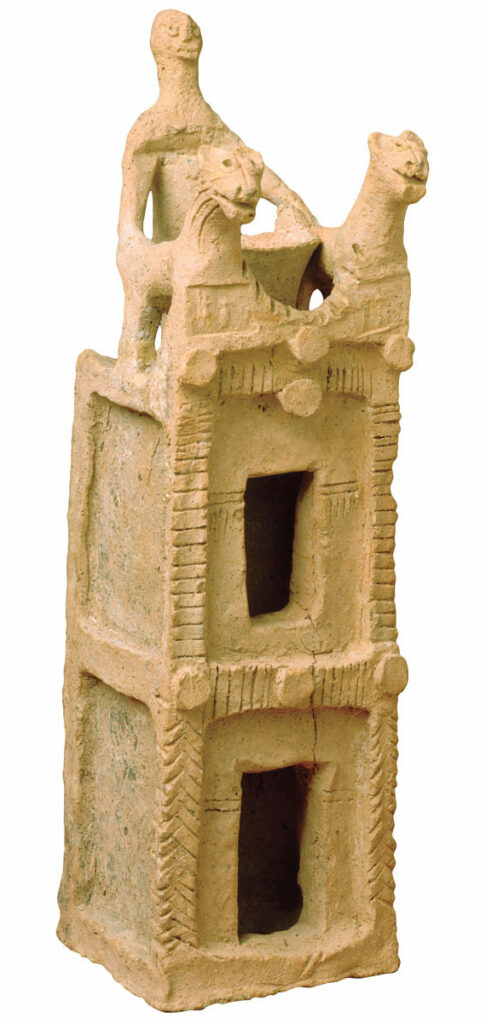
Artisans working with clay in ancient Mesopotamia had a wealth of imagery to choose from. Their world was filled with depictions of mighty deities, powerful kings, and majestic animals, and their sprawling cities were replete with monumental public structures. Many of these elements were incorporated into clay architectural models that, says Annie Caubet, honorary curator at the Louvre, likely drew on a combination of inspirations. “It’s now agreed that, although these miniature buildings were largely the result of the craftsperson’s imagination,” she says, “their creators couldn’t help being consciously or unconsciously inspired by actual buildings in their environment.” For example, Mesopotamian buildings are known to have had wooden beams, which appear as circular bosses on the facades of some models. Flat roofs and mullioned windows and doors are also part of many models, which were often decorated with painted or molded figures of divinities, humans, or animals.