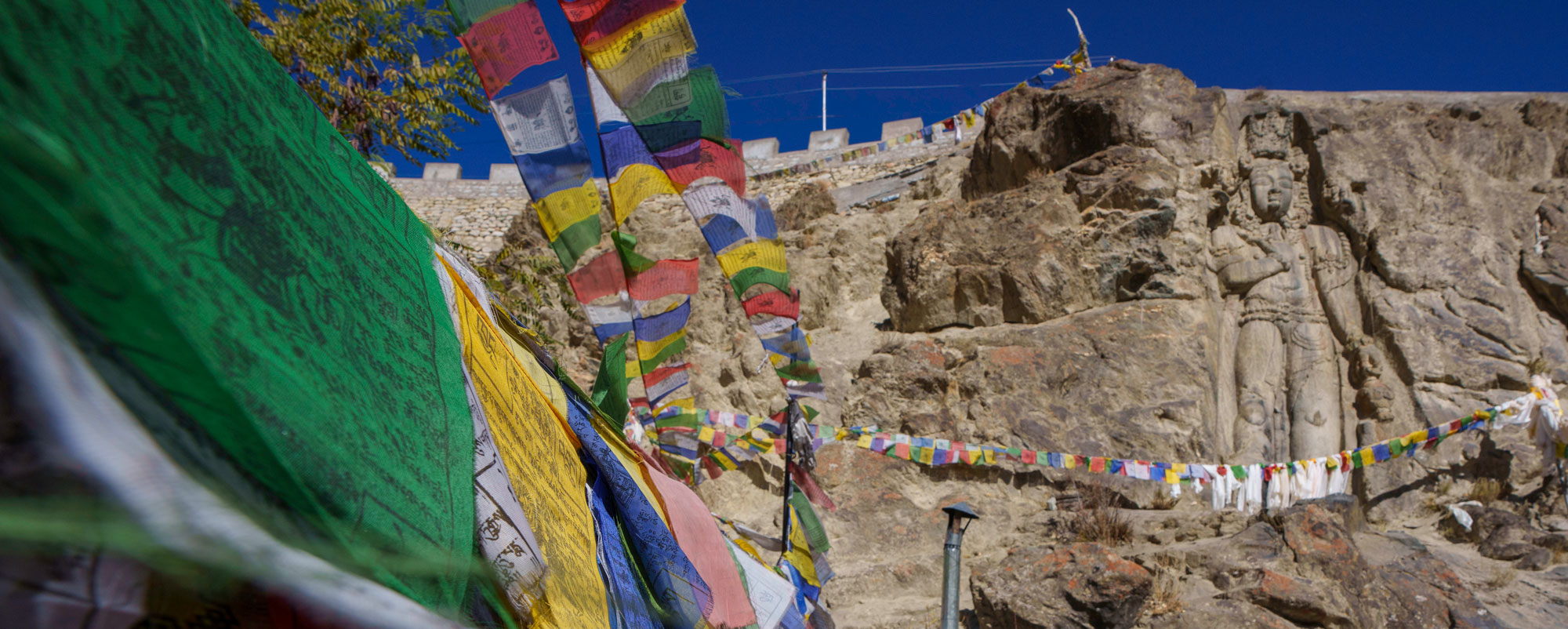
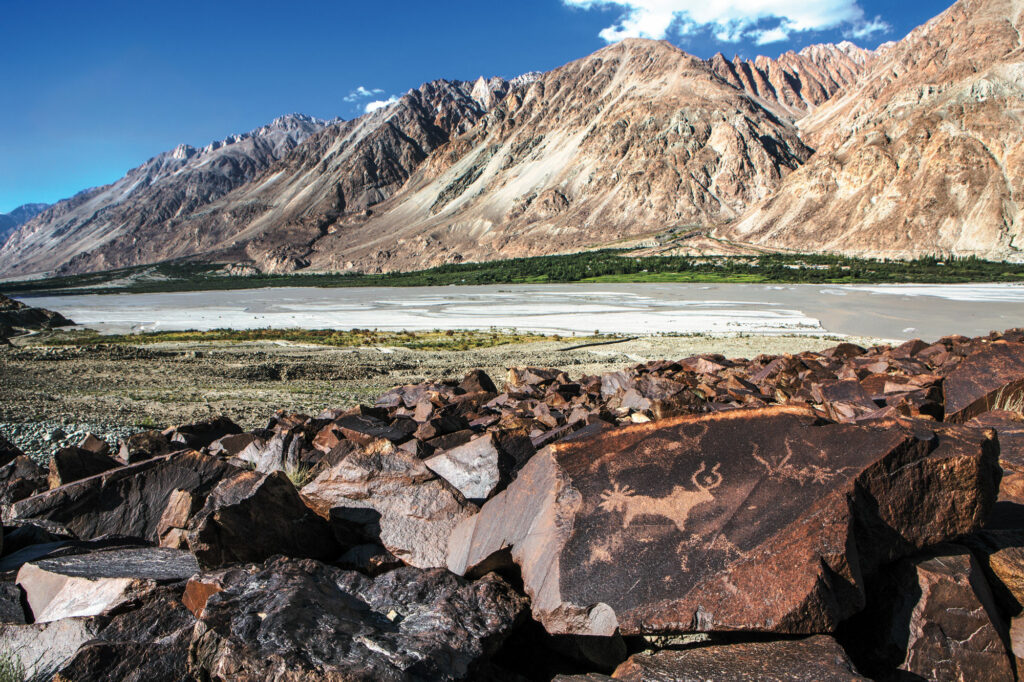
At the westernmost edge of the Himalayan Range, the high-altitude region of Ladakh is encircled by towering peaks and cut through by raging rivers. This alpine desert features some of the coldest environments in the world and is home to among the planet’s highest permanent settlements, which are nestled as much as 19,000 feet above sea level. Ribbon-shaped glaciers flow into steep mountain valleys, and small herds of yaks graze on terraces between white Buddhist stupas, dome-shaped monuments that often contain sacred relics. Wildlife including snow leopards, ibex, and brown bears move carefully along the region’s knife-edge granite outcrops. Throughout the winter, villagers, many living without electricity in communities connected only by steep mountain footpaths, subsist on yak butter tea, dried greens, and meat from the occasional sheep or yak that farmers feed with fodder stored on the roofs of their mudbrick homes. During warmer seasons, nomadic families continue a millennia-old practice of bringing livestock into the high mountains for summer grazing.