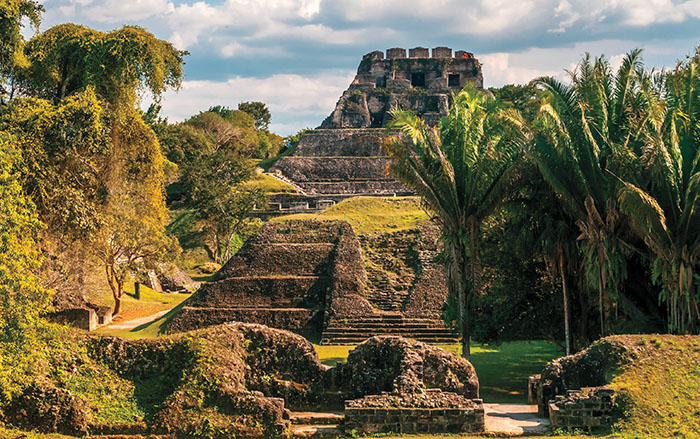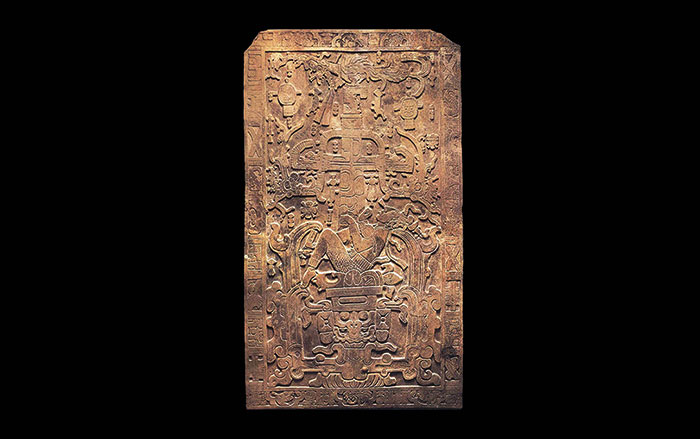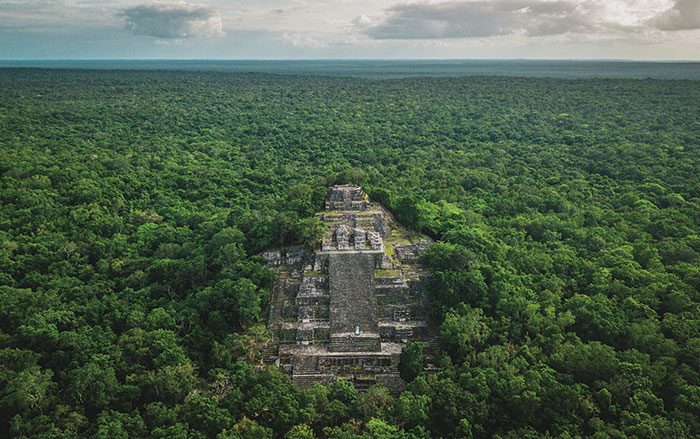
After more than four decades of excavation at the Maya site of Caracol, a team led by University of Houston archaeologists Arlen and Diane Chase made a first-of-its-kind discovery when they uncovered the tomb of Te’ Kab Chaak, founder of the kingdom’s ruling dynasty. It is exceedingly rare in Maya archaeology to be able to associate human remains with a historic figure known from hieroglyphic inscriptions. This is also the only tomb of a ruler to have been found in Caracol.
Te’ Kab Chaak ascended to the throne in a.d. 331 and presided over Caracol in its early stages, before it grew into one of the most powerful Maya cities in the southern Yucatán Peninsula. The ruler’s burial was unearthed in an area of the site that the Chases first investigated in 1993. This past year, the team revisited the location and detected a large void just below the spot where their earlier excavations had stopped. “There was a eureka-type moment when we stuck a measuring stick in, and it didn’t touch the bottom,” says Arlen Chase. “We knew there had to be something there, but the question was, how do we get in?”
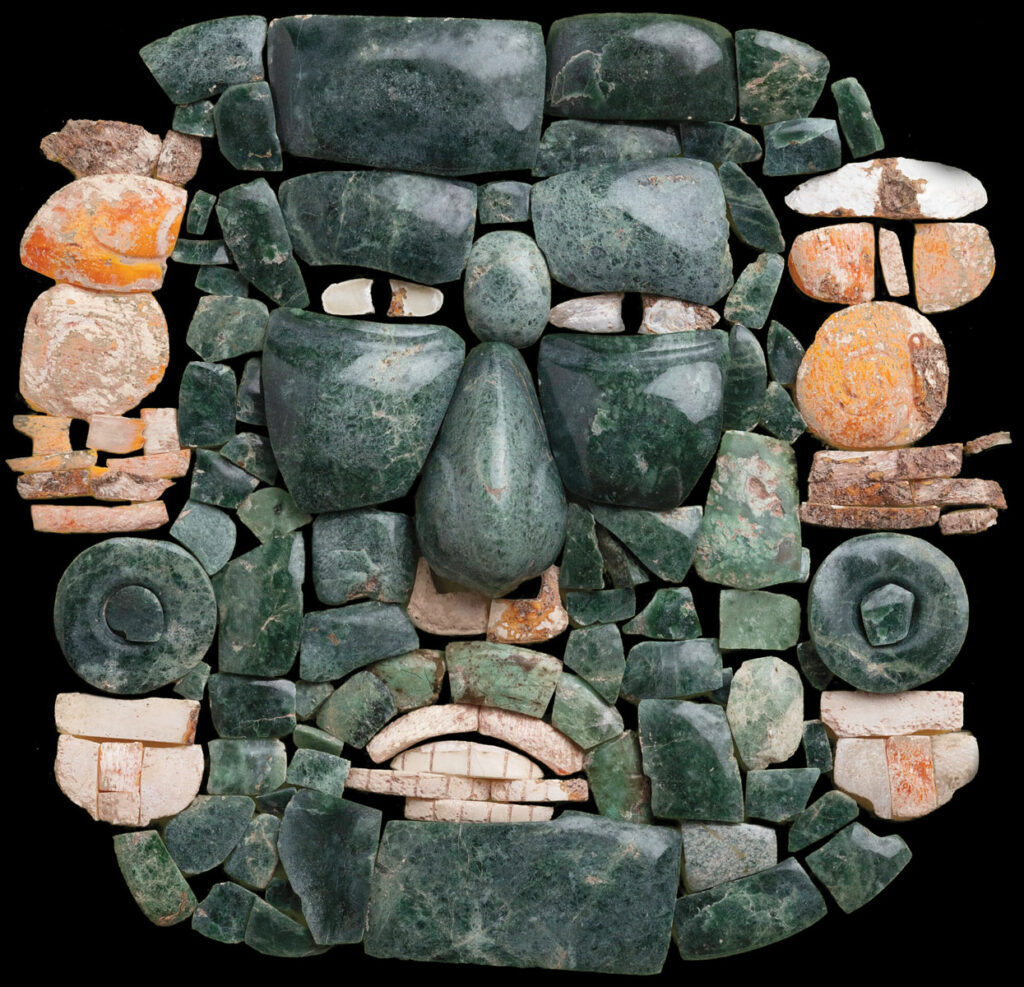
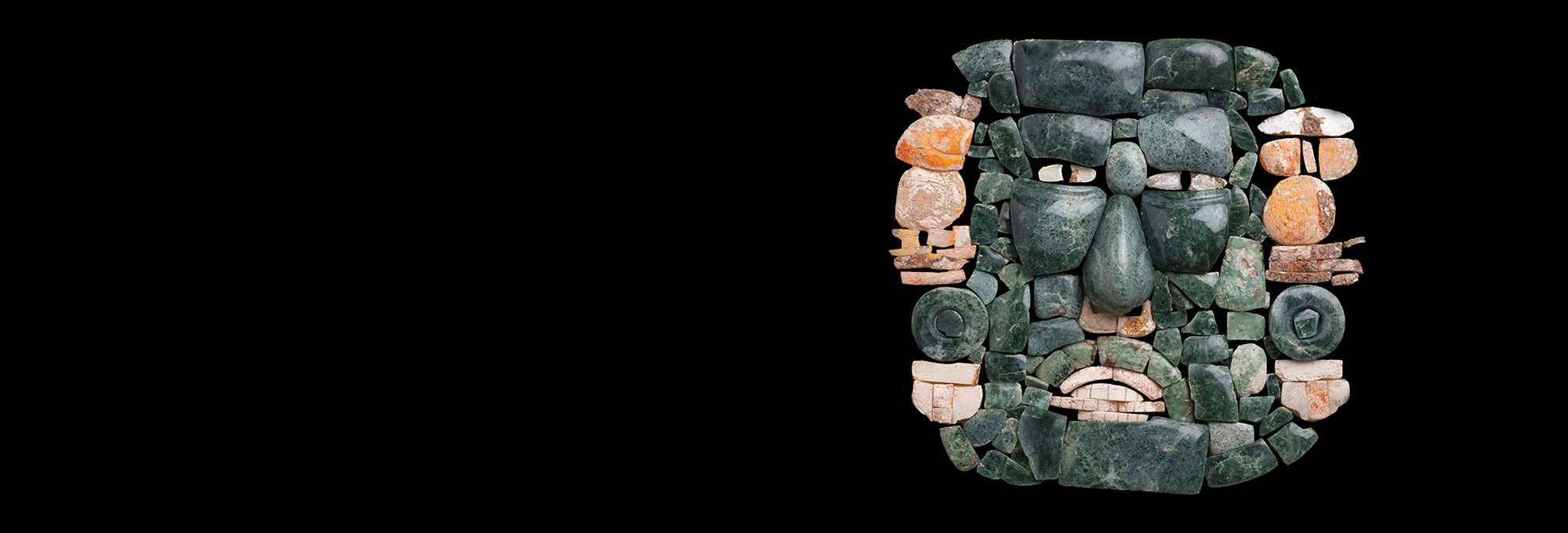
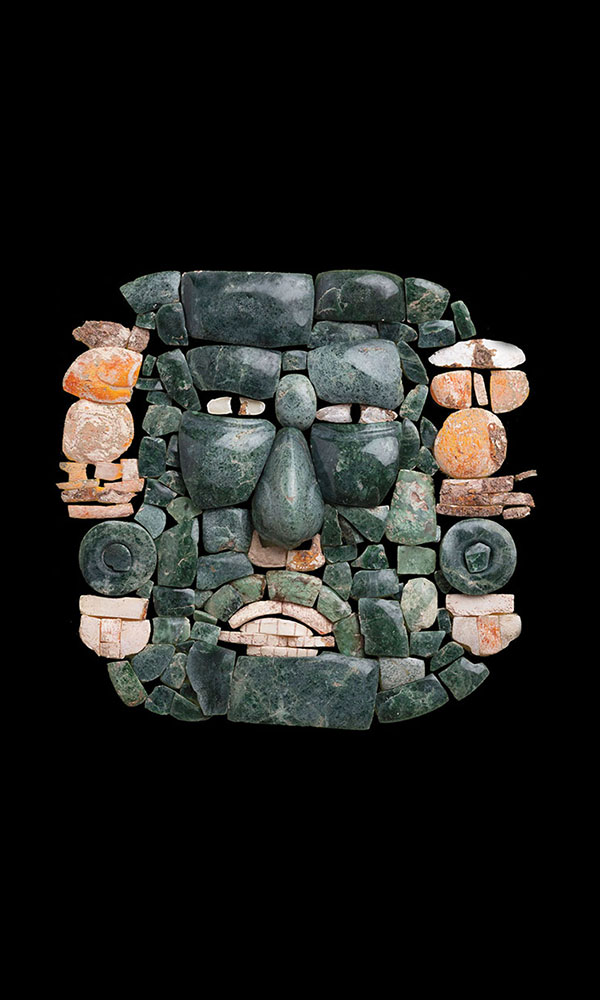
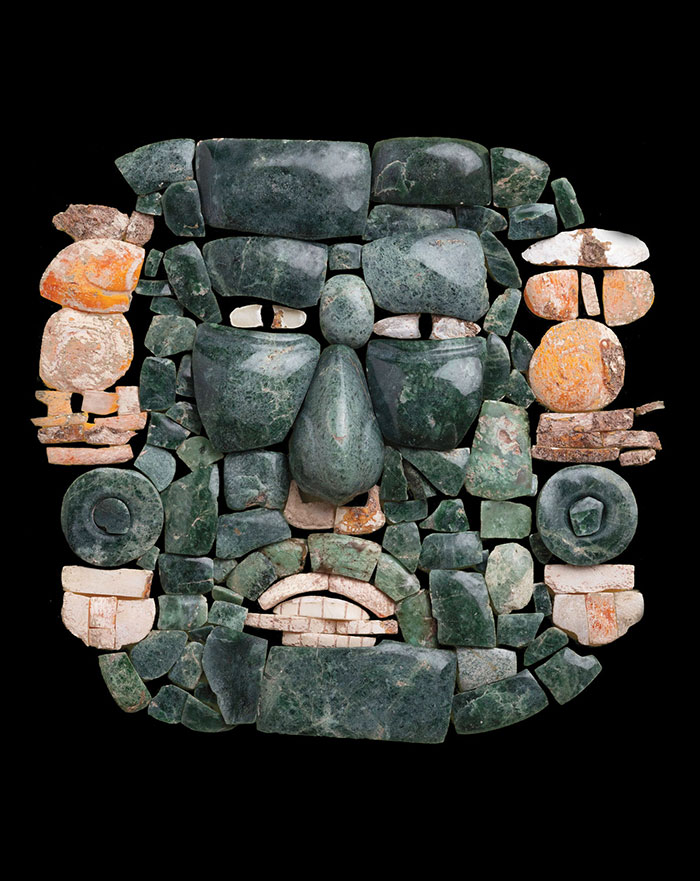
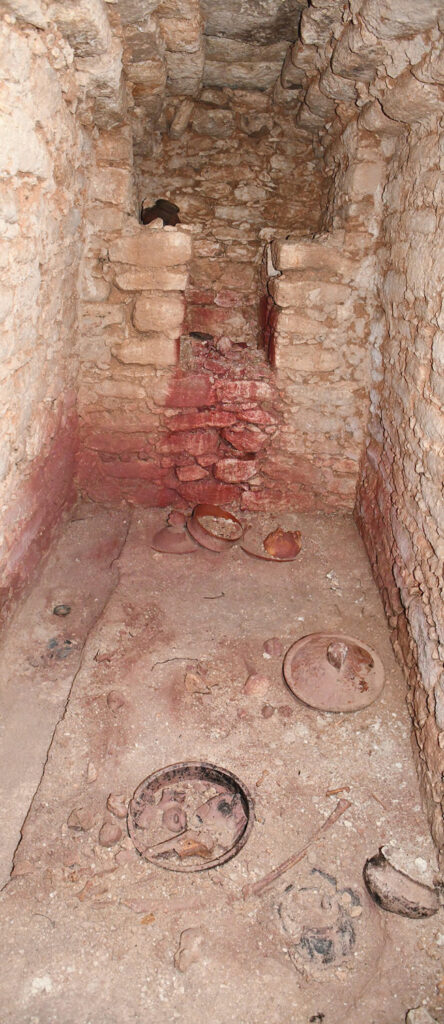
When members of the team entered the void, they found a seven-foot-high rectangular burial chamber whose walls were covered with red cinnabar, evidence that the deceased was a person of importance. Artifacts on the chamber’s floor included pottery vessels, jadeite jewelry, and carved bone tubes that the archaeologists have dated stylistically to the reign of Te’ Kab Chaak, which ended around a.d. 350. The most exceptional object was a jade-and-shell mosaic death mask that once covered the face of the Maya king. “This discovery is both a story of how quickly things can happen, but also how much patience you need to have,” says Diane Chase. “On one hand, it was more than a thousand years in the making, but for us, it was at least forty years.”