Oldest Mummified People

Top 10 Discoveries of 2025 January/February 2026

Southern China and Southeast Asia
Courtesy Indonesian-French Joint Prehistory Program
SHARE:

While excavating burials of hunter-gatherers in a cave in Vietnam, archaeologist Hsiao-chun Hung of the Australian National University wondered how to explain the flexed, folded, and contorted positions of some skeletons. She suspected these people had originally been mummified in a smoke-drying process, based on ethnographic reports of such practices in Southeast Asia as recently as the twentieth century. To test the theory, Hung’s team analyzed skeletal remains of 57 people found at 11 different sites across China, Vietnam, and Indonesia that date to between 10,000 and 2000 b.c. The researchers used techniques that involved bombarding the bones with X-ray beams and infrared light. Their results indicated that many bones had been heated at low temperatures. Some also had visible burn marks. The team concluded that the bodies had indeed likely been dried over fires.

Once mummified and bound, the bodies would have been light enough to move easily. “These hunter-gatherers might have been carrying ancestral people with them,” says archaeologist Peter Bellwood, also of the Australian National University. “As the bodies decayed and fell apart, they decided to bury them.” Some of the burials have been dated to approximately 10,000 years ago, making them the earliest known intentionally mummified people in the world. “What is striking,” Hung says, “is how widespread this tradition seems to have been.”

MORE FROM Top 10 Discoveries of 2025

  • Top 10 Discoveries of 2025 January/February 2026

    Crete's Inner Circles

    Papoura Mountain, Greece

    Read Article
    George Drakonakis/Ephorate of Antiquities of Heraklion
  • Top 10 Discoveries of 2025 January/February 2026

    Dining With Dionysus

    Pompeii, Italy

    Read Article
    Pasquale Sorrentino
  • Features January/February 2026

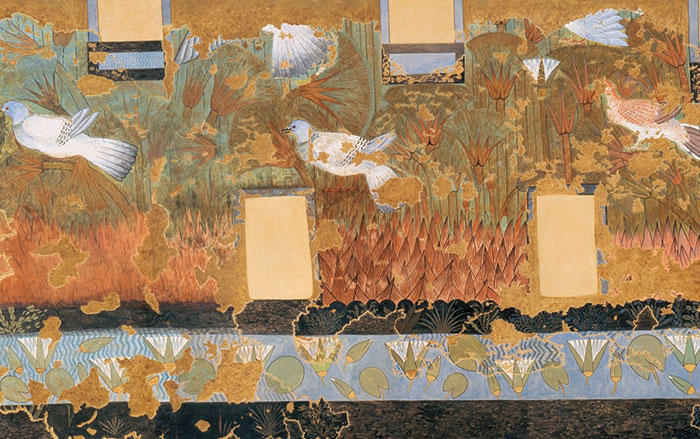
    The Birds of Amarna

    An Egyptian princess seeks sanctuary in her private palace

    Read Article
    The Metropolitan Museum of Art, New York/ Rogers Fund, 1930
  • Features January/February 2026

    Taking the Measure of Mesoamerica

    Archaeologists decode the sacred mathematics embedded in an ancient city’s architecture

    Read Article
    Courtesy Claudia I. Alvarado-León
  • Features January/February 2026

    Stone Gods and Monsters

    3,000 years ago, an intoxicating new religion beckoned pilgrims to temples high in the Andes

    Read Article
    The ritual center of Chavín de Huántar flourished in northern Peru.
    Courtesy John Rick
  • Features January/February 2026

    Top 10 Discoveries of 2025

    ARCHAEOLOGY magazine’s editors reveal the year’s most exciting finds

    Read Article
    Courtesy of the Caracol Archaeological Project, University of Houston