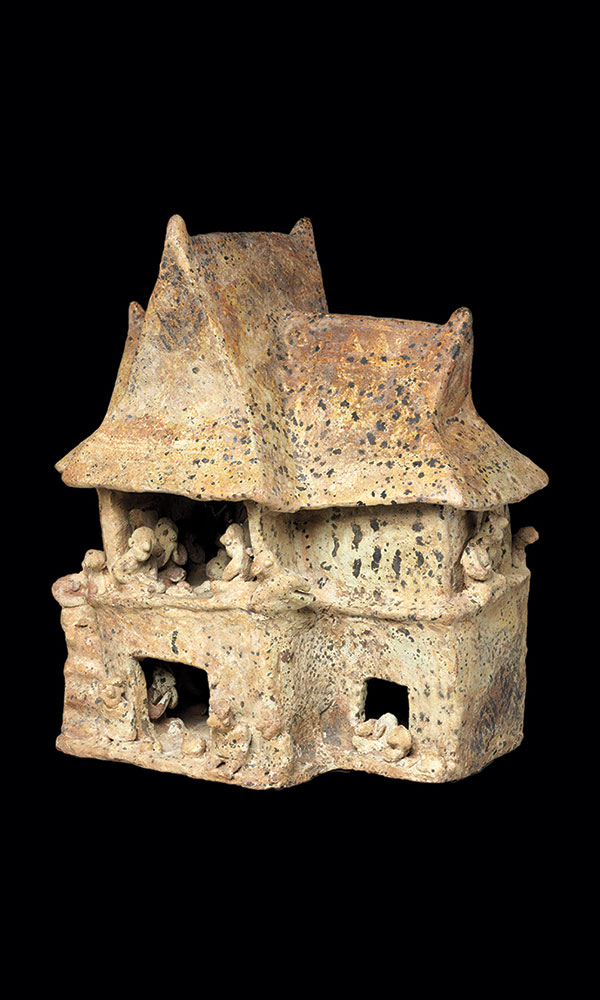



As early as 5000 b.c., Neolithic people in China sculpted pottery in the shape of structures such as roofs or huts, but the craft reached new heights of popularity during the Han Dynasty (206 b.c.–a.d. 220). In this era of widespread prosperity, a nonhereditary elite class of scholar-officials rose to power. Confucian morality was these men’s lodestar, and many believed immortality was attainable. Funerary objects called mingqi were buried in both grand and humble tombs. Among the most fanciful mingqi were earthenware architectural sculptures, thousands of which survive. “Anybody who could afford one probably had one,” says art historian Nancy Steinhardt of the University of Pennsylvania.
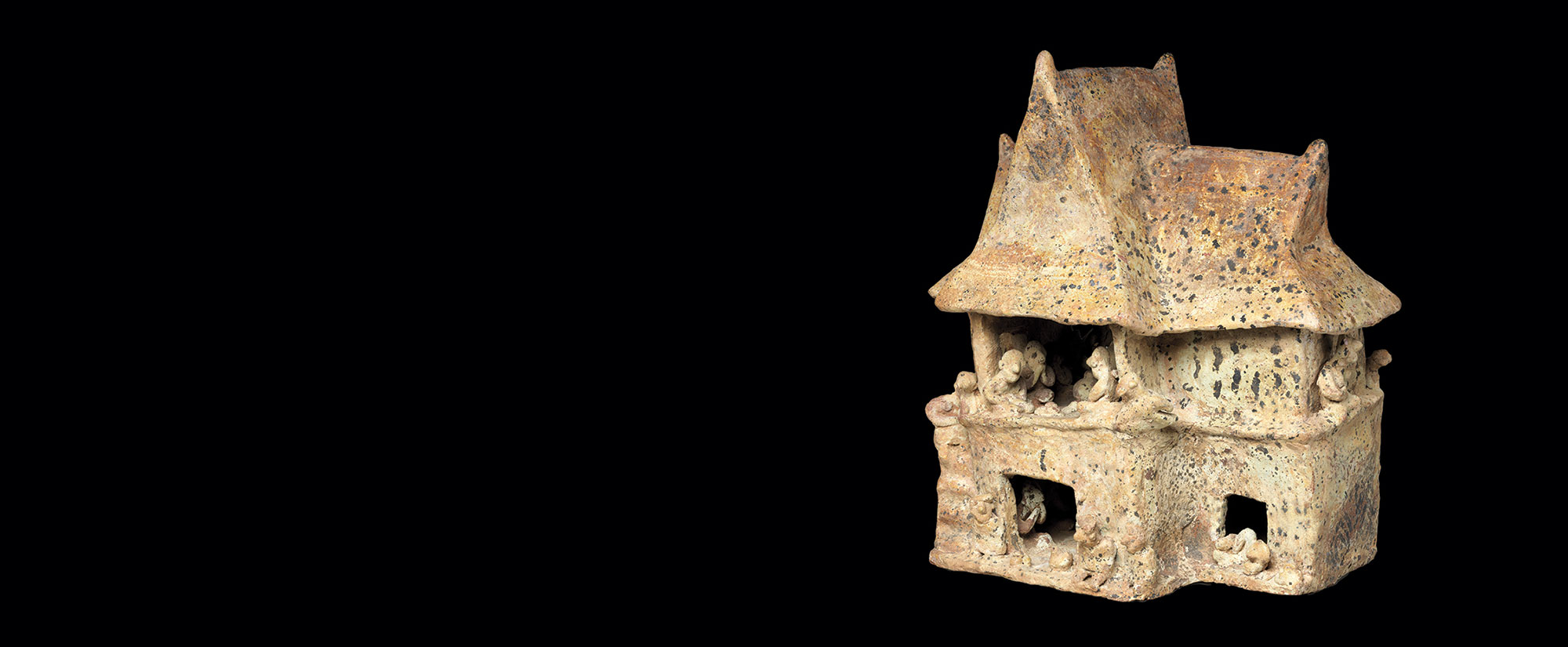
Parts of these architectural mingqi were mass-produced, but no two are the same. Some represent fortified courtyard houses or high towers. Others depict granaries, stoves, animal pens, wells, and even latrines. “This is the whole range of China’s built environment, to the extent that we can know it,” says Steinhardt. Some details found on architectural mingqi, such as the patterns of roof tiles, match remnants of actual buildings. Other embellishments are equal parts delightful and baffling. Tiny human figurines peer over walls or slide down roofs. Animals such as goats, fish, birds, turtles, and frogs take up residence in some structures. Many towers have dishes or bowls as bases. If a water ritual was once associated with them, it has been long forgotten.