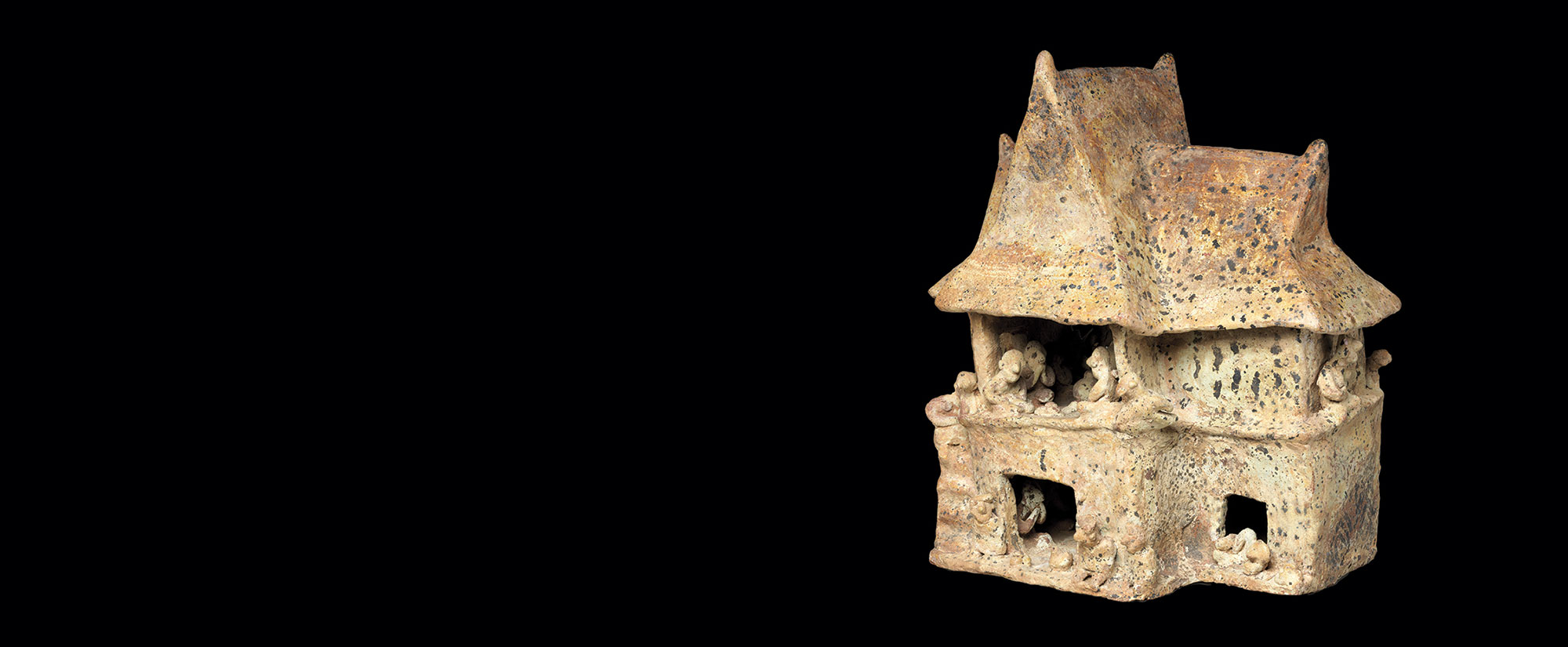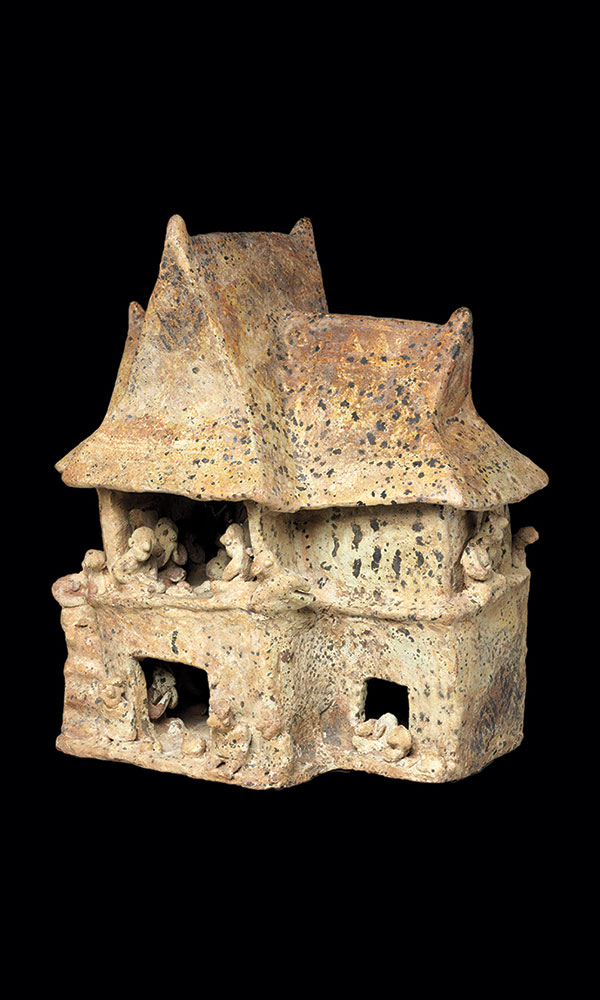



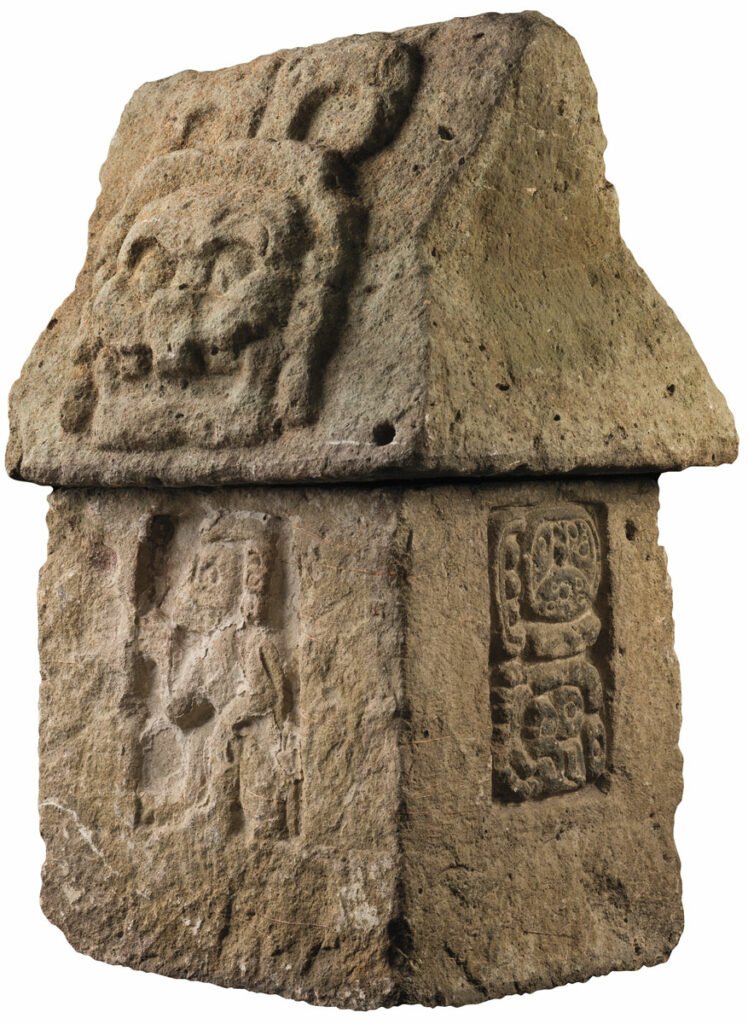
Many Mesoamerican cultures created architectural models of houses and temples, but very few are known from the Maya world. Among the rare examples are four models called house effigies that researchers from Harvard University’s Peabody Museum of Archaeology and Ethnology recovered from the ancient city of Copán in the 1890s. Each model is carved from volcanic tufa in two pieces—a rectangular living space and a lid in the shape of a gabled roof. Since the roofs of most Maya homes were made of thatch and hence have not survived the centuries, these models offer archaeologists an idea of how Copán’s residences may have looked. The objects are modeled after domestic spaces, but they seem to have been intended to bridge the human and divine realms. “Glyphs carved on the effigies specifically refer to them as a ‘sleeping space for a god,’” says Peabody Museum curator Barbara Fash.