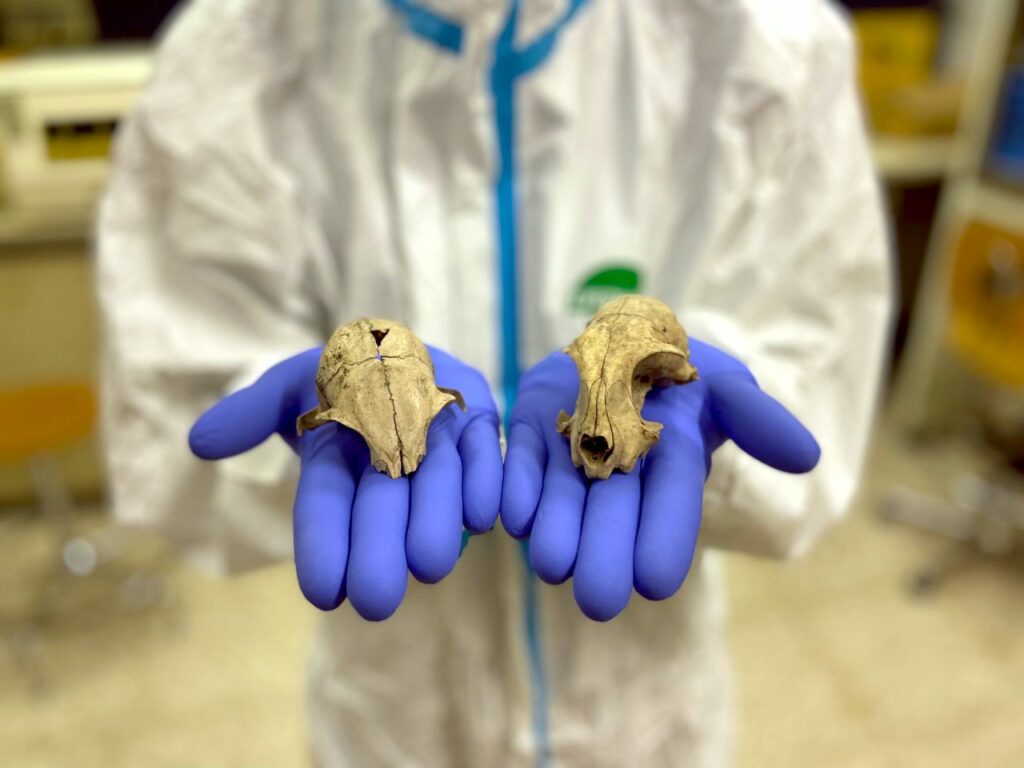
ROME, ITALY—Gizmodo reports that analysis of DNA samples taken from 70 cats who lived in Europe, North Africa, and Anatolia between the ninth century B.C. and the nineteenth century A.D. suggests that cats (Felis catus) may have arrived in Europe just 2,000 years ago. It had been previously thought that cat domestication began some 10,000 years ago, when wildcats lived alongside farmers in the Levant and hunted rodents seeking stored grain. Cats were then thought to have traveled with Neolithic farmers who left Anatolia for Europe some 6,000 years ago. Felines are known to have been revered in Egypt about 4,000 years ago. But when Claudio Ottoni and Marco De Martino of the University of Rome Tor Vergata and their colleagues compared the genomes of the ancient cats with DNA from modern domestic cats and wildcats, they found that today’s cats are more closely related to wildcats from North Africa (Felis lybica) than wildcats from the Levant. They also determined that the earliest ancestral domestic cats from Europe in the study were just 2,000 years old. Prior to that, the researchers discovered, cats in Europe and Anatolia were genetically European wildcats. Additionally, feral cats in Sardinia—long thought to be the descendants of local domestic cats—were found to be more closely related to North African wildcats. People are now thought to have introduced wildcats to the island some 2,200 years ago. When cat domestication occurred is still a question for continuing research. “Our objective now is to analyze ancient samples from archaeological sites in Africa, including Egyptian mummies from the Pharaonic period,” Ottoni and De Martino said. To read about a mischievous cat's exploits in ancient Egypt, go to "The Cat and the Fat."