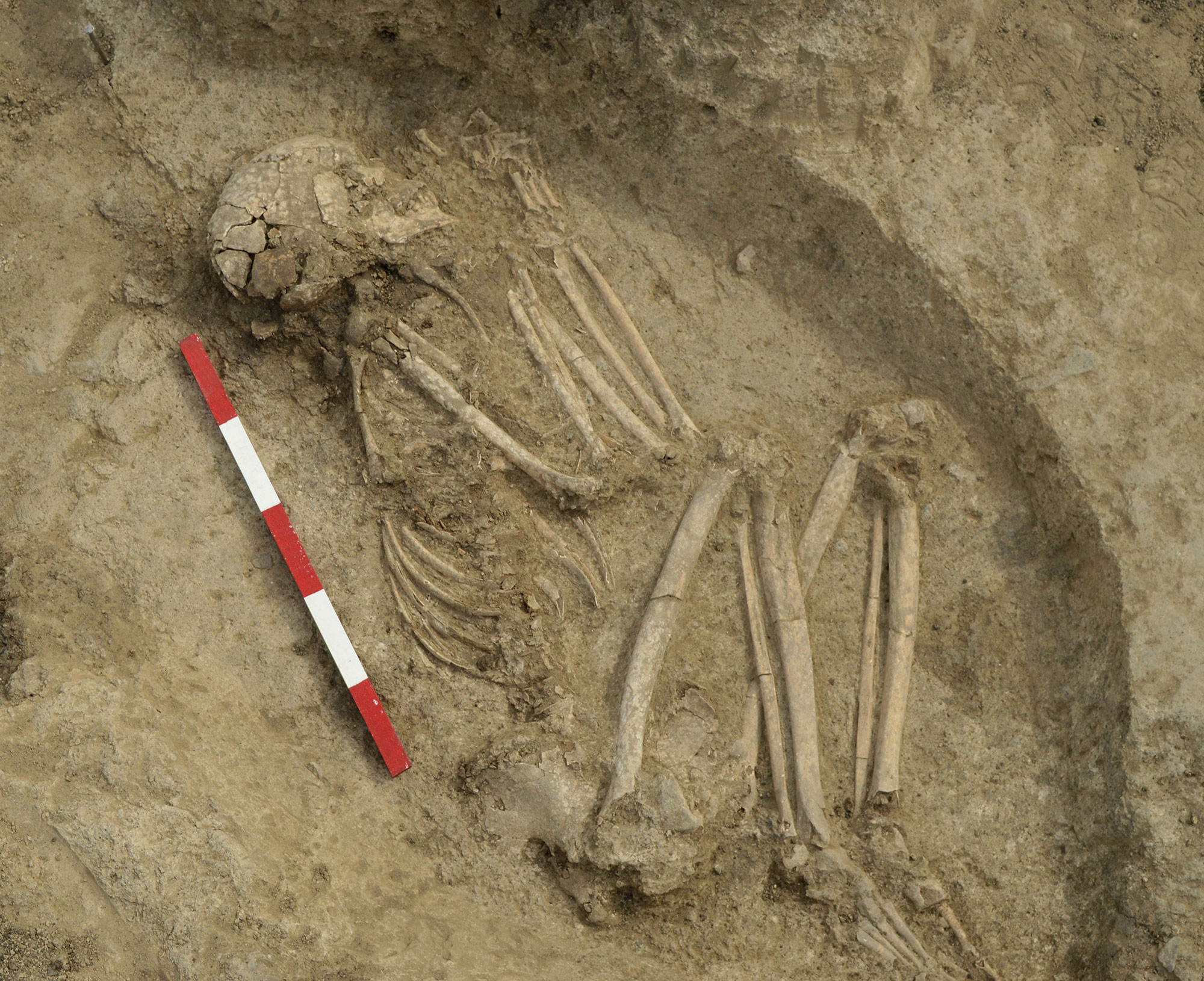
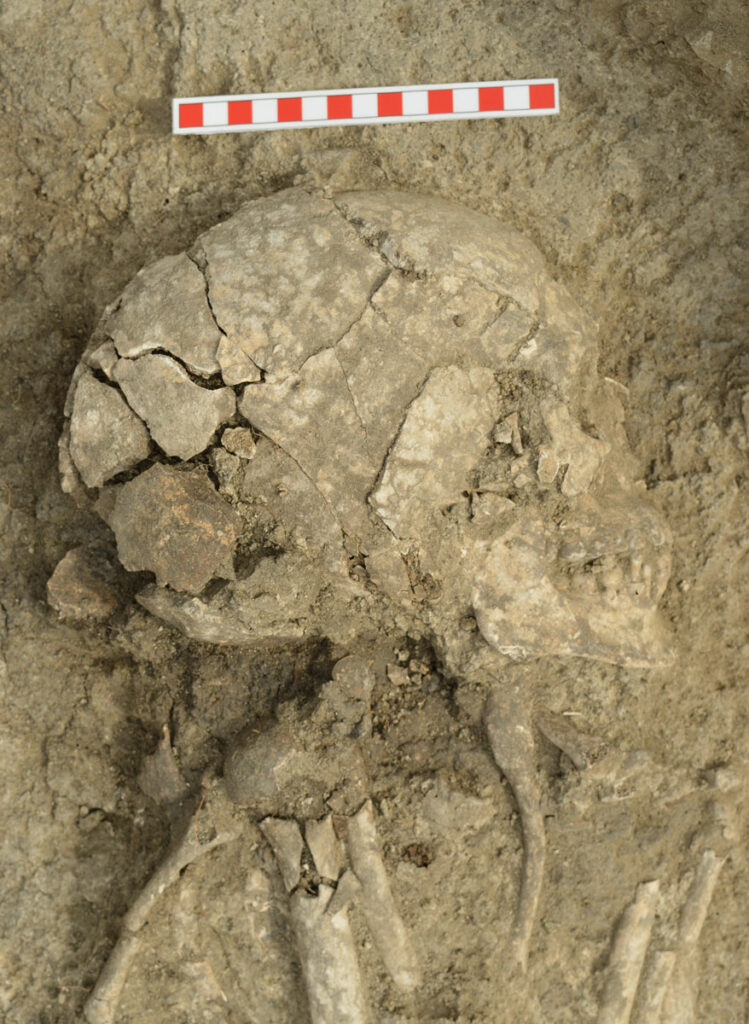
SOFIA, BULGARIA—According to a Live Science report, an interdisciplinary team of researchers from the Bulgarian Academy of Sciences, including zooarchaeologist Nadezhda Karastoyanova of the National Museum of Natural History of the and anthropologist Victoria Russeva, examined the 6,200-year-old skeletal remains of a teenaged boy and determined that he had been attacked by a lion (Panthera leo). His remains were unearthed in eastern Bulgaria at a prehistoric necropolis known as Kozareva Mogila by a team of archaeologists led by Veselin Danov and Petya Georgieva. The boy is thought to have been knocked to the ground before his legs, left arm, and head were bitten repeatedly. The attack resulted in severe puncture wounds likely to have caused damage to his brain, Karastoyanova explained. To identify the predator, the researchers molded the bites of large carnivores in the museum’s skeletal collections, including those from the skulls of lions and bears. They then compared these tooth imprints with the wounds on the boy’s skull, and considered the distribution of large carnivores in the region. Evidence of healing, however, indicates that the teen likely received medical care and survived for two or three months after the Panthera leo attack. Read the original scholarly article about this research in the Journal of Archaeological Science: Reports. To read about these big cats' symbolic significance throughout the ancient world, go to "When Lions Were King."