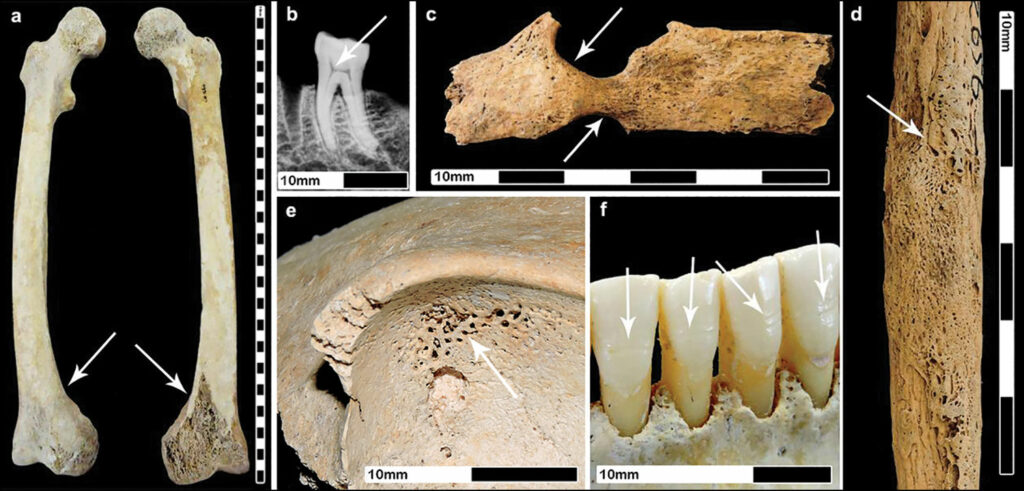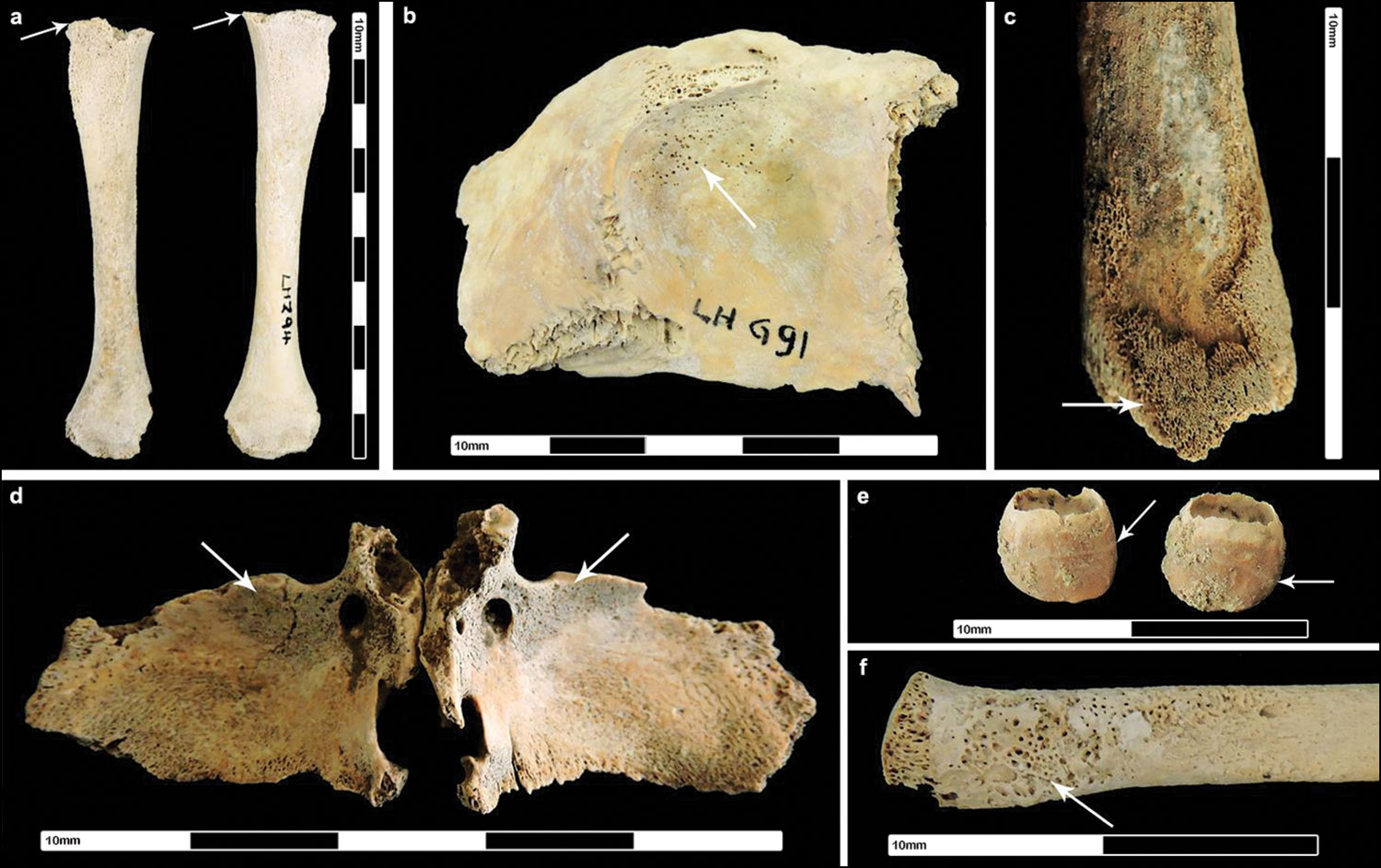
READING, ENGLAND—According to a statement released by Antiquity, Rebecca Pitt of the University of Reading examined the bones of women and infants who lived in south and central England before the arrival of the Romans in A.D. 43 and during their occupation of the island. “Mothers and infants are underrepresented in historical accounts,” Pitt said. “By looking at mother-infant experiences together, we can observe the long-lasting impact urbanization has on the health of individuals, with negative health signatures passed from mothers to their children,” she explained. Pitt identified the age of death for each individual and assessed each person’s health status, based on indicators such as skeletal lesions. She determined that the health of the women and children declined overall during the Roman period, but mainly among those who lived in urban areas. People who lived in rural areas did show slightly more signs of exposure to disease than they had prior to the arrival of the Romans, Pitt explained, but the difference was not statistically significant. She suggests that the decline in health in urban areas can be attributed to overcrowding, pollution, limited access to resources, and devastating exposure to lead in Roman infrastructure. Read the original scholarly article about this research in Antiquity. To read about the origins of a man buried in Cambridgeshire during the Roman period, go to "Ancient DNA Revolution: A Stranger in a Strange Land."