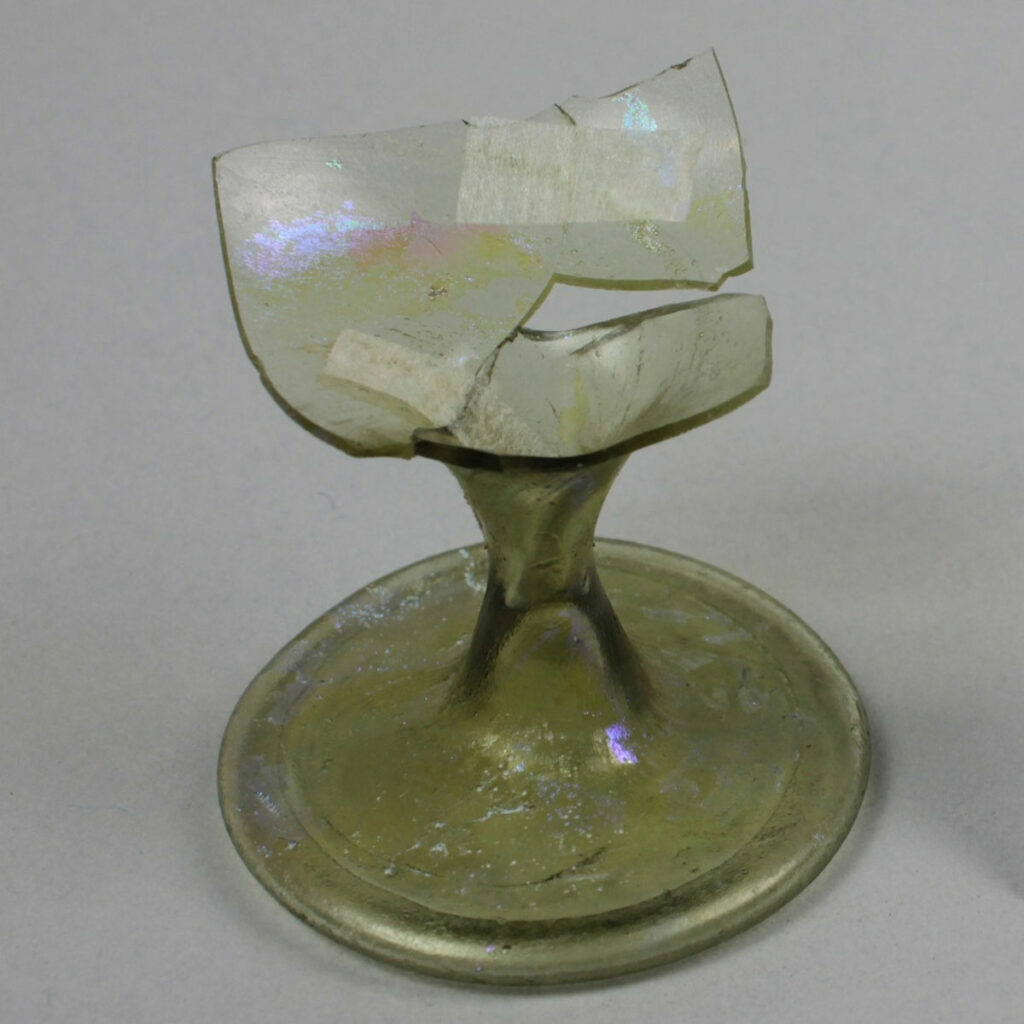
VENICE, ITALY—According to a statement released by Ca’Foscari University of Venice, Margherita Ferri of Ca’ Foscari University, Elisabetta Gliozzo of the University of Florence, and Eleonora Braschi of Italy’s National Research Council analyzed glass fragments, waste from glass production, and a steatite crucible unearthed at the site of San Pietro di Castello on the island of Olivolo. All of the objects were dated from the sixth to the ninth centuries A.D., when the island was located near the entrance to Venice’s harbor. Roman glass was made with natron from Egypt, but when it became difficult to obtain this material, Europeans began to make glass with plant ash. The researchers discovered that glass was fabricated using the new recipe in Venice as early as the eighth century. The chemical makeup of the glass also revealed that these new ingredients had been imported from the Levant. “This means that Venice, 1,300 years ago, not only was aware of this new technology, but its trade networks were so efficient that it imported cutting-edge materials produced hundreds of kilometers away,” Ferri said. Testing also showed that an early medieval blue mosaic tile containing an opacifying agent that fell out of use after the fourth century had been made with recycled Roman glass. Medieval Venetians also produced blue-colored glass by reusing metalworking slag, which contains cobalt, the researchers explained. Read the original scholarly article about this research in Archaeological and Anthropological Sciences. To read about remnants of a Roman road that is now submerged in the Venetian lagoon, go to "A Trip to Venice."