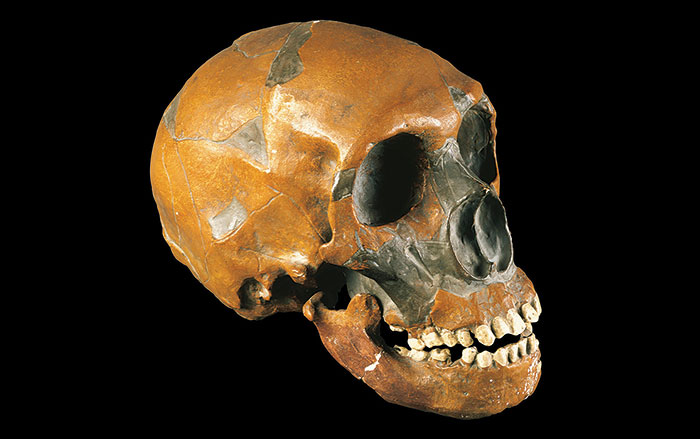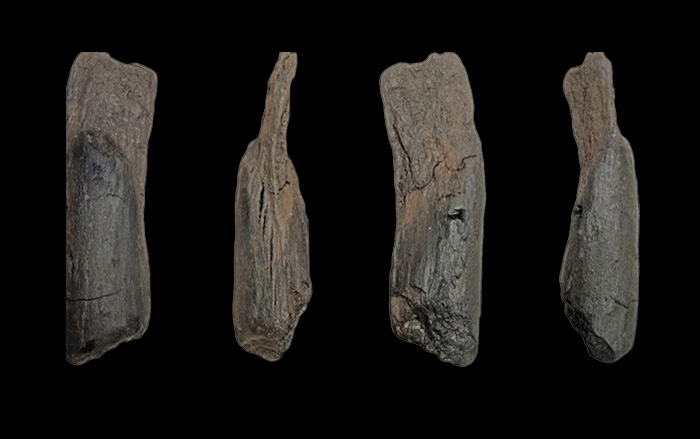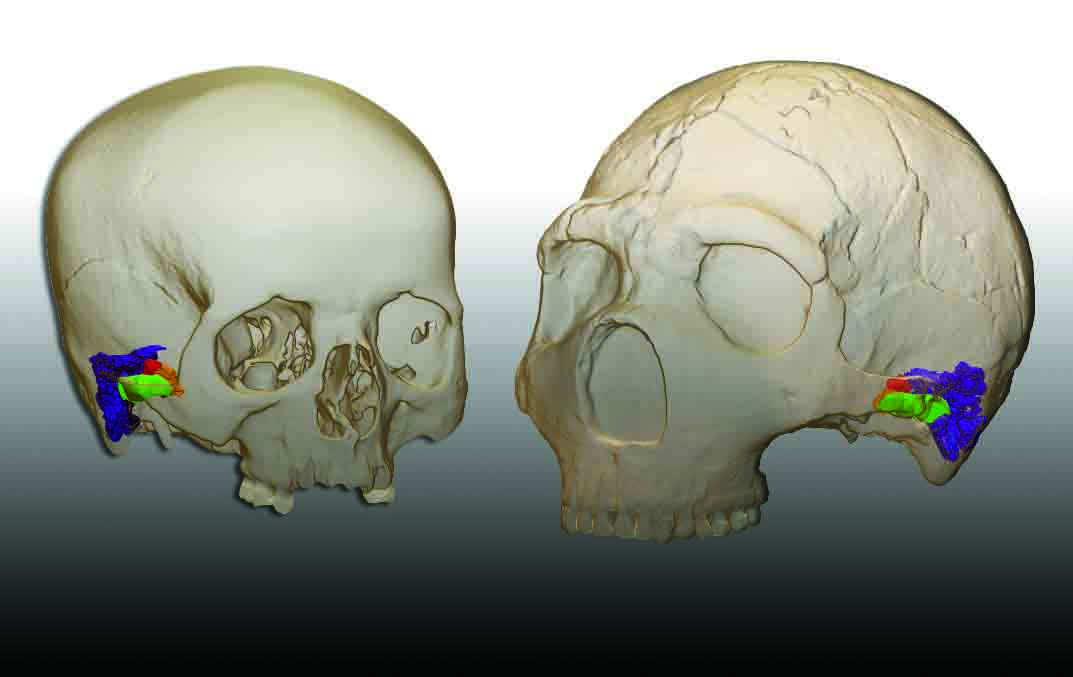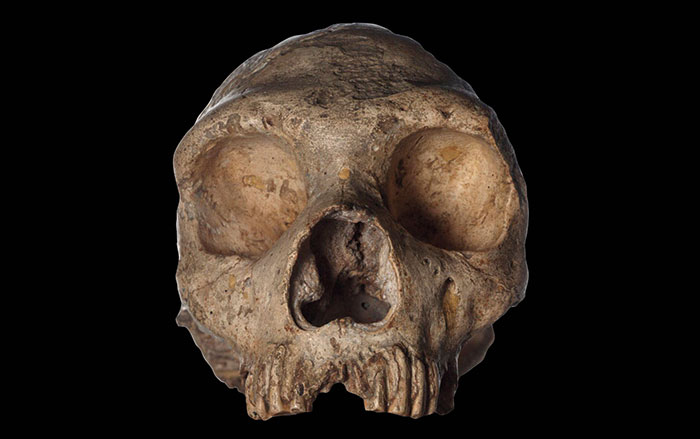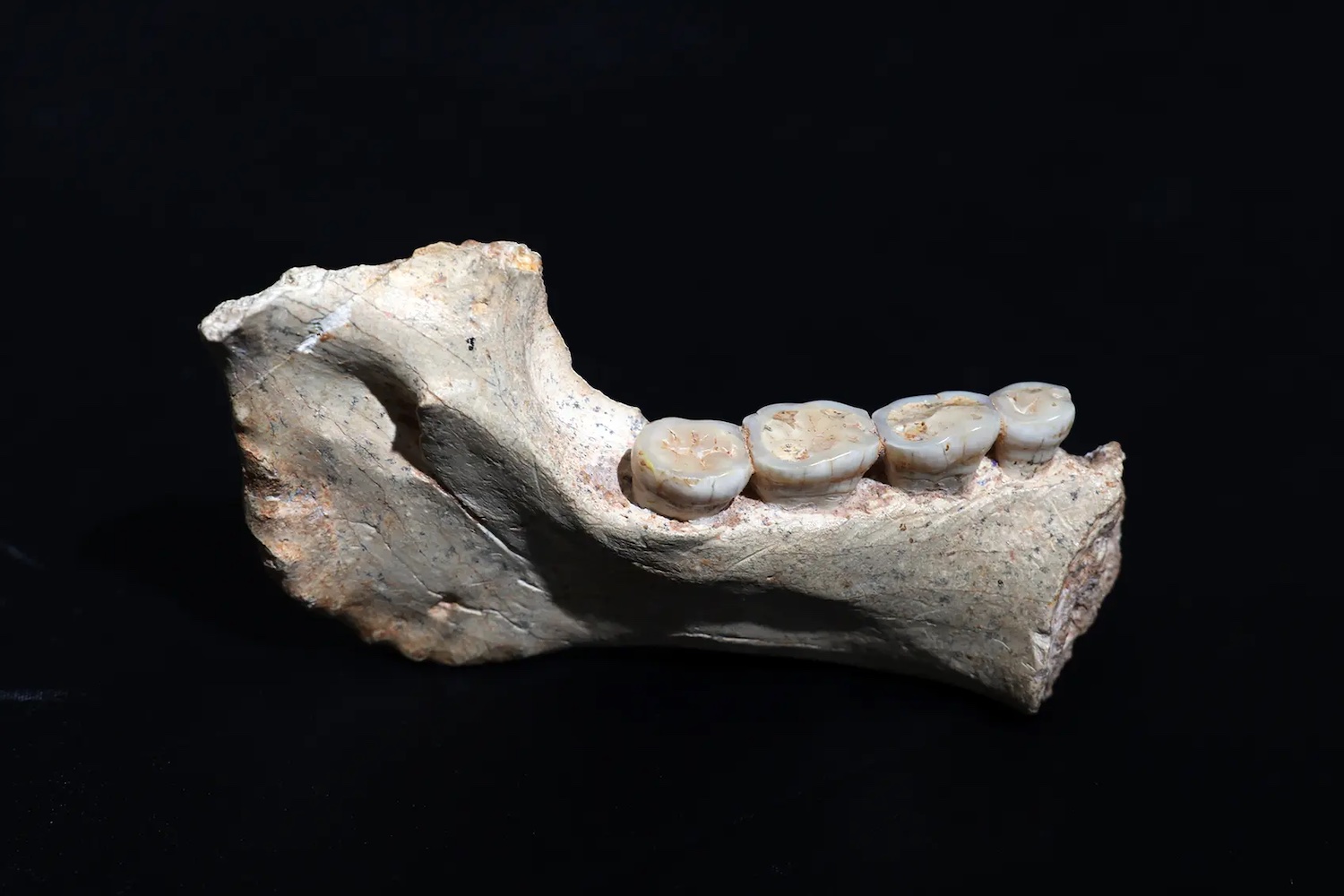
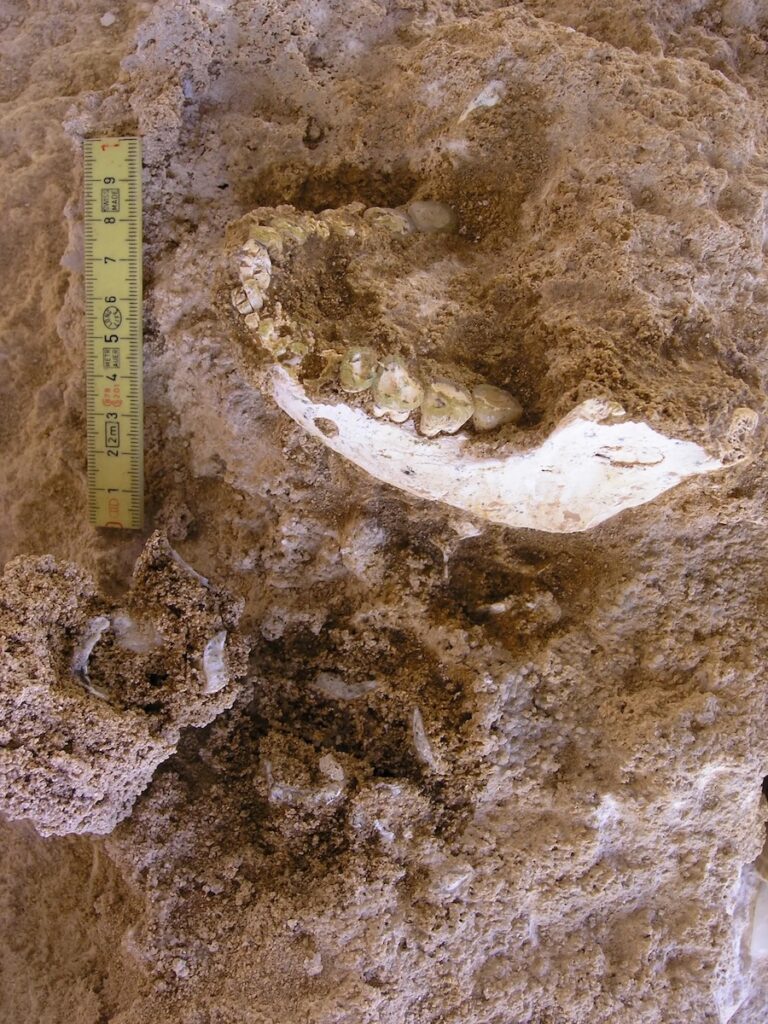
CASABLANCA, MOROCCO—A team of Moroccan and French researchers suggests that they have identified the remains of the last common ancestor of modern humans, Neanderthals, and Denisovans, according to a Live Science report. The 773,000-year-old fossils, including three partial lower jaws, several vertebrae, and teeth, were discovered in a cave in Morocco’s Thomas Quarry. They have some characteristics of Homo erectus, which evolved in Africa some two million years ago. Some Homo erectus groups migrated out of Africa, and reached Europe about 800,000 years ago. Those in Spain, known as Homo antecessor, are thought to be direct ancestors of Neanderthals. Paleoanthropologist Jean-Jacques Hublin of the Max Planck Institute for Evolutionary Anthropology said that the fossils from Morocco also share some traits with Homo antecessor. Yet, he explained, these newly found fossils are distinct from both Homo erectus and Homo antecessor. “This supports a deep African origin for Homo sapiens and argues against Eurasian origin scenarios,” Hublin said. Evidence for early modern humans, dated to 300,000 years ago, has been found in Morocco’s site of Jebel Irhoud, he added. Additional analysis of the fossils may help to classify them, Hublin concluded. Read the original scholarly article about this research in Nature. To read more about the Jebel Irhoud fossils, go to "Homo sapiens, Earlier Still," one of ARCHAEOLOGY's Top 10 Discoveries of 2017.