2,400-Year-Old Tombs and Possible Shrine Uncovered in Rome

News January 23, 2026

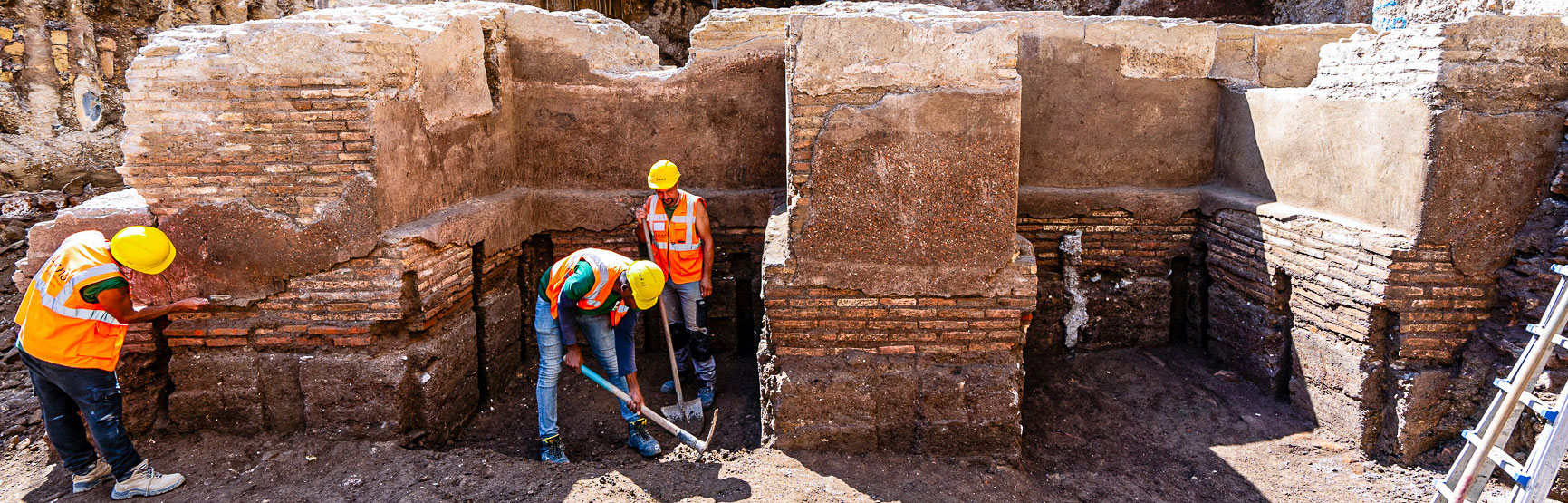
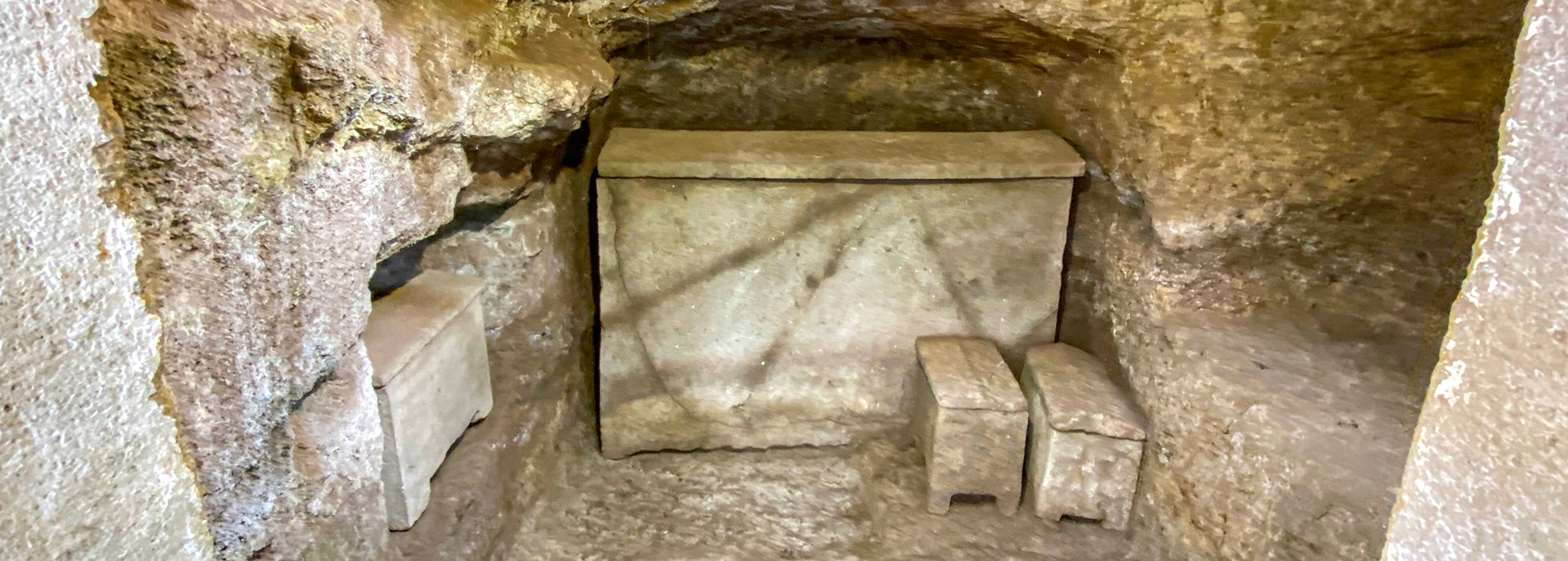
Interior of Republican tomb in the Parco delle Acacie, Rome, Italy
Italian Ministry of Culture
SHARE:

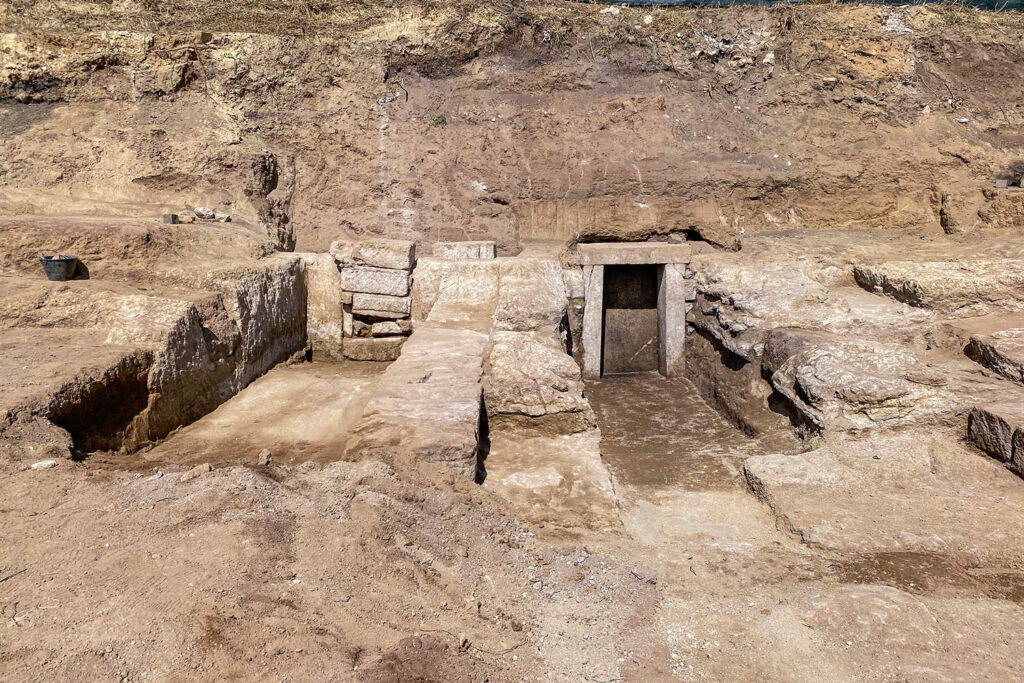
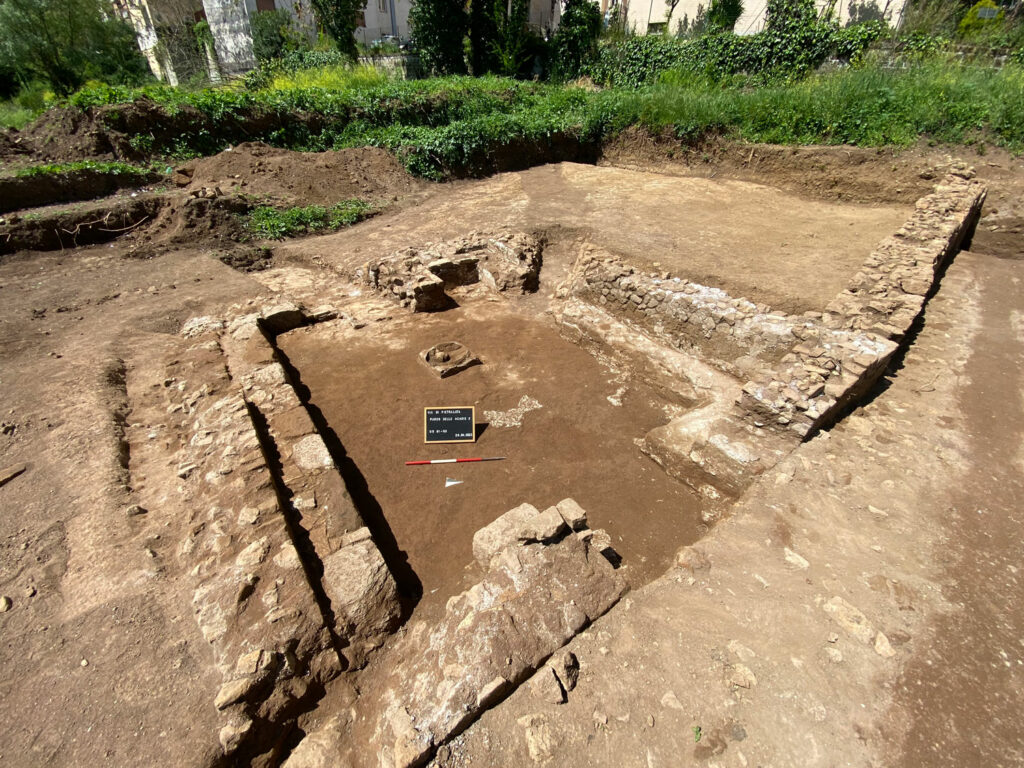
ROME, ITALY—Live Science reports that two 2,400-year-old tombs have been uncovered in the Parco delle Acacie near Via Pietralata in northeastern Rome. One tomb contained a stone sarcophagus and three cremation urns, while the other held the remains of a man’s skeleton. The tombs were found in a cemetery near a shrine thought to have been dedicated to the deified Greek hero Hercules, a roadway leading to the shrine, and two monumental basins that may have been used in ceremonies at the site about 100 years after the tombs were built. Bronze coins at the shrine site suggest it was used between the fifth or fourth centuries B.C. and the first century A.D. To read about a Roman-era marble statue of Hercules excavated in the ancient Greek city of Philippi, go to "A Young Hercules."
  • Features January/February 2026

    The Cost of Doing Business

    Piecing together the Roman empire’s longest known inscription—a peculiarly precise inventory of prices

    Read Article
    A digital reconstruction shows how the Civil Basilica in the city of Aphrodisias in southwestern Anatolia would have appeared with the Edict of Maximum Prices inscribed on its facade.
    Ece Savaş and Philip Stinson
  • Features January/February 2026

    The Birds of Amarna

    An Egyptian princess seeks sanctuary in her private palace

    Read Article
    The Metropolitan Museum of Art, New York/ Rogers Fund, 1930
  • Features January/February 2026

    Taking the Measure of Mesoamerica

    Archaeologists decode the sacred mathematics embedded in an ancient city’s architecture

    Read Article
    Courtesy Claudia I. Alvarado-León
  • Features January/February 2026

    Stone Gods and Monsters

    3,000 years ago, an intoxicating new religion beckoned pilgrims to temples high in the Andes

    Read Article
    The ritual center of Chavín de Huántar flourished in northern Peru.
    Courtesy John Rick