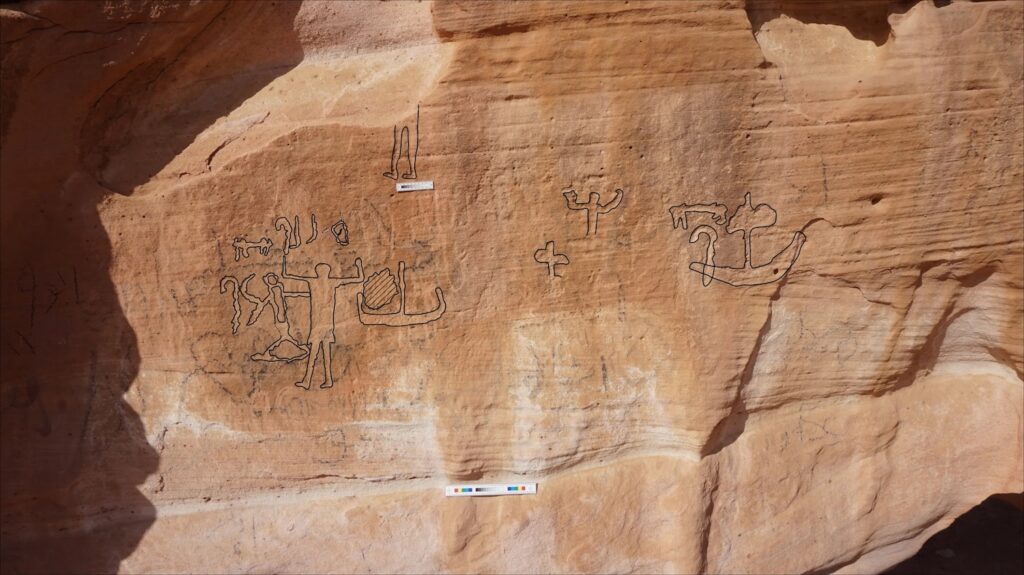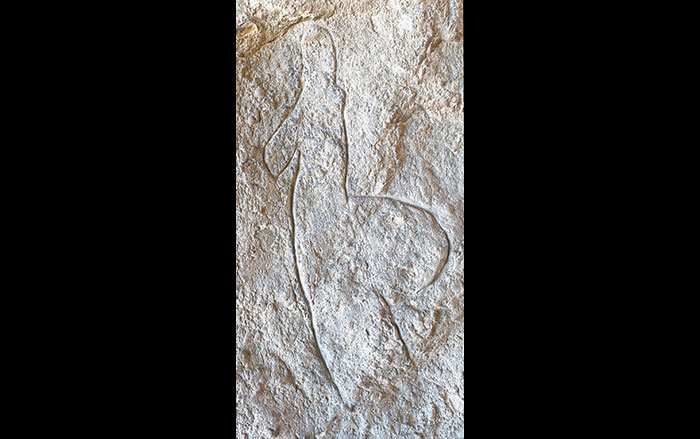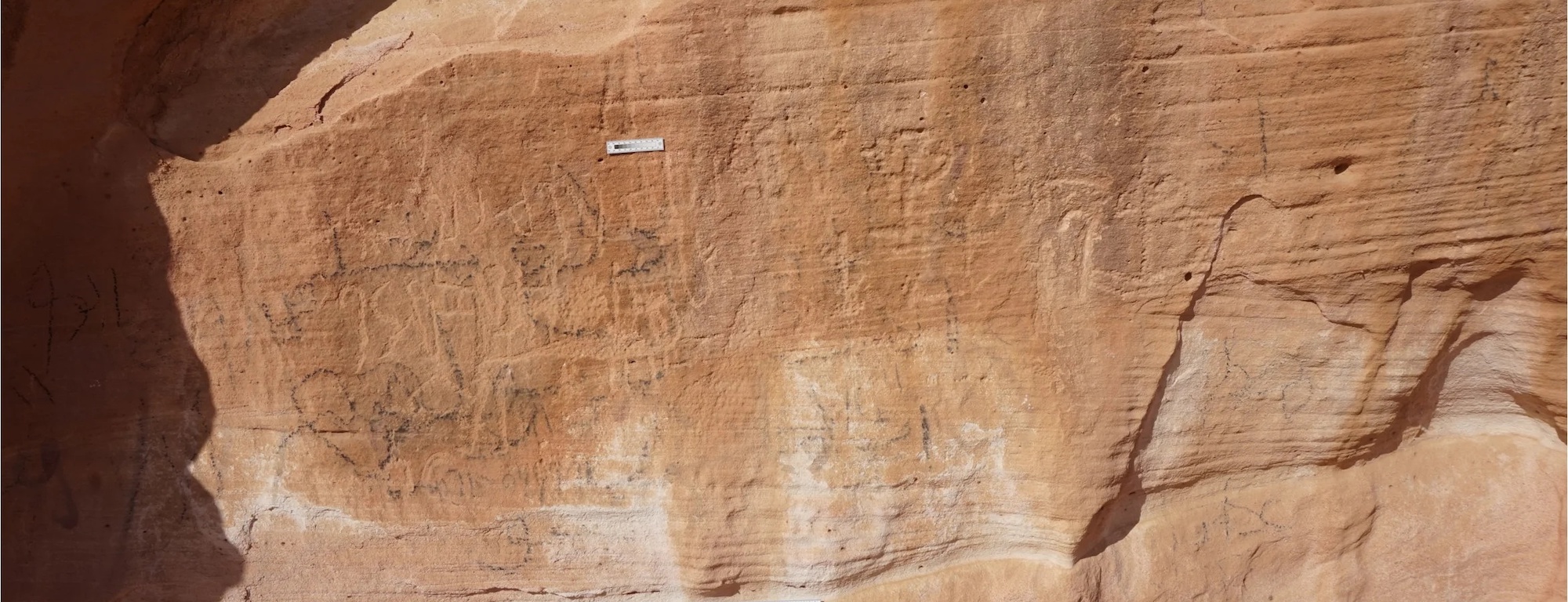
BONN, GERMANY—A survey of rock art in Wadi Khamila conducted by Mustafa Nour El-Din of the Egyptian Ministry of Tourism and Antiquities and Ludwig Morenz of the University of Bonn revealed a 5,000-year-old inscription and a depiction of an early Egyptian pharaoh’s conquest of the southern Sinai, according to a ZME Science report. A man wearing a loincloth stands with his arms raised by a kneeling figure with bound arms and an arrow in his chest. The style of the Sinai image resembles a depiction of 1st Dynasty pharaonic power over Nubia to the south at the site of Gebel Sheikh Suleiman, the researchers explained. The Sinai inscription suggests that the Egyptians probably wanted local mineral resources such as copper and turquoise. “The inscription is likely to announce Egyptian dominance under the patronage of Min,” Morenz said. Translated, it reads, “God Min, ruler of copper ore/the mining region.” Min was also revered for fertility, reproduction, male sexual potency, and as the divine protector of Egyptians who traveled beyond the Nile Valley. The act of carving the prominent rock panel could therefore be understood as claiming the Sinai for Min and Egypt. The image and inscription were later covered with Nabataean and Arabic writings, possibly erasing the name of the victorious early Egyptian king. “Until now, Wadi Khamila has only been mentioned in research in connection with Nabataean inscriptions that are around 3,000 years younger,” Morenz said. Read the original scholarly article about this research in Blätter Abrahams. To read more about early pharaohs, go to "Searching for Lost Cities: Egypt's First Capital?"